

Neue Welt gallery at The Packing Plant has earned a reputation as a go-to stop for formalist sculpture exhibitions, and its celebration of shapes, materials, colors and textures makes it a safe harbor in a scene awash in content-forward displays. Curator Mauro Antonio Barreto is currently showing pressing hearts into ash, an exhibition of photographs by Brooklyn-based artist Ian Kline that brings interesting twists to a space that mostly specializes in installations of objects. It’s also a show that’s welcome in our local art scene, where photography displays are too hard to come by.
Kline’s very first camera was a Polaroid 300, an instant picture-maker that rebranded Fujifilm’s Instax Mini under the Polaroid name. Kline’s introduction to photography was decidedly physical given the tactile, substantive outputs of instant film cameras. Kline has graduated to 35 mm film cameras, but his photographs still feel as immediate and intuitive as pull-and-shake images, and his artist statements and gallery text also tend to be poetic, free-flowing and candid. At Neue Welt, these elements combine in a display that’s exploratory and definitive, energized and contained.
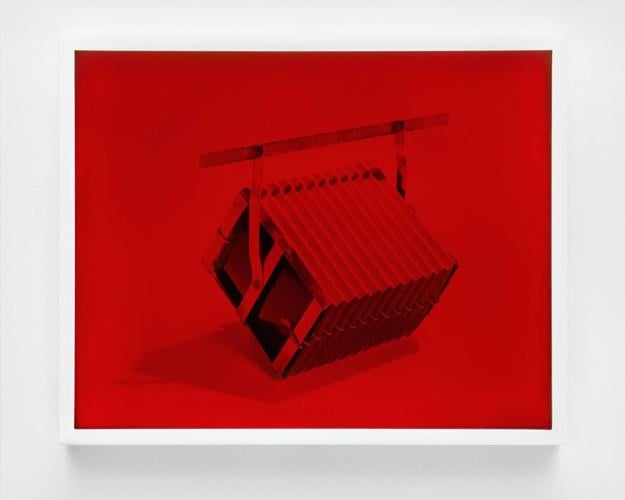
Three works in the show feature images of 4-by-5 sheet film developing racks. They’re product documentation shots from a 1960s archive of a Kodak lab in Rochester, N.Y. Kline purchased the archive, and now these humble production images are recontextualized in works of art that feel more like objects than mere image displays. Each picture is viewed through a sheet of transparent red acrylic. The photos and acrylic are contained in matching white artist frames that are studded with red-painted screws. Each layer of coordinated materiality adds to their sculptural wholeness. Kline also puts his poetics in play, titling the works with the chemical formulas for substances like oxycodone and Xanax, and their 1963/2026 dating nods to the artist’s intentional revival and transformation of the Kodak imagery. Kline’s best work comes layered in both language and images, in space and in time.

"Mary, Live Again," Ian Kline
Other titles in the show evoke personal narratives or esoteric allusions, as with the chemical formulas. Most artists are utilitarian in their titling, but words are part of the fabric in a show called pressing hearts into ash, which the artist styles in all lowercase. Titles like “Mary, Live Again,” “Townes Ashes” and “Forest of One” are intimate and diaristic, while “Heaven Spills” and “Thaws” sound more abstract. Neue Welt shared the titles of works with me in a document that read like the table of contents in a poetry chapbook. Titles of shows, artworks and statements are the appropriate places for artists to insert content that’s pertinent to their unique personal visions. If meanings and messages must be included in a work of art, they are more clearly communicated in language than in visuals.
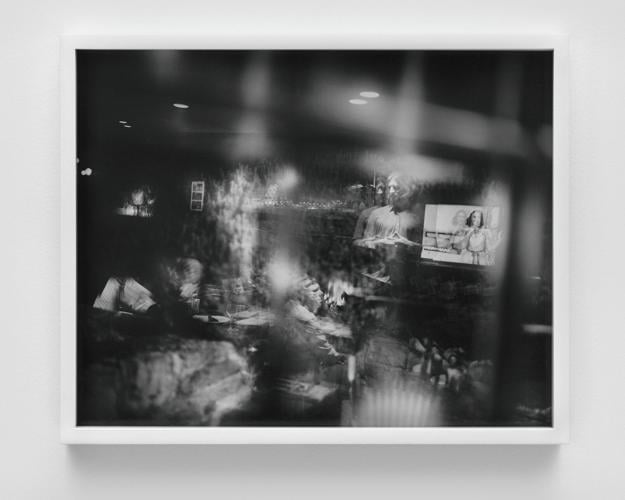
“Poison in the Distance of Home” is my favorite title in the show. It put me in mind of the Victorian mansion in the middle of the locust-plagued wheat field in Terrence Malick’s Days of Heaven. Kline’s picture is kind of agrarian, but it’s a layered, palimpsestic affair combining black-and-white images of a bird and a dandelion gone to seed. The picture includes what appears to be faint text, but this work — and many in the show — makes use of double exposure, blurring that space-time that Kline points to throughout the display.

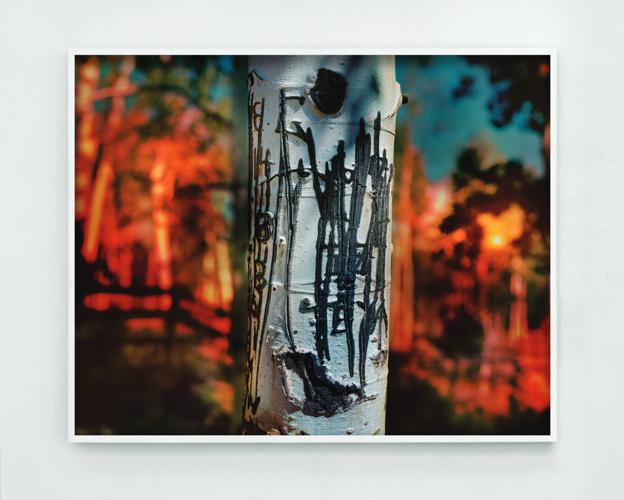
"Forest of One," Ian Kline
Another standout, “Forest of One,” is a close-up on the scarred trunk of a white birch tree against a backdrop of a forest on fire. This is the only color photo in the show, and the only one that looks like the color’s been cranked through whatever means: chemical, analog, digital. It’s also the biggest image in the show, and the centerpiece you see when you first walk through the gallery door. It’s an intense picture full of dangerous details — from the vicious-looking scarred scratches on the tree bark to an Apocalypse Now-style treeline inferno. However, it’s all so beautiful that viewers will choose to look closer rather than looking away.
In a 2024 interview with Cultured, Kline revealed the curiosity at the center of his practice, celebrating traveling and meeting people outside of the photography bubble and observing that “the world is always more interesting than your ideas.” Kline’s work is detailed and thoughtful, but it’s not precious. He uses his images as building blocks in objects that embody his conceptual ideas, demonstrating that another good place for content is behind the work. The photographic objects in pressing hearts into ash are about color and texture, but also about time and place. The works are solidly handmade, but they evoke the fluidity of passing moments and the fragile nature of memory.
Kline is most often described as an experimental photographer, but he’s also a conceptual sculptor and a poet. His intermedia explorations are lively and immediate, but they’re also built to last.



Post a comment as anonymous
Report
Watch this discussion.
(0) comments
Welcome to the discussion.
Log In
Welcome to the discussion.
Keep it clean. Please avoid obscene, vulgar, lewd, racist or otherwise abusive language. Comments featuring hate speech or threatening or violent content will not be tolerated.
PLEASE TURN OFF YOUR CAPS LOCK.
Be truthful. Don't knowingly lie or mislead.
Be proactive. Use the “report” link on any comment that violates our comment policy.
Share with us. We'd love to hear your feedback.