
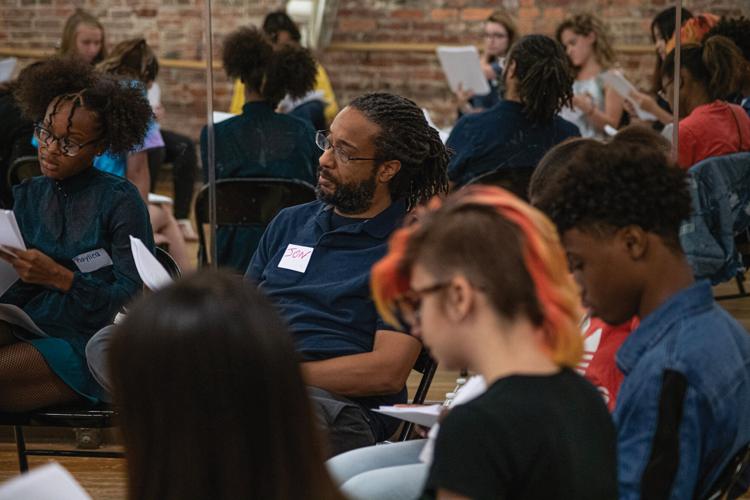


John Royal (center)
Early on a recent Monday morning, a group of high school students is gathered at the Global Education Center on Charlotte Avenue. They lean over drawings and canvases with paintbrushes and pens in hand. Aaron Gardner, a junior at East Nashville Magnet High School, sits beside the painting he’s just completed. It depicts two African American youths shackled together by their necks. Black straps criss-cross their faces, bearing words like hopeless, suspect, broken, voiceless and guilty.
Those words, says Gardner, are particularly damaging to young people. They can stop kids from dreaming before they begin. “We haven’t started living,” says Gardner, “haven’t started seeing ourselves as we might someday be.”
To the left of the two figures, Gardner has painted the words of Gwendolyn Brooks’ “We Real Cool,” a short, muscular poem about a group of rebellious teenage boys marching toward an early grave.
Gardner and 12 other high school students have been meeting for the past month to read, discuss and make art about Dominique Morisseau’s award-winning play Pipeline. Their artwork will hang in the lobby of TPAC’s Johnson Theater in October when the Nashville Repertory Theatre produces the play. Pipeline is about an African American teenager straddling two worlds — the world he has always known in his neighborhood with his parents and friends, and that of the upstate New York private school his mother has insisted he attend. Ahead of Nashville Rep’s production, director Jon Royal wanted to connect with high school students like Gardner — “the experts,” he says, regarding Pipeline’s themes.
Pipeline was first produced in 2017, and it’s the kind of contemporary play that Nashville artists are clamoring to get onstage. As he heads into rehearsals, Royal — a gifted, studious artist who has been at the helm of three major productions already this year — says local theater is at a crossroads. Are Nashville audiences and theater patrons ready for a progressive theater scene that challenges the status quo? Or would we rather see more of the same?
Royal wears wire-rimmed glasses and has shoulder-length dreads, a closely trimmed beard and an easy smile. But he’s weary. Nashville is his hometown, and he wears that fact like a hard-won badge of honor. He’s been acting, directing and producing plays here for more than two decades, working diligently to make the local theater scene more accurately reflect the city he loves.
“I’ve grown up not happy with ... the fact that the medium that I work in doesn’t reflect enough of the city that I actually know,” says Royal.
When he was 18 years old, Royal decided he wanted to work with young people, and theater would be his vehicle for engaging with them.
“I became an artist because there are things that I want to change in the world,” says Royal. “I’m 43, so most of my elementary school teachers had been in their 20s in the ’60s. So I’m growing up in Nashville, in a very important civil rights city, and having a lot of black teachers — they’re looking at [me] like, ‘OK, so what are you going to do?’ ”
Just this year, Royal directed three challenging contemporary plays: Ghost at Nashville Children’s Theatre, Topdog/Underdog at the Rep and Citizen at Actors Bridge Studio. These plays are about family, identity and dreams — but because they center on people of color, they are also about navigating the world in a body that our white-dominated culture often sees as less than human. This is different from colorblind casting — when a theater company casts actors of color in roles that have traditionally been played by white actors. Royal is a black American directing stories written and performed by black Americans.
It might be easy to say he’s starting conversations about race, but he adamantly pushes back on that idea.
“It used to be, for me, that the most important thing was that people come and see the play,” he says. “The play is the thing. The play is where it’s at. And I think that the play is important, but the whole reason we’re telling these stories — that we’re putting these stories on stages — is because these topics, these conversations, these stories are already in the community, and whatever piece of art you’re making is just an extension of a conversation that’s already being had in the larger community.”
If you look at the archives of Nashville’s larger theater companies — such as the Rep, Studio Tenn and Nashville Children’s Theatre — you’ll find the majority of the productions are classics and musicals, with one or two new works performed each season. Most feature Eurocentric casts and themes. But increasingly, people like Royal are pushing for equity.
“Theater is all about ritual,” says Royal, “and we tell these stories again and again because there are lessons that we feel are important and valuable to us. However, these lessons can take on a lot of different forms, so it’s about people being able to embrace new forms of similar lessons. As our historical context changes, the complexity changes. So the deal is, if we let go of the complexity, if we decide that we’re gonna take a pass on the complexity, we’re never going to grow collectively.”
The Old Guard
In late May, Nashville Rep issued a surprise statement. René Copeland — who had served for 15 years as artistic director and directed more than 40 plays for the company — would be stepping down. The news came just days after the Rep wrapped the 10th season of its Ingram New Works Festival, a program developed under Copeland’s supervision that has gained national acclaim for acting as an incubator for emerging playwrights from across the country. Copeland and her late husband Scot, who was a longtime producing director at Nashville Children’s Theatre, nurtured the theater community and shepherded it as Nashville grew.

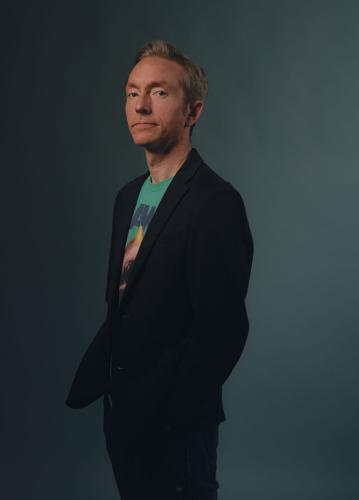
Nate Eppler
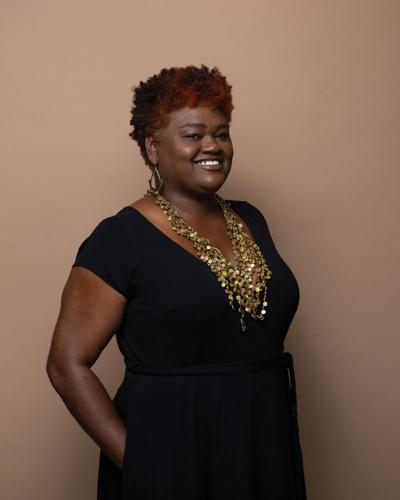
Nate Eppler is the director of Ingram New Works — he was a member of the first cohort of playwrights and is the Rep’s playwright-in-residence. For each Ingram New Works Project, four playwrights travel to Nashville over a period of 10 months to develop brand-new plays from scratch, with focused, tailored guidance. It culminates in a festival, in which local actors perform two staged readings of each play. This year’s installment showcased an array of themes — faith, cultural assimilation, trauma and family legacy — in settings as diverse as a New York City subway, a ramshackle motel and an alien planet at war.
From the outside, the Rep appears to be thriving. It produces a robust season of plays, and for the past four years, one play each season was written by a person of color. Its annual production of A Christmas Carol is a holiday tradition for a host of Nashville families, and it has consistently been a place where local actors can find work. Copeland tells the Scene that this was part of her vision from the start.
“If Nashville is going to be famous for being a center of creativity,” says Copeland, “then it’s gotta be a place where artists live. Right? That’s the only way that really, genuinely, authentically happens. … We need to be able to be a part of an ecosystem that says, ‘If you’re a theater artist, you can live in Nashville and get paid work.’ ”
But from the inside, the Rep — like many theater companies and arts organizations — has been struggling financially. The nonprofit’s 2016 tax filings show that it was not profitable, with a total deficit of $131,232. This has improved significantly since — in 2018, the Rep’s revenues comfortably topped expenses — but one purpose of a board is to ensure the institution’s long-term financial viability, and thus the Nashville Rep’s board members decided to head in a new direction.
“I think that we all saw the need for a change,” says Bonnie Dow, the Rep’s board president. “[It was] partially about just René having been artistic director for a long time and having made very clear to audiences and to the board what her vision was for the Rep — the kind of main seasons that she thought we ought to be doing. And the board decided that we didn’t want to keep doing the same kind of main-stage season. … She was really dedicated to her vision, and we were really dedicated to our desire for some changes.”
Dow says the Rep is committed to paying its actors excellent wages. “You want that creative class to stay here and be able to live here and not to have to go to some large city to make a living,” says Dow. “And all of that has been going into the decisions that we’ve made, because we are really thinking about the long haul and what we want to mean to Nashville far into the future.”
The long haul includes broadening the Ingram New Works Project to include a program for local playwrights — Ingram 615, which Eppler says will launch later this year. The Rep is also expanding its youth education programming, and it will be returning to TPAC’s larger Polk Theater for one production next year. But perhaps the most controversial change has been the organization’s desire to draw in a different kind of audience than Copeland was after.
In mid-March, the Rep quietly updated its season on its website. It removed Nate Eppler’s play This Red Planet, which was already cast, and replaced it with Mary Poppins in an attempt to attract family audiences. This Red Planet is about an artist who is hired to teach George W. Bush how to paint. The play deals with contemporary questions: Are people allowed to be more than one thing to us? Who is deserving of our empathy? Do we too readily forgive men who appear to be mediocre, doddering bumblers?
The change came as a blow to many people in the theater community who took to social media to voice their concern. Eppler says he understands why the Rep cut his play from the season, and adds that he hasn’t felt unsupported by the board. What’s more, he says the change brought critical conversations to the surface.
“I was really glad that it led to a conversation about how valuable new work is in the community, because the first thing that occurred was that a lot of other artists responded, not just in my defense but in defense of new plays,” says Eppler. “And when I told them that I was OK, they were still in defense of new plays, and that really matters.”
Copeland — who declined to comment about leaving the Rep — says Nashville audiences are maturing, but it can still be a struggle to convince theater patrons to support new works they haven’t heard of. “Sometimes you kind of have to go, ‘You don’t know yet that you are hungry for this conversation. Come see this ... and it will spark something in you that you didn’t realize you needed to feel something about.’ … So it’s a difficult balancing act for everybody who is trying to have an organization be viable and also serve its community.”

Ghost
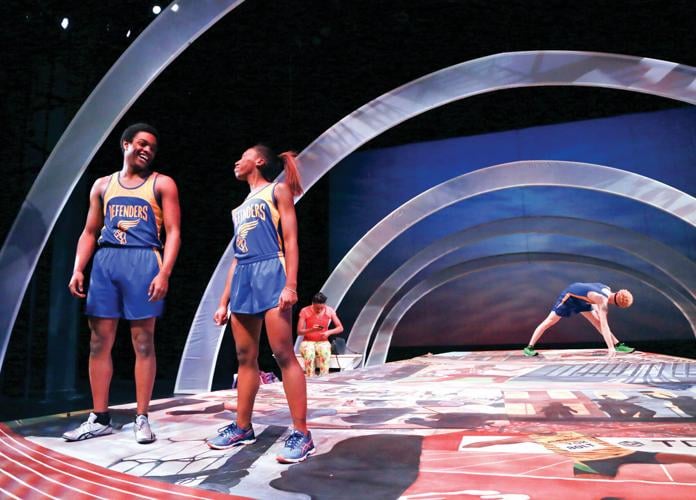
For Royal, the desire to attract young audiences does not need to be in opposition to producing new work that challenges dominant frameworks. Both Ghost — which features a black teenager who finds acceptance and purpose in running track — and Mary Poppins are written and produced for kids, he says. Matilda is family-friendly, but so is The Wiz.
“So is that what you have in mind?” says Royal. “Or do we really need to talk about what we’re actually talking about? … Is it still going to be this heteronormative, Eurocentric family stuff where we’re gonna throw some people of color in it? Or are you really looking to tell specific stories that address the spectrum of what family is?”
One Step Forward
In 2017, Royal joined a cohort of artists and arts leaders in Racial Equity in Arts Leadership, a joint venture of the Metro Arts Commission and Vanderbilt University’s Curb Center for Art, Enterprise, and Public Policy. The program invites arts nonprofit leaders and individual artists to attend seminars, lunch-and-learn sessions for self- and peer critique, and public lectures all focused on arts equity and disrupting systemic racism in the arts. Royal attended as an independent artist, and he worked closely with Vali Forrister, the founder and director of Actors Bridge Ensemble, to address some of his concerns.
Royal says there is no shortage of talented actors of color in the city, “but when you get into jobs outside of performing, there are very few of us.”

Cynthia Harris
After going through the REAL program with Royal, Forrister approached the Actors Bridge board treasurer, Cynthia Harris, with a question: Would Harris be interested in a directors training program? If so, what should it look like?
Harris says Actors Bridge has always been producing bold, forward-thinking theater. “But there is an opportunity to not just have actors of color, which happens all over Nashville, but to specifically be telling the stories of people of color,” she says. “There’s the heavy — and there is the challenge that lies for everyone.”
These conversations gave birth to the Directors Inclusion Initiative at Actors Bridge, a program that offers resources and training to people of color who have an interest in directing theater. Actors Bridge invites people in various theater professions to talk to the group about their craft, whether it’s directing, choreography, set design, lighting, stage managing or something else. The goal is to tell “a broader net of stories,” Harris says.
Harris has been collaborating with directors to tell stories in Nashville since 2002. The establishment of the Directors Inclusion Initiative gave her permission to step fully into the role of director, and in May, she directed a sensational performance of How to Catch a Flying Woman. The play, which Harris wrote, puts the health and wellness of women front and center, while embracing the language, stories and friendships that Southern black women share.
The program offers accessibility for people who might not otherwise be able to enroll in a professional theater program. Harris’ day job is in public health, and she wouldn’t have been able to attend a two-week out-of-state directors program. The Directors Inclusion Initiative is also accessible to mothers and fathers, who are welcome to bring their kids along.
It’s important to Harris that the program is geared toward helping her to shape her vision in a way that feels authentic and doesn’t compromise the black aesthetic she celebrates.
Says Harris: “There’s a certain sense of spectacle that is a part of my experience of being a black Southern woman and the experience of listening to the way stories are told when groups of women … get together. And I don’t want to sacrifice that for anything. I want to celebrate that voice. … The more specific I am about the nuance of my experience, the more universal my story becomes.”
Two Steps Back
In November, Belmont students Hayley Pellis, Lucy Buchanan and Emily Peterson were in the final stretch of rehearsals for The Wolves, a 2016 play by Sarah DeLappe. Belmont’s theater department was co-producing the play with Actors Bridge Ensemble, which started on Belmont’s campus in 1995 and — until recently — had a longstanding relationship with the university.
A finalist for the Pulitzer Prize for Drama, The Wolves is a portrait of female adolescence, depicting a group of nine soccer players as they warm up for their Saturday morning games. They grapple with weighty topics: war and genocide happening thousands of miles away; sexuality; mental illness; menstruation and sex. The play focuses on the voices of young women in a way that has captured the attention of the play-viewing public in larger cities.
“When you think about a locker room, you think of men and the way that they talk,” says Pellis. “And I think that this was refreshing, to see that women care about what is going on in other countries. ... [These characters are] developing into humans that are going to change the world. There is not enough theater yet of this caliber that’s showing women as complex characters. That’s why it meant so much to me that we were representing people that haven’t had a voice yet.”
The Wolves was directed by then-Belmont faculty member Jaclynn Jutting. When the Scene asks the students to describe Jutting, one declares, “My queen!” They all laugh. Jutting, they say, was rigorous but fair. She demanded professionalism and accountability — she expected the students to behave like professional actors in a company, and her frank but gentle manner made them want to rise to the challenge.
“We have a lot of male professors at our school,” says Pellis, “and having a strong female is really important, because, yes, we’re in the fourth wave of feminism, but there’s still a lot of progress to be made. Having such a powerful person who is a female who is guiding you and is giving you a voice means so much.”
Two weeks before the play was to begin, the students found out that Belmont administration demanded they censor language in The Wolves — six instances of the word “goddammit” and six instances of “fuck.” But production companies, including universities, can’t make such a change without the express written permission of the playwright. Rather than cancel the play, Jutting decided to take it off campus, and the girls performed it at Actors Bridge Studio. Jutting — who was on track for tenure — was told she would not be asked back the following semester.
Pellis and her castmates were especially disheartened by the reason they were told the play couldn’t be produced: It didn’t align with the university’s values.
“The show represents giving young women a voice, teamwork, overcoming grief,” says Pellis. “Those are all such important and universal topics. How can that not align with your values?”
Shortly after, Belmont terminated its 23-year relationship with Actors Bridge. Neither Jutting nor Actors Bridge’s Forrister would comment on why the play went off campus and what the repercussions were. Paul Gatrell, the chair of Belmont University’s theater and dance department, confirms what the students said: that the play did move off campus for “language reasons,” that Belmont is no longer partnering with Actors Bridge, and that Jutting was not given tenure. Gatrell tells the Scene that employment and tenure decisions are made by the provost and president of the university — not by deans or faculty chairs. He did not comment on Jutting’s record as a faculty member. Belmont did not return the Scene’s request for further comment.
“Our job is to educate kids and prepare them for the professional world,” says Gatrell. “It’s not to press the envelope or do the latest, greatest crazy thing that’s off-Broadway. ... That’s other theater companies in town. That’s their job. And they do it very well.”
If You Build It
Nettie Kraft of Verge Theater Company says that for years, it was “almost impossible” to find a place where small companies could have an intimate and honest look at contemporary society in Nashville. In the past, Kraft lived and worked in Chicago, and she saw small theater companies priced out of their neighborhoods and struggling to keep up with overhead costs. It’s why she and her husband Graham Mote mortgaged their home and bought a small commercial space on Indiana Avenue near 40th Avenue North, converting it to a black-box theater.
“It was a pretty big commitment,” Kraft says. “We sort of had that ‘if you build it, they will come’ mentality. And that is true. That definitely happened.”

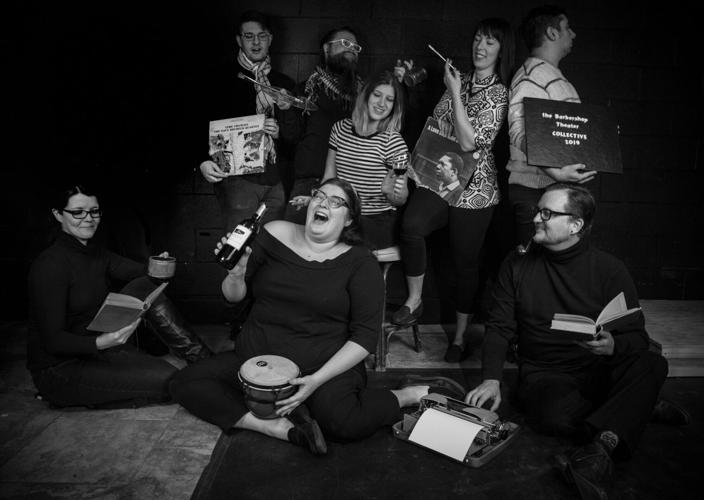
The Barbershop Collective
Their space, The Barbershop Theater — which was formerly home to DIY music space Drkmttr, since relocated to East Nashville — seats 40 to 50 people. It has one bathroom and offers street parking only. But The Barbershop Theater Collective — a group of five theater companies that share the space — is using the building to put on bold, contemporary plays on shoestring budgets.
In June at The Barbershop, Verge got super weird with Mr. Burns, a Post-Electric Play by Anne Washburn. It’s an apocalyptic tale about how the survivors of a nuclear disaster try to create meaning in their wasteland of a country. A single, barely remembered episode of The Simpsons becomes the source of myths and legends, leading to a new way of life. Verge’s production was openhearted. The company crammed eight singing-and-dancing actors into their tiny black-box theater, squeezed in closely enough to trip over the feet of audience members (though they didn’t). While some performances were stronger than others, and the pace struggled in the third act, Mr. Burns was a play that Nashville needed to see, if only so we might dream of what else is possible.
Small theater companies can serve as a landing place for recent graduates and young artists who are hungry for experience. Woven Theatre is another member of The Barbershop Collective, and co-founder William Kyle Odum says the group exists to create such opportunities, not just for actors, but also for directors, technicians and designers. The company has focused on the voices and stories of queer people. Odum says The Barbershop has been invaluable, not just because theater space is scarce and cost-prohibitive, but because the companies share resources, time and skills.
“The Nashville audience is drastically different than it was five years ago, 10 years ago,” says Aaron Muñoz, the artistic director of Nashville Story Garden.
Muñoz says Nashville audiences want to be challenged. The company’s recent production of Dance Nation was on par with the best small theater you’d see in New York or Chicago. With a minimalist set and props, the company put on a play that literally had audience members jumping out of their seats to cheer in the middle of the production — especially thanks to actress Alicia Haymer, whose monologue elicited peals of laughter and shrieks of solidarity.
“I think that whether more established companies recognize that or not,” says Muñoz, “a lot of us smaller companies are saying, ‘This is the theater that needs to be seen — this is the theater that needs to be done,’ because it’s part of a larger conversation that we’re having as a city, but also as a nation. These are big, big conversations that we’re having about identity, about discrimination, about racism, about what it is to be a woman, and we need to address those as artists.”
After talking to Royal for an hour, it’s easy to believe that theater really can change the world.
“I really believe in what Nashville can be,” says Royal. “And so now, as the city is facing more change, I feel like we have a responsibility to be able to put in for really challenging work that makes us examine who we are and what our potential can be as a collective city.
“You can look at me and can look at my career and say, ‘Well, Jon’s working. It’s great!’ And here’s the deal … I don’t want to be exceptional. I want to be a part of an exceptional community.”




Post a comment as anonymous
Report
Watch this discussion.
(0) comments
Welcome to the discussion.
Log In
Welcome to the discussion.
Keep it clean. Please avoid obscene, vulgar, lewd, racist or otherwise abusive language. Comments featuring hate speech or threatening or violent content will not be tolerated.
PLEASE TURN OFF YOUR CAPS LOCK.
Be truthful. Don't knowingly lie or mislead.
Be proactive. Use the “report” link on any comment that violates our comment policy.
Share with us. We'd love to hear your feedback.