

In 1988, an enterprising young actor named Chambers Stevens, along with a group of other right-thinking Nashville thespians, mounted a production of Shakespeare’s As You Like It in Centennial Park. Thus were planted the seeds of the Nashville Shakespeare Festival, whose founding was solidified the following year with a production of Pericles. With the additional drive and support of co-founders such as Jill Jackson and attorney (and then-actor) Donald Capparella, the festival’s mission took hold, proceeding to thrive via expanded performances and educational outreach.
NSF is celebrating its 30-year anniversary this year, a legacy that includes 34 different productions of the Bard at Shakespeare in the Park — the company’s flagship summer extravaganza — plus 10 more plays presented since 2008 through the Winter Shakespeare program. (Other non-Bard-authored shows have included The Little Prince, The Complete Works of William Shakespeare [Abridged] and Shakespeare’s Case.)
The one constant through this historic journey — besides gratified Nashville theatergoers and students, numbering about half a million — has been the leadership of Denice Hicks, who with the exception of a two-year hiatus in 2003-04, has served as artistic director since 1990.
“Here we are at 30, and it’s a great time to reassess,” says Hicks, who professes that the company is currently on sound financial footing through the generosity of audiences and donors. “Free Shakespeare for everybody — that’s something we don’t want to change. We want to continue to serve the community in every way we can through Shakespeare.”
Apparently that will include the same commitment to presenting the Bard with an eye toward the realities of the modern world. “We never wanted to be a museum company,” says Hicks. “We never wanted to re-create any sort of historical, ‘pumpkin pants’ Renaissance theater. We always focus on the relevance of the plays, striving to interpret them through a contemporary lens and maintain as much reverence for the poetry as possible. Accessibility, relevance and creativity are our guide words, and we have no reason to change those. If it ain’t broke ...”
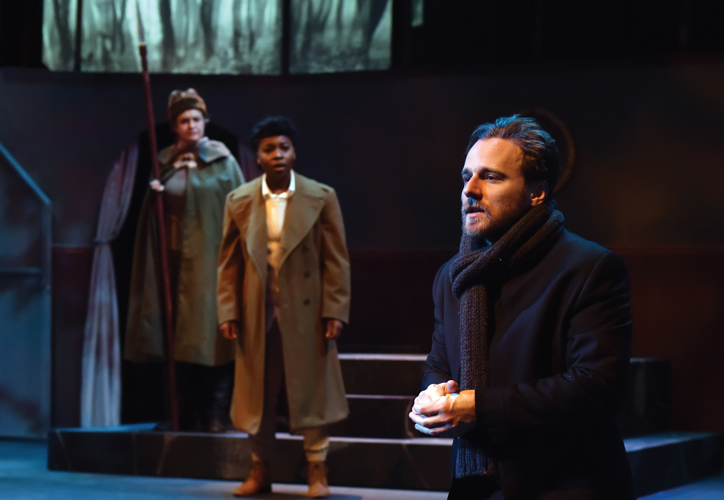
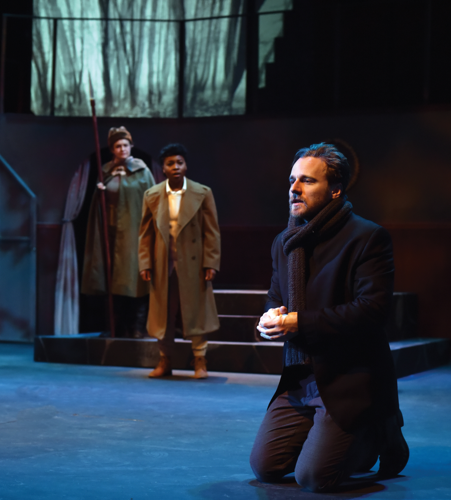
Hicks has certainly brought those values into play in NSF’s new production of Hamlet, which will follow a healthy run at Troutt Theater with a final trio of shows presented in Murfreesboro at Middle Tennessee State University.
The other great tragedies have their pull — Romeo and Juliet’s ill-fated love, Othello’s treachery and betrayal, Macbeth’s perverse ambition and bloodlust — but revisiting Hamlet serves to remind us of the pristine literary brilliance of the Bard at his best. It’s a tale that serves up dark human emotions and a mounting body count that is the result of plenty of action.
Hicks’ direction is tight and features progressive casting touches — both gender-neutral and racially diverse — with fresh festival faces mixing with veteran worthy locals.
The central figure is newcomer Sam Ashdown, whose Hamlet — a quick, wiry, dagger-wielding hipster-ish hero with an inspired gift for declaiming poetry as intelligible speech — is alone worth the price of a ticket. From the moment he perceives something rotten in Denmark, Ashdown lets the audience in fully on his canny descent into madness, reinforced by a gripping pursuit of vengeance that drives the scenario home to its grim conclusion.
In boldly leading the way into Nashville’s winter theater season, Ashdown’s Hamlet is followed by many other excellent performances, including Chelsea Bell’s sensitive Ophelia, Melinda Paul’s steadfast and honorable Horatio and Ethan Jones’ avuncular Polonius, whose death is effectively and affectingly staged, even though we students of Shakespeare know it’s coming. Meanwhile, Audrey Tchoukoua’s Laertes is sympathetic and righteous, and the character’s climactic sword duel with Hamlet offers an additional jolt of tense energy (thanks in part to fight choreography by David Wilkerson). Cheryl White’s Gertrude is a somewhat understated portrayal, yet her big physical scene with Hamlet compels as it should — son desperately confronting mother. Roger Csaki’s Claudius is a slightly dubious villain, almost more priggish than menacing or downright malevolent. Nevertheless, his readings are true enough, and even as a work in progress, he dies a notable death. Santiago Sosa and Andy Kanies are the pastel-clad, bow-tied-but-functional nerds Rosencrantz and Guildenstern, and filling out the ensemble in a variety of key lesser roles are Brian Webb Russell, Lauren Berst and Shawn Knight.
Sam Lowry’s multilevel set is a successful exercise in minimalist artiness, enhanced by ghostly projections. Jessica Mueller’s costumes have a contemporary air but also colorful distinction in their designs and accessories. The original underscoring is appropriately pensive, with piano by Natalie Bell and guitar flourishes by Jack Kingsley.
It didn’t take 30 years for NSF to get this good, but as a glimpse into the company’s future, this Hamlet is a hopeful harbinger of continuing high quality.
Email arts@nashvillescene.com



