
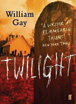
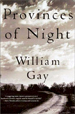
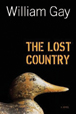
In just over a decade, William Gay has gone from being an unpublished drywall hanger to one of Tennessee's most acclaimed living writers. Often compared to writers such as William Faulkner, Erskine Caldwell and Thomas Wolfe, Gay was born in 1943 in Hohenwald, Tenn. After living in New York City and Chicago in the 1960s and '70s, he returned to his hometown—where he still lives—to work in construction by day and write fiction by night. His first novel, The Long Home, won the 1999 James A. Michener Memorial Prize. He subsequently published two novels, Provinces of Night and Twilight, and a book of short stories, I Hate to See That Evening Sun Go Down. In 2007 Gay was named a USA Ford Foundation Fellow, and in 2010 he will publish his fourth novel, The Lost Country.
Edgewater, the protagonist in your new novel The Lost Country, is a guy getting out of the Navy and traveling around a bit—an experience you yourself had as a young man. How much of the character is autobiographical, and are there other autobiographical elements in the book?
There probably are. I'm probably closer to Edgewater than any of the other characters I've written about. Edgewater is like an alternate me. Philosophically we're similar; he looks at things the way I used to when I was younger. When I got out of the Navy, I'd already been writing, and it was my idea to bum around, have what adventures I could and then write about them at my leisure.
And I thought in order to be a writer you had to leave where you are from and see other places. I thought all novelists had to go to New York City, so I was in New York for a while, but not much was happening. Then I lived in Chicago—I worked there in a pinball machine factory for a while. I eventually came back here, met a girl; we got married, started having kids, and I had to find a way of making a living. I wound up being a carpenter, a drywall hanger and different aspects of construction work. All the time I was writing on the side, writing at night, typing things up, trying to get an agent. It was only when I started writing about things I was familiar with that anything clicked, that it started to feel right. When I started writing about the sort of people I grew up with, hung around the pool room with, drank with, it just rang truer. I could tell it was better right away.
What was that like, going from working construction to being a famous novelist?
I'm still a little surprised by it, frankly. I was a member of Cormac McCarthy's cult audience back when Cormac was not cool, when no one read him hardly. I thought it would be great to have a cult audience. Not a lot of people, but enough to buy the book so that it would encourage the guy who published it to publish the next book. That's what I expected. I expected a few decent reviews, but there were actually more than I expected. And they were frankly better than I had expected.
I try not to think about what it's like being a writer and living here. I tried not to ever have that mentioned. It sounds ridiculous, but that's what I thought—that if I don't talk about it, no one will know. I thought everything would continue like it was, that I could go to the convenience store to buy a six-pack and a pack of cigarettes and not get into a literary discussion about who the characters were in some book and if they were based on real people. But it's hard to stay under the radar, you know.
Do people recognize you now around town?
Right [when] I began to get published, this woman asked if I had someone who helped me with my writing. I said, "What do you mean by that?" And she said, "Well, I knew your family a long time, and they're not that smart. I knew you when you were younger, and you're not that smart. I was wondering if you had somebody who took out the little words and put in the big words."
What did you say to that?
There was nothing to say. I just turned my head and walked away.
Most of your novels and stories revolve around a fictional town in rural Tennessee called Ackerman's Field, sort of like Faulkner's Yoknapatawpha County. Was that a conscious decision, or did it just emerge that way?
It was more of conscious decision. When I was a kid we lived in a place called Grinder's Creek. We didn't have a car—I grew up pretty poor—so on Sunday we used to walk to my grandmother's house. And we went through the woods to get there, and we always went through this big field where there used to be a house. I asked my father what was the name of that field, and he said it was Ackerman's Field. That stayed with me, and when I needed a town in my first published novel, I made my town Ackerman's Field.
And a lot of the stuff in my stories takes place in this really wild place called the Harrikin. It was a huge area of land that was owned by absentee companies. No one could buy or sell land there; nobody built there. At one time there were iron ore mines and a smelter there, but they had been abandoned when the iron ore ran out, and the people left, too. It was just abandoned. I accidentally discovered it years ago, looking for a place I could prowl around in the woods and not walk up into somebody's backyard. I fell in love with the place. I would find places where those old houses used to be. And it was like you could pick up vibrations or something from the lives that had been lived there. All the hard times they had, the ups and downs. Like it was still alive.
In your new book, you have some of the action take place outside Ackerman's Field. That's sort of a departure for you.
I do start it in different places, but by partway through Book Two it's back in Ackerman's Field. Edgewater has met the person he's going to marry—disastrously, by the way. Edgewater is a dead serious guy, but Rooster Fish, the other chief protagonist, is sort of...a lot of funny stuff happens to him. He's not quite comic relief. I like to write comic things, even though it's usually pretty dark.
There's certainly not a lot of humor in your earlier work. How do you think your own writing has changed?
I was a slow study; it was hard for me to learn a lot of things because I was kind of stubborn. And when editors would take the time to respond personally to my stuff, they said, "You need to stop using metaphors and similes and get on with the story. You're describing storms and weather, and this quasi-poetic stuff is slowing things down." But I love language. That's the fun of it, thinking of new phrases and new twists on old phrases. I still do that. How it's changed—I think it's tightened up a lot. I saw that I was overwriting a lot. I tried not to do too much of it but still keep the mythic quality that I wanted.
Did you have anyone around reading and helping you when you were getting started?
I was pretty isolated. I was like a gay guy in the closet. If you're working construction and you go out on Monday where the guys are talking about the football game or skinning a deer, you don't pull out the sonnet you wrote over the weekend and read it to them. It was compartmentalized. Everyone was surprised when I began to publish stuff. No one was really interested, frankly. Most people close enough to me to know about it. I think they considered it a harmless aberration, like a hobby, something I did for my own entertainment.
That was never my design. In seventh grade, I first read Thomas Wolfe, and that determined what I would be, whether successful or not. I had a teacher who noticed I was reading a lot of books, but he didn't think the books I was reading were very good. And so he asked me one day if he gave me a book would I read it, and I said yes. And he said if you read it you can have it, and he gave me Look Homeward, Angel. I was mesmerized.
To read a longer version of this interview, as well as an excerpt from William Gay's forthcoming novel, The Lost Country, visit chapter16.org, an online publication of Humanities Tennessee.
Email arts@nashvillescene.com.



