

In the Club is a recurring series in which the Scene explores local social club offerings.
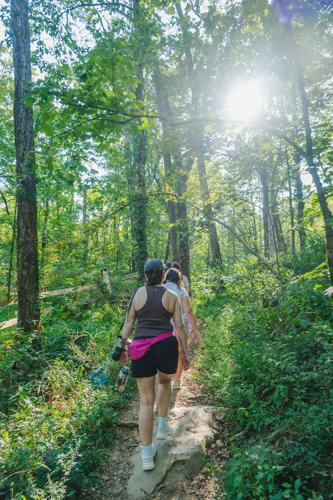
In May, when the Feminist Bird Club Nashville met for a walk at Shelby Bottoms for the first time, more than 60 people showed up.
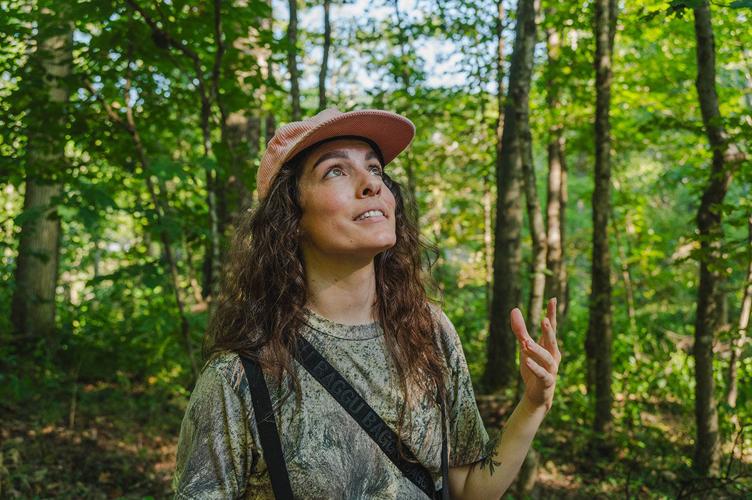
Bird-watching (or “birding”) groups tend to trend “pale, male and stale,” observes Feminist Bird Club Nashville co-founder Liz Clayton Fuller. She and fellow bird enthusiast Kristen Englenz had applied to the national Feminist Bird Club organization around the same time, and worked together with Jennifer Dickinson to start the Nashville chapter this year.
“My interest in birds is very relaxed, and I just like to be where I’m at and enjoy nature,” Fuller tells the Scene. “It didn’t really feel like there was a space explicitly for that, and also a space where people could come who shared the values of intersectional feminism.”
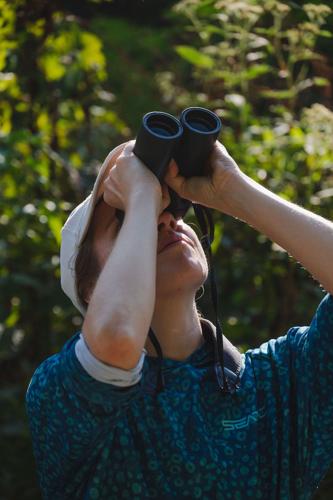
The club also doesn’t require any expertise or gear. They offer binoculars to borrow, and go on short walks on greenways in an effort to keep their approach accessible. The group also puts on Bird Bingo events to raise money for causes in line with the Feminist Bird Club ethos.
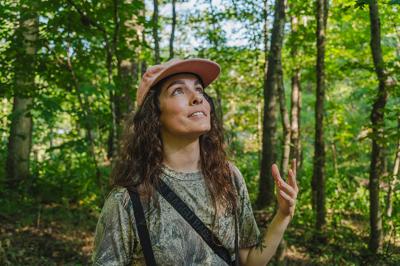
“We hope to be a welcoming space for people to say, ‘Hey, I see something — I have no clue what it is,’ and then knowledge gets shared,” Englenz says. “Hopefully, that positive experience just encourages people to go out more and share that love of nature and learning.”
For Fuller, it’s all birds all the time. Their experience started in a scientific illustration class in art school, and today they’re a bird-drawing specialist. Fuller has their own freelance illustration business, and also draws birds for textbooks and field guides as part of their day job.
“I just started painting birds because they were nice to look at, and that has literally snowballed into my entire job,” Fuller says. “I’m lucky to have pulled on that thread.”

Birding walk
To unwind from a day of scientific drawing, Fuller makes whimsical drawings of birds wearing outfits.
“I illustrated a chickadee in a ’90s power pantsuit the other day, and I’m really, really happy about how that turned out,” Fuller says.
Each bird enthusiast can name a “spark bird” — a bird that got them interested in birding. The term “bird-watching” is largely interchangeable with “birding,” but sometimes birds are heard but not seen — and some people have strong feelings about the semantics.
Many of the Feminist Bird Club regulars got more interested in birds during the pandemic.
“I noticed with the lack of human sounds like planes and cars and everything, you could hear so many more birds, and so I think that kind of kicked off a wave of bird appreciation and birding amongst different people,” Englenz says.
For Dickinson — whose spark bird is the red-winged blackbird and its synthesizer-like call — an app called Merlin Bird ID has been key. Take a picture of the bird or a recording of its call, and the app will identify it for you.

Kristen Englenz
Englenz’s journey with birding began with imitating the Canada geese in her childhood yard, and was bolstered by her love of the 1996 film Fly Away Home. Today the singer-songwriter admits that audiences at times enjoy her bird calls and drawings over her songs. Englenz also produces an educational YouTube channel about birds called Caterwauling With Kristen.
While birds can be intimidating, or even viewed as villains by some, for the founders of the Feminist Bird Club in Nashville, there’s no such thing as an unlikable bird.
“I think every bird is a good bird, and I kind of want to stand up for any birds that are maligned by people, because we’re in their space,” Fuller says. “I’m a fan of them all. I think that we impose a lot of human morality onto birds, and cowbirds are just living their lives and trying to survive.”

Tens of thousands of the birds stop off in Nashville each summer on their way to South America
Birding is a year-round hobby, but a special time in Nashville is purple martin season, when tens of thousands of the birds roost in the city on their way to South America each summer. During the most recent purple martin visit, club members volunteered to keep watch over the roost and educate visiting people about the visiting birds.
Like humans, birds are social creatures. When woodpeckers drum on the trees, it’s not just to find food — it’s to communicate with each other. Each kookaburra family has its own song that they teach to the youngest of the flock. Different birds know each other’s alarm calls to alert each other to a predator, like a snake or an outdoor cat.
The Feminist Bird Club founders hope the club will be a way for people with similar values to be social, too.
“It’s a walk where you’re looking at birds and having a nice time, but you’re also finding community, feeling seen,” Fuller says. “And then there are these opportunities for us to make these societal changes that we’re all aligned on as well.”



Post a comment as anonymous
Report
Watch this discussion.
(0) comments
Welcome to the discussion.
Log In
Welcome to the discussion.
Keep it clean. Please avoid obscene, vulgar, lewd, racist or otherwise abusive language. Comments featuring hate speech or threatening or violent content will not be tolerated.
PLEASE TURN OFF YOUR CAPS LOCK.
Be truthful. Don't knowingly lie or mislead.
Be proactive. Use the “report” link on any comment that violates our comment policy.
Share with us. We'd love to hear your feedback.