
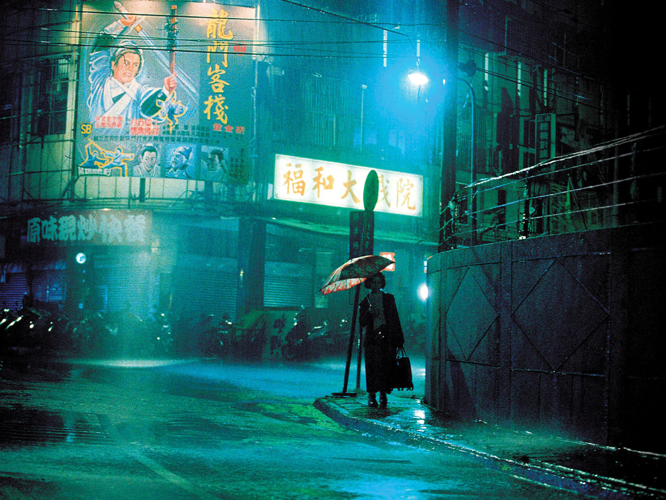


Tsai Ming-liang, more than any other contemporary director, understands water. Dripping, pooling, cascading from the skies, hurtling curbside down every street, measuring time as surely as a clock or the celluloid pulled through a projector does. Taipei, Taiwan’s Fu-Ho Grand theater is a shelter from the downpour in the way that humanity has always sought a dry place to just hang out and be dry in — but we’ve complicated the scenario with our art and obtrusive instincts and with candies and corn and, because this is a film from the Aughts, cigarettes.
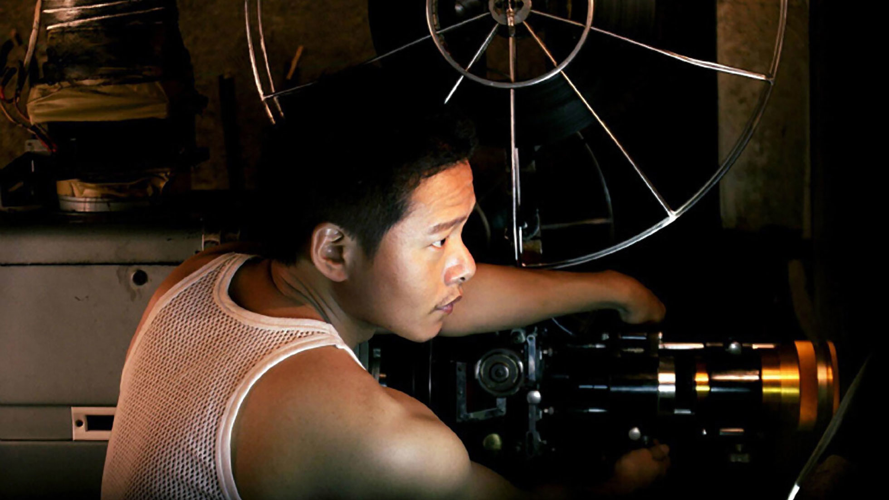
Since making movies involves illusion and sleight of hand so that nothing registers beyond the frame, showing movies requires similar rituals, though they’re not nearly as glamorous. For a poetic meditation on the nature of cinema and the theatrical experience, Tsai’s 2003 film Goodbye, Dragon Inn (the original title translates as “No Leaving”) does a great job at depicting the countless little rituals that go into making a movie theater work. The countless procedures going on behind the scenes (often quite literally) are a riff on the film-school axiom about editing — if it’s being done right, the viewer doesn’t even notice it. Emptying trash cans and mop buckets, maintaining snack resources, making sure everyone is having a good time — it’s a very specific kind of job that, when depicted on screen, is usually played for laughs. Not so here. At times, one could imagine a David Attenborough-style narrator deployed to map out the ecosystem of the movie theater, so rigorously composed and tonally exact are the proceedings.
The Fu-Ho is a presiding sprawl of a theater going to seed, and it’s easy to imagine a time when its efficient majesty was a gem in Taipei’s social scene. Single-screen movie caverns were already a rarity in the ’90s, so by 2003 this theater was already a dinosaur inviting the imaginations of patrons and passersby alike to slip back in time. So for the last night before it all closes down, the theater is screening a classic. King Hu’s 1967 Dragon Inn is a barnstormer of a film, a wuxia epic about family, betrayal and bureaucracy.
The theater patrons are a motley bunch. Loud snackers, frustrated cruisers, forgotten stars, ghosts. At times it’s very difficult to determine who among the few folk in the theater’s fading seats are actively alive and who are recursive fragments of past experiences. Even among the theater’s two staff members it’s hard to discern the assertive traits so often used to define narrative agency. Routine can become a surprisingly comfy cushion, even if we know, ultimately, we’ll be sitting on it alone. The ticket lady’s kindnesses are the foundation for the understated grace and diffuse horniness that comes to power what’s happening on screen, as well as what’s happening to the audience — both those watching Dragon Inn and those watching Goodbye, Dragon Inn.

The 4K restoration does something interesting, beyond crafting a dialogue between the speckled, vintage film print of Dragon Inn that the Fu-Ho is showing, the 2003 negative that Tsai and his cinematographer Liao Pen-Jung shot, and the current high-end digital exhibition standard of 4K DCP. (It’s a visually elegant illustration of what the old Mr. Show sketch “The Pretaped Call-In Show” was putting across about the shifting nature of media and how we perceive it.) It does, from the tech end of things, what happens within the film when we see Jun Shih watching Dragon Inn, or Miao Tian having brought his grandson to the screening. Both were actors in the original film, now experiencing something fraught, and so intertextual there isn’t even a name for it, and it’s completely overwhelming, yet somehow soothingly chill.
There’s a feeling that cinema excels at conveying — a collective isolation that paradoxically allows a viewer to experience art on an individual basis, even when surrounded by others (the Eraserhead effect), while at the same time providing a soft, slack link between everyone who ever watches a film at any point in time. Because film depicts the act of living, to view a film while alive creates a connection. And that connection is what Goodbye, Dragon Inn excels at. The film has never played Nashville before, at the old Belcourt or at Sarratt, yet I have memories of seeing it there. It wouldn’t have played a press screening at the 2003 New York Film Festival at both the Walter Reade Theater and in Alice Tully Hall — but memory disagrees, letting fuzzy edges and the comforting casserole of the past turn us all into the unreliable narrators of our experience.
The only thing concrete about the film is that which was used in construction of the theater and the city around it. This is a trippy, elusive and ultimately very moving film that will start pollinating your dreams and quite possibly change the way you experience going to the movies. See it with someone you would climb untold stairs to share your lunch with.



Post a comment as anonymous
Report
Watch this discussion.
(0) comments
Welcome to the discussion.
Log In
Welcome to the discussion.
Keep it clean. Please avoid obscene, vulgar, lewd, racist or otherwise abusive language. Comments featuring hate speech or threatening or violent content will not be tolerated.
PLEASE TURN OFF YOUR CAPS LOCK.
Be truthful. Don't knowingly lie or mislead.
Be proactive. Use the “report” link on any comment that violates our comment policy.
Share with us. We'd love to hear your feedback.