
Olivia Wilde’s directorial career has been fascinating to follow. Her 2019 breakout Booksmart surprised audiences and critics alike, showing the world that she was an actor-turned-director to watch. But her follow-up, 2022 social thriller Don’t Worry Darling, featured a rumor-plagued production and was met with a lukewarm reception. Wilde has taken a step back to a more intimate setting with The Invite, proving that her first film’s success was not a fluke.
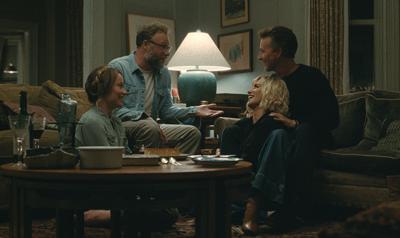
The Invite follows married couple Joe (Seth Rogen) and Angela (Wilde), whose tempestuous relationship is already on the rocks when they decide to host their eccentric neighbors Hawk (Edward Norton) and Piña (Penélope Cruz) for dinner. What follows is a hilarious, awkward and emotional exploration into Joe and Angela’s marriage as they receive a proposition that could rekindle their romantic flame — or snuff it out entirely.
Wilde’s direction is on point. The film’s opening is a wonderful stylistic tribute to late-’60s and early-’70s cinema, and the slick aesthetic extends into every avenue of the film’s look. Wilde constantly frames the two couples in mirrors, doorways and windows, engineering a creatively claustrophobic sense of place. In her blocking, she often cordons off Joe with Piña or Angela with Hawk, playing with the intimate spaces each character occupies and adding chuckle-inducing sexual tension. All of the film’s actions play out within a single apartment, but never once does the location feel boring or stale.

Olivia Wilde’s latest directorial effort opens wide this week
With such a small cast, every performance needs to be strong, and everyone is at their best here — even if Rogen steals the show, as he gets some of the script’s wittiest lines, and delivers them drenched in sarcasm. But each actor plays excellently into their character’s quirks. Wilde’s anxious people-pleasing energy, Norton’s disarming vulnerability and Cruz’s equal balance of intelligence and seductiveness add to the whip-smart dialogue.
What Wilde has done here is tremendous: She’s made a sharp, humorous dramedy with a bittersweet gut-punch of an ending — reinforced with classic cinematic stylization, making it as timeless as her inspirations.



