

Not going to lie: It feels weird to gather together the interesting things in the realm of Blu-rays, books and Ultra HD given what all is going on in the world. But after The Devil Wears Prada 2 wrung me out to dry with a very real focus on what being part of the mediasphere is like these days, I’m grateful to have a venue for this. And I’m glad to maybe direct your attention to some interesting things in the non-streaming realm.

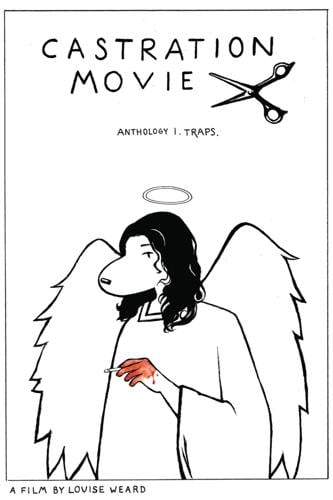
Castration Movie Anthology I: Traps (Muscle Distribution Blu-ray)
One of the most important statements in current trans* cinema, Louise Weard’s multipart epic (Anthology III comes out later this year) is an expansive, extended look into how people are living right now, and it’s essential viewing. Over the course of Anthology I’s two-disc, five-hour soak in this moment in history, you’re going to encounter nearly every kind of story that you could imagine: psychodrama, tragedy, cringe comedy, the most wrenching truth that you’ll feel like a trespasser for witnessing, deadpan physical comedy, and a sense that you’re seeing something special. Muscle Distribution does CMA1 right, with an array of supplements and commentaries that give you an almost cosmic sense of context. Given how genuinely scary things are right now, a work of art this defiant and singular is something that anyone interested in the possibilities of what film can do should check it out. And major snaps to upstart distributor Muscle for showing physical media the respect it deserves.

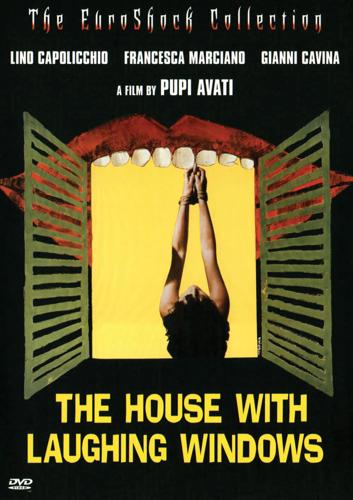
The House With Laughing Windows (Arrow UHD) / The Stendhal Syndrome (Vinegar Syndrome UHD/Blu-ray)
It’s thematically overwhelming to have two of the greatest horror films about art to surface in super-stacked special editions — this is about as perfect a double feature of Italian genre cinema as you could want. Pupi Avati’s 1976 The House With Laughing Windows is an irresistible slow burn about a remote Italian town with a secret, where art restorer Stefano finds himself working on refreshing a painting that bears witness to an unspeakable crime. Dario Argento’s 1996 The Stendhal Syndrome (his last truly great film) is about the mesh of great art and incapacitating trauma, when police inspector Anna Manni pursues a serial sex criminal into the psychological space that suffuses some of the greatest works of art in human history. Both films ask very difficult questions about what it means when it becomes impossible to separate the darker sides of the human experience from incredible and enduring works — the former literally, the latter in a more expansive and figurative sense. House is the more accessible of the two, and the more easily recommendable. But Syndrome really is an incredible work of art about metabolizing rape trauma and exorcising it through the visual arts in ways both respectable and grotesque. (It’s also a problematic film both for what it is and what it represents, as star Asia Argento — the director’s daughter — is a very complicated figure, and one who requires some extensive research to discuss.) But both films, presented in remarkable restorations with heaps of comprehensive extras, are touchstones in using the iconography and tools of horror to get at art with bloody, brutal insight. [Critic’s note: Though The Stendhal Syndrome was mostly shot with the performers speaking English on set, it is entirely post-synced by an unrelated dubbing cast. It is essential to watch it with its Italian audio and English subtitles, because it features Argento’s actual vocal performance, and it makes so much difference.]

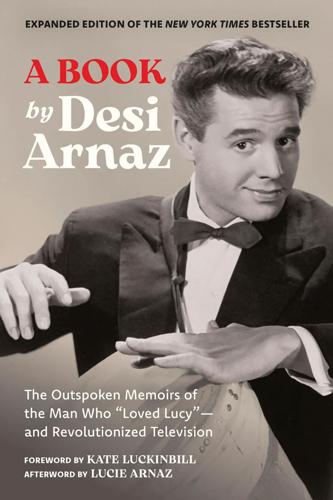
A Book by Desi Arnaz — Expanded Edition (Hachette, also available in Spanish)
I guarantee you know someone who loves Lucy. Even today, the legacy of I Love Lucy, both as TV history and as a cultural document, endures, and there are all manner of books, films and websites devoted to this particular aspect of 20th-century media. And now, after 50 years, the public is getting expanded primary sources, with Desi Arnaz’s 1976 autobiography back in print with a whole bunch of added material (including extensive extracts from what would have been a second volume, which includes Arnaz’s thoughts on the Cuban revolution and perspective from daughter Lucie Arnaz Luckinbill). This isn’t a trashy tell-all, nor is it reputation-burnishing hagiography, but something we don’t tend to get in modern autobiography — a fascinating life, interestingly told, that enriches our understanding both of I Love Lucy as a cultural phenomenon and what it meant to be a Cuban émigré in the ’50s while living life in the public eye. This is a work, especially in this new variation, that delivers a lot of information about a time and social space that (unless you grew up in it) you would not have ready access to. This was quite a surprise, and a captivating read.

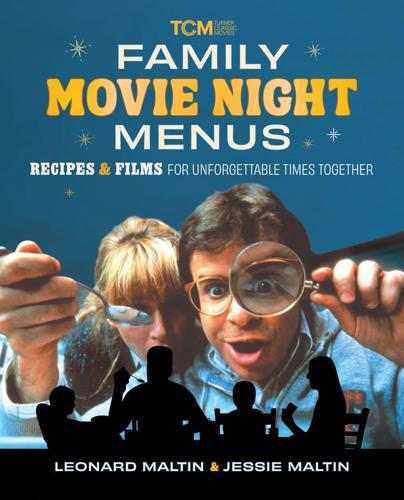
Family Movie Night Menus by Leonard and Jessie Maltin (Running Press)
There was a lovely time, long ago in the history of the Nashville Film Festival, when I got to meet Leonard and Jessie Maltin at a jurors’ luncheon. The father and daughter were a charming twosome — informed, friendly and devoted at a genetic level to making sure people have good and productive experiences at the movies. This book, which finds a way to build menus (with eminently possible recipes) around films, facilitates a dinner-and-a-movie night for anyone who wants to take strength in gathering their nearest and dearest together for a good movie and a good meal. It’s a great and practical idea, with the kind of approachable and knowledgeable vibes one expects from the House of Maltin. As someone who loves sharing film and food with others, I find this is a great text to have around in the kitchen (or next to your TV or projector).



Post a comment as anonymous
Report
Watch this discussion.
(0) comments
Welcome to the discussion.
Log In
Welcome to the discussion.
Keep it clean. Please avoid obscene, vulgar, lewd, racist or otherwise abusive language. Comments featuring hate speech or threatening or violent content will not be tolerated.
PLEASE TURN OFF YOUR CAPS LOCK.
Be truthful. Don't knowingly lie or mislead.
Be proactive. Use the “report” link on any comment that violates our comment policy.
Share with us. We'd love to hear your feedback.