


The Oscar nominations were announced this morning, revealing which films from the past year will be up for awards at the hostless ceremony on Sunday, Feb. 24.
As ever, there are things to celebrate (The Favourite! Roma! Black Panther!), things to be confused by (Bohemian Rhapsody?) and things that make us want to throw our computers out the nearest window (no women nominated for Best Director, no nomination for Ethan Hawke).
We saw and wrote about a lot of movies this year, some of which you may have missed. So if you're trying to play catch-up, allow us to help out. Here are our reviews of some of this year's Oscar-nominated films, and our praise for a few that were snubbed by the Academy.
Best Picture
The Favourite Is Gutsy, Bracing and Refreshing
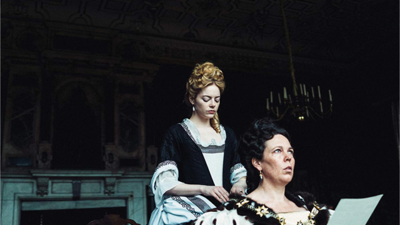
At the heart of The Favourite are three women: Queen Anne (Olivia Colman, forever the long-suffering Sophie of brilliant British comedy Peep Show); her adviser/designate/lover Sarah Churchill (Rachel Weisz); and Abigail Masham (Emma Stone), a former child of privilege now struggling to climb out of the gutter and into some sort of noble position at court. Far too often, when political intrigue uses chess as a metaphor, it forgets the queen’s versatility and freedom of movement. Rest assured, The Favourite does not do so. This film understands its metaphors, and each of these women touches more points on the emotional continuum between splendor and suffering than entire casts of other films do.Vice Is a Frenetic Portrait of Dick Cheney, Devious SociopathAll three leads are dynamic women. None are victims. None are saints. Each navigates her own path — among several moral compasses. There’s scheming and soft-collar sadism and skullduggery about taxation, but also cake and dance parties and fleshy pleasures.
And now we have Vice, wherein Adam McKay — responsible for writing some of Will Ferrell’s most ridiculous moments both on Saturday Night Live and the big screen — goes full Oliver Stone with a frenetic, frazzled biopic of polarizing former Vice President Dick Cheney. (Never mind that Stone already covered this territory a decade ago with the George W. Bush biopic W.) I have a feeling McKay saw W and thought Stone didn’t go hard enough on Bush’s administration. That could explain why the director characterizes Bush & Co. as a bunch of rubes being worked by Christian Bale’s Cheney. Bale goes gleefully Method here, and it’s kinda ironic to see Batman — pounds packed on and head shaved — working as the Joker of the GWB administration. He’s an agent of chaos who just wants to see the world — or, at least, the Middle East — burn.BlacKkKlansman Melds Comedy and Tragedy With Thought-Provoking Results
As far back as I can remember, the now-veteran black filmmaker has spent his career trying to tell y’all that some white people have done and are continuing to do some sinister, racist shit. But considering how shocked and surprised many were at Trump’s election, it would seem that Lee’s words fell on deaf ears. Many white folks are currently going to great lengths to expose their ass-backward prejudices, usually in the most insanely stupid ways. (Please tell me you saw the video a black dude captured of a white dude calling him the N-word from his van — a van that has the name of his business and his phone number printed on the driver’s side door.) With BlacKkKlansman, Lee is simply reminding us not only that extreme racial intolerance has been around for decades, but also that it’s practically as American as apple pie.Black Panther Is a Push in the Right Direction
Who are you? That question is asked throughout the 18th installment in the Marvel Cinematic Universe. For the newly appointed king of the technologically advanced nation of Wakanda, T’Challa — played by biopic-actor extraordinaire turned household name Chadwick Boseman — that question comes abruptly after the death of his father, T’Chaka. (If you haven’t already, watch Captain America: Civil War. You’ll have questions otherwise.) In his first act as king, T’Challa attempts to find arms dealer Ulysses Klaue (Andy Serkis). While tracking him down, T’Challa discovers a dark past that his father kept from him. The Black Panther must now deal with the sins of his father and become not only the king W’kanda needs, but the hero the world needs.CGI is obviously a crucial aspect of contemporary superhero movies, and director Ryan Coogler and his team have done an amazing job in portraying the beauty of Wakanda along with the nation’s impressive technological advances. The culture and people of Wakanda are portrayed as strong, confident and self-possessed — these characters don’t get the hopeless, oppressed Third World treatment, as fictionalized Africans so often do.
Also:
Black Panther Has Changed Black Cinema Even Before Its ReleaseBest Documentary
Talking to the Directors of RBG About the Iconic Ruth Bader Ginsburg
RBG is everything a fan could want, including footage of the fit 85-year-old planking (!) and a peek into her closet to see her diverse collection of jabots, or judicial collars. (She wears the Cersei Lannister-looking one when she issues dissents.) But the film is also instructive. Ginsburg has spent decades moving the needle inch by inch. Equality is a long game, and if you hope to keep fighting into your 80s, you better start working out. The Scene spoke to West and Cohen by phone.
Best Foreign Language Film
Shoplifters Is a Wellspring of Emotional Complexity
Kore-eda’s fable, which focuses on a de facto family of laborers who moonlight as petty criminals, is at its best when documenting the deviant acts its protagonists carry out in broad daylight. Their actions — their very way of existence — go unobserved by the outside world until Kore-eda’s camera gives us a closer look. This family’s lifestyle may be jury-rigged, but Kore-eda’s filmmaking is anything but. His patient compositions are often compared to those of the late Japanese director Yasujiro Ozu, but the detailed images and devotion to those who make a life at society’s margins also bring to mind the French anarchist and “poetic realist” filmmaker Jean Vigo.
The Polish film Cold War, also nominated in this category,
opens at the Belcourt next month.
Best Animated Feature
Wes Anderson's Isle of Dogs Is a Cinematic Marvel That Raises Some Questions
Naturally, Isle of Dogs is beautifully composed, as careful with symmetry, delicate detail and color coordination as anything Anderson has made. While Anderson’s first foray into animation, 2009’s Fantastic Mr. Fox, was rich with autumnal colors and cleverly crafted miniature sets, Dogs is even more intricate, an absolute marvel of painstaking construction. Watching Fantastic Mr. Fox, you might chuckle at just how sharp and well-designed the characters are, but watching Dogs, you’ll feel delight as you frequently forget that these seamless scenes were shot in stop motion. How could Anderson and animation director Mark Waring create such a fluid feature via such a grueling process? An overhead-shot sushi-preparation sequence could stand on its own as an award-worthy short film. It is a wonder.But since its debut at a couple of festivals and its limited-release opening last month, Isle of Dogs has caused some critics to raise questions of cultural appropriation and racial stereotyping. “Bluntly put, does this white American filmmaker’s highly selective, idiosyncratic rendering of an East Asian society constitute a sincere act of homage, or a clueless failure of sensitivity?” asked the Los Angeles Times’ Justin Chang. “In a movie where the leads are largely inhuman,” wrote Mashable’s Angie Han, “it’s the humans who end up feeling like the inscrutable foreigners.”
Snubbed
Damien Chazelle Pulls Off First Man With Great Technical Skill
Chazelle’s First Man is packed with moments of high tension inside the cockpits of massive spacecraft, which rumble and groan under their own weight as the camera remains fixed on the dispassionate faces of astronauts. Those moments are interspersed with the occasional Malick-esque sequences of mid-’60s domestic life, all of them gorgeously shot. Ryan Gosling tamps down the star power we saw in La La Land to play the even-keeled Armstrong, a reluctant hero who famously ducked the spotlight throughout his life. He was a brainy Ohio native, a pilot with the Right Stuff, and here Gosling simply delivers an impossibly handsome version of that. The death of Armstrong’s young daughter Karen in 1962 serves as the emotional engine of the film. A movie about remarkable human achievements would be nothing without actual humans, after all, and even though Claire Foy gives what is perhaps the film’s strongest performance as Armstrong’s wife Janet, Gosling’s stoic anguish gives us non-heroes something to latch onto.Paul Schrader's First Reformed Is a Haunting Meditation on the Faithful Life
Hawke plays Toller with the care of a mother holding her newborn child. The closer Toller gets to full emotional collapse, the more Hawke’s decisions to hold his cards close to the chest pay off. The film lives and dies by Hawke’s ability to generate empathy and angst in dual fashion, and he’s rarely been better. Toller’s journey plays a lot like Pastor Tomas Ericsson’s in Ingmar Bergman’s Winter Light, part of that director’s Faith Trilogy. Whereas Bergman chose to exorcise his personal demons in Winter Light and offered little solace, Schrader takes his reverend on a journey of painful progress and allows more light to slip in through the cracks.You Were Never Really Here Is Brutal, Upsetting and Very Good
Based on a book of the same name by Jonathan Ames (creator of HBO’s Bored to Death), You Were Never Really Here follows Joe (Joaquin Phoenix), a military veteran turned fixer and hitman tasked with tracking down the young daughter of a New York state senator. The girl, Nina (Ekaterina Samsonov, who was 13 years old during filming), has been sold into a sex-trafficking ring, and we watch as the hammer-wielding, PTSD-afflicted Joe attempts to free her. There’s lots of asphyxiation, exploding brain matter and crushed fingers along the way.If Beale Street Could Talk Will Make You Fall in Love Again — for the Very First TimeYou Were Never Really Here is a film of extremes, vacillating between perfect quiet and roaring chaos, between hyperviolence and slow banality. The stark shifts between ferocity and quiet are aided by Jonny Greenwood’s frenetic, pounding and sometimes-dissonant score. The Radiohead guitarist previously collaborated with Ramsay on We Need to Talk About Kevin and was nominated for an Oscar for his work on last year’s Phantom Thread. Just as he did with those films, Greenwood provides the mortar holding together the building blocks of the film.
Beale Street captures the breathless, soaring elation of first love as well as the bitter emotion of trying desperately to protect what’s yours. It will open your eyes to injustice so you’re hot with rage, and it will make you dizzy with longing for the someone or something that makes you feel like you are home, safe, loved. The film shines a light on systemic racism and the tremendous need for criminal justice reform — as much today as in the 1970s, when Beale Street is set. But it’s also a testament to the restorative power of love in black American families.Lee Chang-Dong's Burning Is a Long, Mysterious Slow-BurnBased on the 1974 James Baldwin novel of the same name, Beale Street stars newcomer KiKi Layne as Tish Rivers, a 19-year-old from Harlem who is three months pregnant. The baby’s father — Tish’s fiancé and childhood best friend, Fonny Hunt (Stephan James) — is in prison. He’s been accused of rape, but Tish knows better than anyone that Fonny is innocent — the two were together when the assault happened, and a vengeful cop fingered Fonny for the crime. As in the novel, the narrative oscillates between the story of Tish and Fonny falling in love and the story of Fonny’s imprisonment as the couple’s families do everything they can to secure his release.
Burning is also the rare film that successfully adapts a work by Japanese author Haruki Murakami — in this case, the short story “Barn Burning” from his 1993 collection The Elephant Vanishes. Seeing as how the film is inspired by a Murakami work, that means there will be a mystery, there may be a lot of cigarette smoking at night, and there most definitely will be a cat that may or may not actually exist — and then there will be yet another cat who does exist, but is lost and then found (and in very magical and cute fashion, I might add). Lee is a skilled adaptor, and Burningmarks his triumphant return as director eight years after the excellent Poetry.



