


While watching The Nile Hilton Incident, I was totally convinced I was watching an Egyptian film. I later learned that it’s actually a product of the Arab diaspora in Europe: Director Tarik Saleh was born in Sweden to Egyptian parents, star Fares Fares emigrated from Lebanon to Sweden as a teenager, and the film was shot in Germany and Casablanca, Morocco. Upon realizing how unflattering the script’s portrayal of corruption among Egyptian cops and politicians was, the Egyptian government withdrew permission for Saleh to shoot in Cairo — three days before shooting began. All the production money came from Europe, and it’s essentially a Swedish Arab’s fantasy of a North African film. This is something quite new in world cinema.
It’s January 2011, and police detective Noredin (Fares) is called to the Nile Hilton Hotel, where pop star Lalena has been killed. He discovers the existence of compromising photos that might offer a clue to her murder, but powerful men try to keep them secret. Tycoon and politician Hatem Shafiq (Ahmed Seleem) may be connected to the crime, and meanwhile, protests are breaking out in Tahrir Square. Hotel maid Salwa (Mari Malek) endangers herself by trying to blackmail Shafiq. As Noredin investigates the case, TV news offers a steady hum of reports about the demonstrations of the Arab Spring.
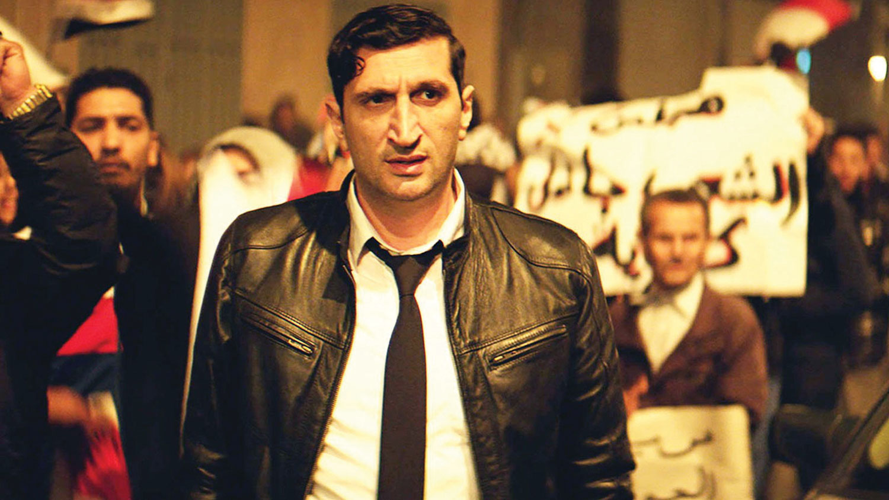
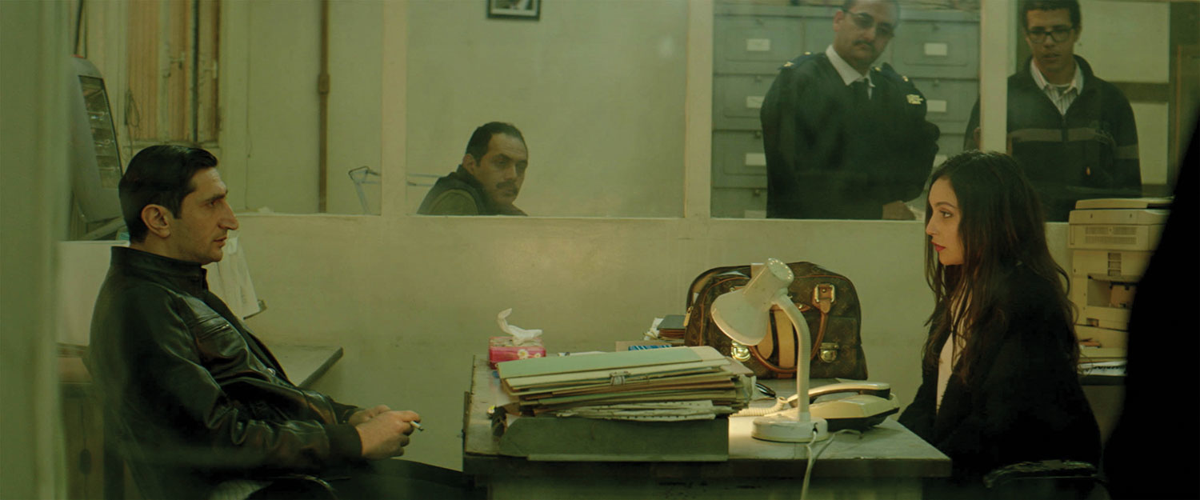
The Nile Hilton Incident is full of familiar elements. Noredin is a world-weary, chain-smoking cop who accepts bribes, self-medicating with with alcohol and marijuana. Fares plays him as a man who hides behind his uniform: His slicked-back black hair, leather coat and tie are his shell, offering a tough-guy machismo like those of the French actors in Jean-Pierre Melville’s films. Why does he seem so emotionally repressed? Well, he says his wife died in a car accident.

As a narrative, The Nile Hilton Incident evokes 1970s American depictions of corruption, like Sidney Lumet’s Serpico and Roman Polanski’s Chinatown. The mystery Noredin pursues puts him in more and more danger, but unlike Serpico, there’s no interest here in setting him up as an iconic hero. Director Saleh emphasizes the political context at every possible turn, and he did a terrific job of restaging the Arab Spring demonstrations in Morocco. He also shows the police preparing to use electric shock to torture suspects, though it isn’t explicitly depicted. If one were ignorant of what actually happened to Egypt after the Arab Spring, the ending might offer an optimistic celebration of revolt — but given the current dictatorial regime, it’s bitterly ironic and cynical.
The Nile Hilton Incident began its theatrical run in the U.S. at the same time neo-Nazis in Charlottesville, Va., were chanting, “Jews will not replace us.” The concept of “replacement” — also used by European racists in regard to Muslims “invading” their countries — is largely attributed to far-right French author Renaud Camus, who has railed against Sweden’s policy of welcoming Muslim immigrants from the Middle East and North Africa.
Well, this film is the product of Sweden’s welcoming of immigrants, and it shows that the nearest contemporary successor to great actors like Jean-Paul Belmondo and Lino Ventura might be a European Arab. Fares delivers one of this year’s most impressive male performances so far, one that lifts this film above the neo-noir clichés that it could have suffered from. I think its very existence — and the prosperity of the people who made it — is Camus’ nightmare, and that alone might be reason enough to see it. Still, it’s a vision of Egypt that may be a fantasy but is no less well-informed in its addressing of subjects like the tormented relationship between Arabs and black Africans.
Email arts@nashvillescene.com



