

Whether a tryptophan hangover, an airport delay, doing time behind the wheel for Black Friday shoppers or hiding in the comfiest bathroom in the house, you’re finding yourself looking for something new to read. And here at the Scene, we are happy to provide you with a whole lot of film to soak in — enough to keep you prepared for the next year or so of movies coming your way, thanks to an insane amount of time spent diving deep in several film festivals (the New York Film Festival, NewFest, the Brooklyn Horror Film Festival and the Knoxville Horror Film Festival) northeast of here over the past few weeks. Part one of this dropped back in October, a streamlined Whitman’s Sampler compared to this heaping buffet plate designed specifically to be referred to whenever something weird or wild strikes your fancy and you’re looking for some guidelines.
There’s always so much worth checking out, and it’s the sad nature of modern publication that not everything gets full, dedicated coverage. So think of this as a series of helpful thoughts about these 40 films scrawled on a series of Post-It notes given to you along with a particularly delicious dish.

From ‘La Bola Negra’ to ‘Club Kid,’ here’s a selection from this year’s NYFF, NewFest and Brooklyn Horror Film Festival
Let’s start with three of the best science-fiction films since Possessor, shall we? Imagine if Vertigo and Ghost in the Shell were the same movie. Not using the big obvious aspects of either, but nonetheless something thematically keyed into classic stories of obsession and shifting technological identities that kick the brain into overdrive but also haunt your waking and sleeping consciousness. The Remotes (NYFF), a Filipino sci-fi epic about the short path between a traffic school app and how LLMs may well unmake the certainty of death, is the kind of triumph that should get everyone excitedly talking. Now imagine a world in which Hounds of Love-era Kate Bush made a Body Snatchers movie. That’s The Unknown (NYFF), and that should have you intrigued ... but here’s a little more. You wake up after an evening of pleasures of the flesh only to discover you have changed bodies with the person you hooked up with. Léa Seydoux and Niels Schneider star, it’s from Arthur Harari (one of the writers of Anatomy of a Fall), and it is an absolute must-see. Night After Night (BHFF), the latest from I Trapped the Devil director Josh Lobo, is an unsettling and rather beautiful steep in a mysterious complex wherein something indescribable is afoot, with only the security guards starting to piece things together. It has the gut-punch elegance of Under the Skin, a sense of workplace horror that hits like Session 9 and an echo of egg-crack cinema like We’re All Going to the World’s Fair, and I cannot wait to see how people react to it.
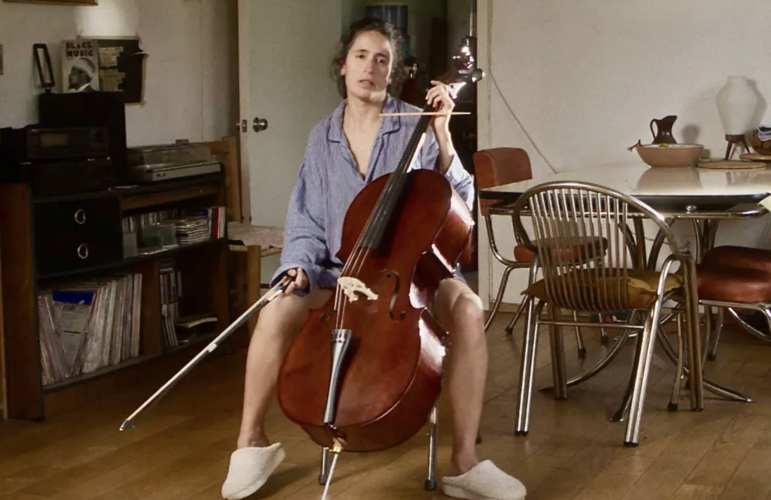
We sometimes talk about little films, not in a pejorative sense, but as a way of highlighting works that deal with adult issues, or that eschew easy marketability. These are films that unfold on a level recognizable to a wider swath of humanity than robot fights, alien invasions or home-decor porn would. The funniest film I saw the whole time spent festivaling, the Mexican film Everything Else Is Noise (NYFF) — the latest from Nicolás Pereda, who made the exceptional meta-narcos whatsit Fauna back in 2020 — is an absolute delight. I could spend three hours with the women in this film just talking about art and the way that their lives and visions intersect, but instead it all works itself out in less than 90 minutes. And the domestic indie Little Doors (KHFF) is a marvel: a no-budget vision of making romance work in a very subtle and effective post-apocalypse. Writer/director/co-star Anthony Oberbeck and co-star Megan Koester deliver something very special here, and as with many of the films in this wrap-up, I hope they get the distribution and attention they rightly deserve.

Everything Else Is Noise
There’s a Kiwi film coming your way called The Weed Eaters (KHFF), and it is something distinctive. At first, you think it’s going to be a typical gut-munching zombie epic, but it is defiantly not. It is instead the story of a group of friends who, while on a little getaway, find a bag of marijuana with the unforeseen side effect of making human flesh absolutely delicious. Rather than skewing raucous gorefest, it instead gets pensive and mordantly funny. While it’s not an exact tonal match, what it most reminds me of is homegrown horror legend Make Out With Violence.
If you’ve ever watched a season of a streaming series and thought, "That was good, but it would have been better focused into a movie," well have I got something for you. The Bulgarian film The Dreamed Adventure (NYFF) is all about low-level criminal operations on and around the border between Bulgaria and Türkiye, and it’s hypnotic. A mystery, a procedural, a chance for old lovers to hash their shit out, a peek inside rival crime organizations and through it all, the archaeologist Veska (Yana Radeva, in one of the best performances of the year) making all manner of things happen. If you’ve ever wondered what a Brundlefly of The Wire and Elsbeth might look like, you need to check out this subtle and gripping Balkan epic.
It is rare that horror anthologies fully cohere and stick the landing. But Grind (BHFF) had the big picture in place before anyone started shooting, letting each of its stories about the gig economy and the structure of income inequality fit together very well. It’s way funnier than you might think from that description, as well as deeply upsetting. Content moderation, review-based delivery apps, shunned Edward Burtynsky-looking warehouses, pyramid schemes — they’re all part of the horrors, and it all feels way too real, even at its most stylized and fanciful.
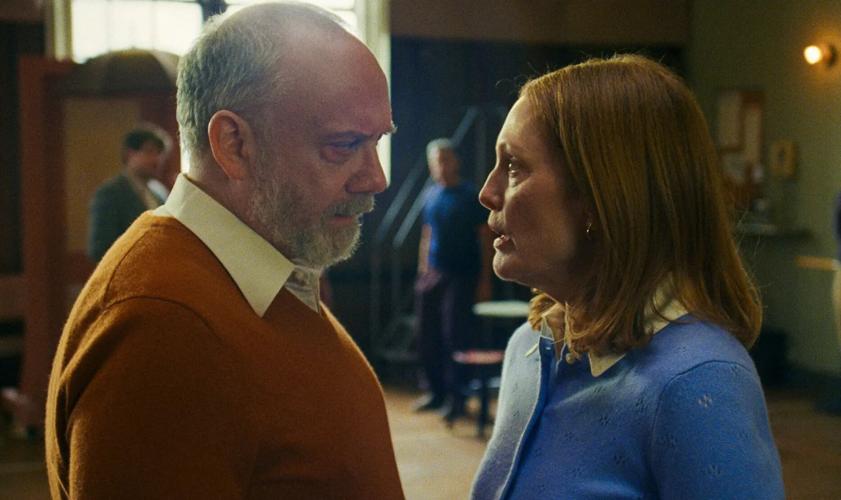
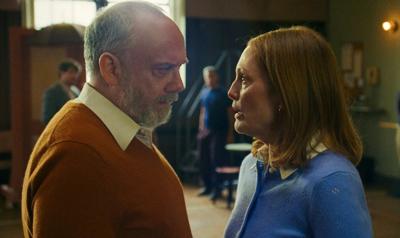
The Debut (NYFF, opening in Nashville on Christmas Eve) is a crowd-pleaser with no shame whatsoever, thankfully. In one corner, Julianne Moore in a triumphant performance as a frustrated wife and mother drawn to local theater as a path to self-actualization. In the other corner, Paul Giamatti as the director who recognizes something in this untested talent. They will meet on the stage of a musical (with songs by the film’s writer-director, Jesse Eisenberg) called Nosy Neighbors, with Halle Bailey and Bernadette Peters along for the ride. For anyone with even a tiny bit of theater in their constitution, this is a must. But even more so, if you love to see high-quality actressing, get yourself a seat and watch Julianne Moore give 160 percent. For some viewers, this film will be hell on earth. But I’ve never seen a film get a thunderous ovation in the middle of the movie before, and I remained on board in its wild and weird New Jersey of the soul.
Werner Herzog is back in narrative mode, and he brought the Mara sisters along with him. Bucking Fastard (NYFF) is weird and wild, and you’ll know in about five minutes if it’s for you or not. I found its story of two sisters who speak in unison, trying to find their own way in the world around us, to be deeply felt as well as oddly amusing. It’s both funnier and more contemplative than you might expect, and it’s always fun to have Herzog change up his m.o. every now and then.
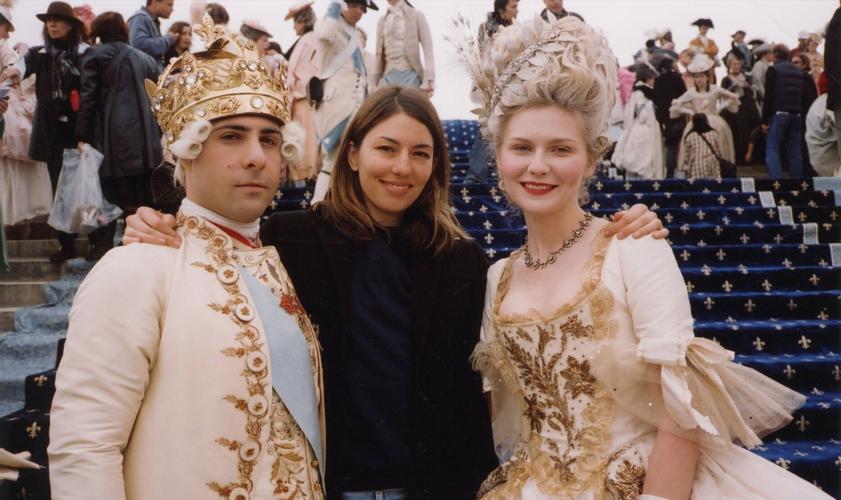
Making Marie Antoinette (NYFF, Nov. 29 at the Belcourt) is a fascinating and immersive experience. A tribute to Eleanor Coppola’s patient and exacting eye as well as Sofia Coppola’s tenacity on the set of 2006’s Marie Antoinette (playing in its new 4K restoration Nov. 29 and 30 at the Belcourt), this is the kind of documentary that gives you a lot as a spectator: definitely a fascinating lens through which to view the film itself, but also the way that film sets behave differently with women in charge. I would call it essential viewing even for people who aren’t huge fans of Marie Antoinette; Marianne Faithfull simply presides and dispenses words of wisdom, and there’s a tiny moment in which the film ponders the similarities and differences between Coppola Italians and Argento Italians that I wanted more of (not because of tension or unease, but because my late Sicilian great-uncle also told me to pay attention to the way Italians talked about one another when they thought no one else was paying attention). The outfits and food are so much more opulent than you could possibly imagine, and you come away appreciating the breadth of the entire Marie Antoinette experience.

Making Marie Antoinette
There’s a kindhearted Austrian drama called The Loneliest Man in Town (NYFF) that feels tailor-made for the Belcourt’s Music City Mondays series. It’s about rockabilly musician Al Cook, who finds his life turned inside-out and all of his certainties fallen by the wayside. It’s the kind of film that if you’re a guy who never really pursued the family thing and who considers your record collection to be your children, you may well feel called-out; I sure did. But this is a sweet and subtle film about human decency (if you dug 2012’s Museum Hours or you dig the films of Aki Kaurismäki, this is absolutely your jam) that I think would resonate in a lot of local hearts.
Corpus (BHFF/NF) does an exceptional job of tangling unresolved feelings with intricate supernatural conspiracies, as well as demonstrating that the one ex of yours who you can’t quite let go of ... well, you probably should. Extensive heightened atmosphere and a steadfast refusal to spell everything out and qualify the lore also helps (as well as a truly creepy central mask). Similarly, Posthumous (BHFF) digs into the complex connections between family trauma and its yield in the present, but it uses the medium (and mode) of magnetic videotape to map out its unspeakable spell. The new Adam Egypt Mortimer film Pathetic Fallacy (BHFF secret screening) is just as focused on the architecture of tragic relationships, but absolutely bonkers in its execution (which is a high compliment). I’ve been on the AEM train ever since 2019’s Daniel Isn’t Real, and no one else in contemporary genre cinema is willing to go this wild to get something unhinged and unfettered across. You’re not ready, and be glad of it.
I haven’t seen anything quite like Sinner Supper Club (NF) in a while. At times a Boys in the Band for a collective of modern women of all sorts, but also an unexpectedly haunting ghost story that parses the complex morality of ice cream cake in social situations. Socially tense, and endearing for anyone who’s ever had to deal with the distinctive pickiness of all their friends.
At opposite ends of the continuum of documentary filmmaking, we had Gays Against Guns (NF), undertaking traditional reportage-based analysis of the reaction of the queer community to acts of violence against it, and I Deserve a Lover Whose Every Rise Sets Fiery Dooms Raging Across the Skies (NYFF), an Iranian cinemascope quilt that throws a whole lot of ideas and axioms at the wall — and some of them stick beautifully. Both are about cultural preservation against the hostile forces in power, though the latter is so diffuse that it becomes very difficult to figure out exactly what it’s saying. Its imagery is effective, and some of the relics it uncovers are moving, or horrifying. But there’s a real loosey-goosey approach to resistance movements that leaves a very sour aftertaste. My Iranian critic friend was appalled. Gays Against Guns left me feeling pissed-off and inspired, and that’s what documentaries do very well — allowing the experience of watching a film to become its own dialectical exercise.
One of the biggest regional horror surprises was Erie (BHFF), a Pennsylvania-made found footage epic that does so much while you’re watching it that when it’s over, you immediately want to watch it again to shake it all out in your mind. Do not read anything else about this one — its surprises are special ones, and I highly recommend it to anyone who wants to take a suitably wild-ass journey into Secrets in the Woods.
Back during my festival programming days, I always operated under a very simple axiom: If I saw anything that made me laugh or scream loud enough for the neighbors to react, that film got programmed. By virtue of that rule, Dan Sallitt’s What Can’t Be Mentioned (NYFF), the sequel to his 2012 film The Unspeakable Act, gets special notice herein for the line “if I was pregnant, I’d drink to forget.” Tallie Medel simply presides in this deeply felt cringe comedy, one that has stuck around and grown in estimation over the intervening months.

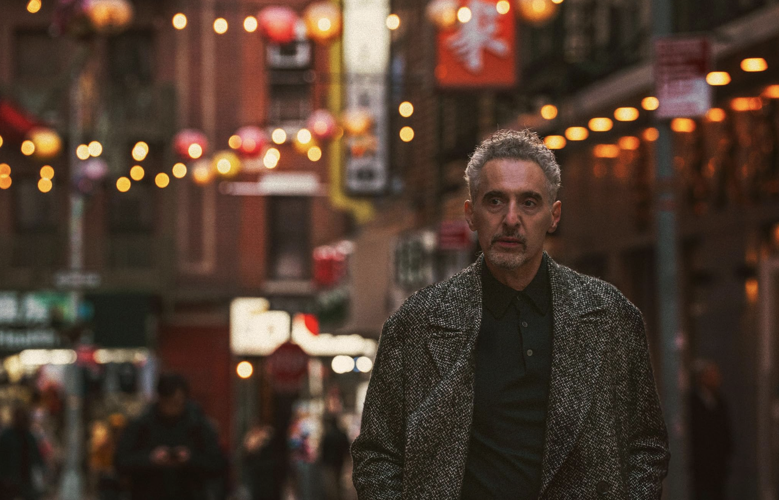
The Only Living Pickpocket in New York
It’s been ages since I’ve seen a deadpan sick joke like Lisandro Alonso’s Double Freedom (NYFF). A mellow study of an isolated farmworker who makes space for his differently abled sister after her care facility shuts down, this builds to a moment that you just have to respect even as you’re shocked that it happened. The film is not disingenuous; it does not deceive. It remains as true to itself as it possibly could be. And it’s entirely possible that my assessment of the film is a shameful misapprehension. But I don’t think so.
Both the Adams family and Larry Fessenden, beloved genre icons all, hit the festival circuit with summing works. The former’s The Glorious Dead (BHFF/KHFF) and the latter’s Trauma or, Monsters All (BHFF/KHFF) aimed to encompass the realms they’ve been building over the past years. Fessenden’s film does so literally, gathering his own monster squad from his past three films into a story set on a collision course with [gestures wildly] this society all around. The Adamses give us a loose procedural about trying to keep society together when monster shit is happening everywhere. Both of these films are perfectly fine, though they get stymied by their creators’ previous triumphs. Expectations will do that sometimes. But there’s also an unspoken commonality in that it is their characters’ and stories’ dealing with the state of the world that they buckle. These films would not be true to their creators’ expectations if they minimized the recurrent conflict with inflexible exterior mob rule, but they would probably be more enjoyable ... but honestly, for this pair, I blame society rather than the films themselves.
This year’s pair from Hong Sang-soo hit me in much the same register. After his In Water made me so angry (literally shaking with rage) that I began to question my own commitment to global cinema, he won me back over with the exquisite A Traveler’s Needs. Which left me in a fairly neutral space for Nowhere to Lay My Eyes and The Day She Returns (both NYFF), which are both just fine. The former deals with unsettled family issues and the scam nature of "objective documentary," while the latter drifts in and around a series of interviews before skewing just one step too metatextual as a closing flourish. Again, perfectly fine movies.
Unfortunately because of the squishy ground that is art film distribution and release, a few of the films covered herein have already come and gone from local theaters. So offer some brief flowers to the following: Paweł Pawlikowski’s exquisite Thomas Mann meditation Fatherland (one of the many great Sandra Hüller performances of 2026, streaming soon on MUBI). Lee Chang-dong’s Possible Love (now streaming on Netflix) features two incredible actresses giving their all, a clear-eyed look at how empathy can be weaponized and a haunting cross-section of South Korean labor politics. Noah Segan’s The Only Living Pickpocket in New York is a wonderful and taut sunset piece — kinder than The Wild Bunch, meaner than Burglar, and I’d never in a million years have guessed that John Turturro was such an incredible disco dancer. And The Cycle (now streaming on Shudder) is a smart and tense police procedural that makes a left turn into the supernatural that left me gobsmacked with joy at the sheer virtue of it having never been tried before. (Remember The Wretched back in 2020? That kind of audacious twist.) In a deeply frustrating turn, the NYFF didn’t even have press screenings for You Can See Everything (which is awesome and essential and still a national phenomenon) or the coming-soon Artificial, and I begged and pleaded and enlisted arcane forces and still no dice getting in to their public screenings. Which happens sometimes.
A film that is focused on the actual truths of climate crisis, especially one rooted in the historical record, would be welcome at this point in time. Unfortunately, A Statement (NYFF) frames itself as being “what actually happened at this historical 1980 meeting,” and then almost half of the movie is not even at that meeting. There’s some great performances (Nina Arianda, Paul Giamatti, John Turturro and perfect angel Zach Woods come off best), and it does ultimately get across how doomed we are. But by that end, you’re just enervated and annoyed. This is not a film that’s going to make things better for anyone.
There’s not a word for a film that is pretty great across all manner of metrics, barring one real big stumble. And there should certainly be one in the cinephile lexicon, because Ira Sachs’ The Man I Love (NF/NYFF) has so much going for it — exceptional work from Luther Ford, Tom Sturridge, and Rebecca Hall; a believable production design that lets you believe that you’re in ’80s New York; and some incredible music choices (including a barnburner of a closing number set to Ronee Blakley’s “Lightning Over Water” that rivals Beau Travail for dance floor catharsis. But unfortunately, there’s a big problem, and it’s Rami Malek’s lead performance as the doomed artist Jimmy. I think Malek has been great in the past (Short Term 12, Mr. Robot), but with the exception of a truly electrifying performance of Melanie’s “What Have They Done to My Song Ma” at an anniversary party, his choices in this film do not work. In a way, I guess that makes the film more valuable, because you just don’t see films showcasing this kind of performance on this level, usually. And the wrenching and real La Gradiva (NF/NYFF) is such an uncompromising and gracious look at These Teens Today that when it makes A Decision at the very end, it feels like a broken leg at the finish line. It does so much so right, with characters so emotionally complex you will feel several different strains of awkward recognition, that that last pivot lands like a fatal flaw. Teachers aren’t getting paid enough, and it’s like that the world over.
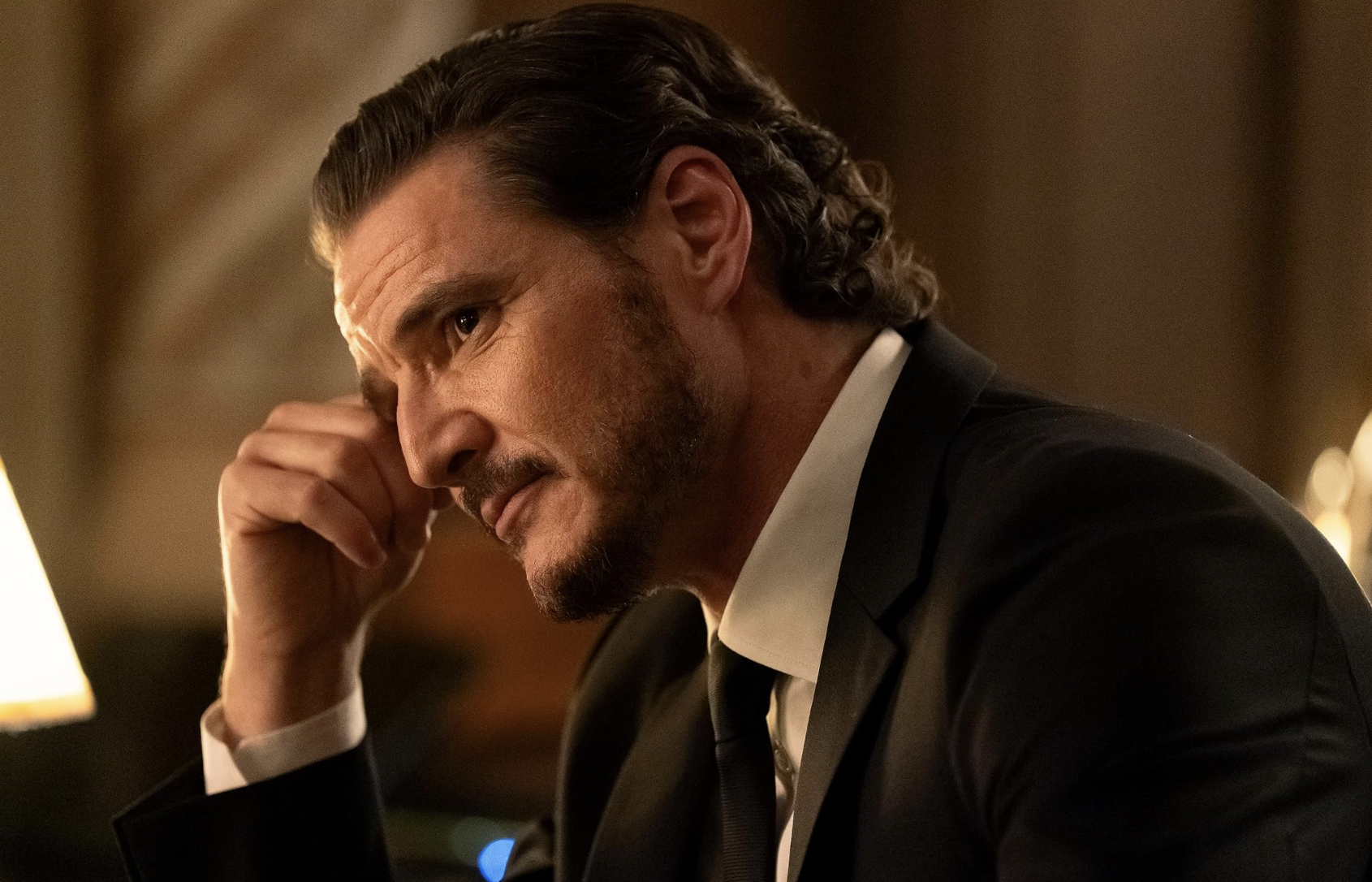
Behemoth!
Sometimes, being a hater has its purpose. But most of the time, it feels healthier to try and find constructive pathways when talking about works of art that don’t click. Art is subjective, and whatever oomph my critical meanderings may have, no one is obligated to accept them as some sort of absolute gospel truth. Something like I Rarely Wake Up Dreaming (NYFF), an intense film about a trans man caught up in Ukraine’s exacting post-Russian invasion military program following his marriage to his longtime girlfriend, has a lot of intriguing thoughts about Ukrainian society at the moment, as well as the ongoing stresses of a society under siege. But it makes some choices that struck me as deeply messy, and also had me wondering what trans critics had to say about some of those choices. Likewise, Slay (BHFF) is a slasher steeped in the world of the influencer. Slashers I get — I know the mechanics and the structure and the use of disreputable thrills as an ideological equalizer. But the influencer realm is like sports; a disadvantage on the front end when it comes to syncing up with what a film has to say. The best example of this would be Cameron Winter at Carnegie Hall (NYFF, at the Belcourt Dec. 11-13). My friend Greg’s brother was at the show that director Paul Thomas Anderson filmed for this, and had a transcendent experience. Winter has a legion of fans keyed into his quavering tones and lyrical sway, and it’s not my place to harsh their mellow just because I found the whole endeavor kind of cold. Maybe it’s the limitations of filming in Carnegie Hall, but there were maybe three or four shots that felt as if they required PTA shooting on 35 mm film. Otherwise, it was an elegant concert that seemed to be preaching to the choir.
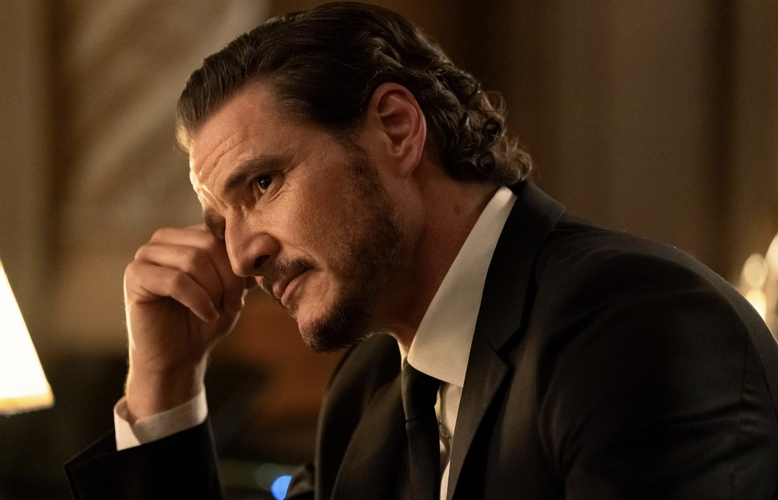
I like Pedro Pascal. But Behemoth! (NYFF, coming to Nashville Dec. 3) is utterly ludicrous. There’s an infiltration of a fancy party shot like a video game mission that ends with our protagonist pursued by corgis that made quite an impression, and Olivia Wilde takes a nothing stereotype of a role and makes it come alive. She’s the only person going big enough to be recognizable over the themes, which are clipping like you wouldn’t believe. But it just feels squishy around the middle, and Pascal comes off like a pinball being bounced around a board of all manner of early-middle-aged-dude problems. It makes sense that writer-director Tony Gilroy is such an acclaimed Star Wars guy, because all the women in this film talk like aliens. (Note: I have not yet seen Andor, and I know that as a media prophet I damn well ought to, so check back with me a little later in December.)
One of a trio of impeccable 2026 Sandra Hüller performances alongside Project Hail Mary and the aforementioned Fatherland, Rose (NYFF) is a great performance stuck in a film that feels all too eager to resort to ’90s rules of representation. Rose is a woman who, like Joan of Arc, wore men’s clothes to fight in war. Unlike Joan, when Rose was able to return from war, she stayed in men’s clothes and lived that life, which went fairly smoothly. Until it didn’t. Is Hüller great in it? Yes. Is the film true to history? Quite possibly; I wasn’t there. Did its resolution piss me off to the point of wrecking the rest of the day? Undoubtedly. Likewise, the character design and visual sensibility of Big City Pizza (KHFF) was enthralling, somehow giving the texture and look of CD-rom gametech and that intersection between Plymptoons and early Adult Swim. I adored its many denizens and environments — especially the goldfish who lives next door, floating in the air while it tries to water its plants. But the story and dialogue just left me in the lurch, and I tried, I really did. Would certainly wander around in its world for a while, though. Happily.
Since you’ve made it this far, just as a treat, really, I’ve got a couple more films to tell you about. Neither were part of the official festival rondelay, but I was introduced to them during that period of time and they are worthy of discussion, both for what they have to say about storytelling and for the fanfare with which they give you the editors of the future. Family Go to the Bad House uses extracts from several hundred different films to tell the ultimate haunted house story, with every archetype (Father, Mother, Child, Expert and Harbinger) having an aggregate of multiple clips, edited together. And it is awesome — a delight for horror fans and anyone who appreciates the way that storytelling evolves and flourishes but still builds upon the same classic foundations. And then Halloween: The Shapeless Cut veers even more experimental, taking John Carpenter and Debra Hill’s immortal classic and excising any appearance or mention of Michael Myers or Dr. Loomis. What you have left is 41 minutes of the girls, the kids, the community and the vibes, and it is remarkable. These are out there, and worth asking about.


Post a comment as anonymous
Report
Watch this discussion.
(0) comments
Welcome to the discussion.
Log In
Welcome to the discussion.
Keep it clean. Please avoid obscene, vulgar, lewd, racist or otherwise abusive language. Comments featuring hate speech or threatening or violent content will not be tolerated.
PLEASE TURN OFF YOUR CAPS LOCK.
Be truthful. Don't knowingly lie or mislead.
Be proactive. Use the “report” link on any comment that violates our comment policy.
Share with us. We'd love to hear your feedback.