
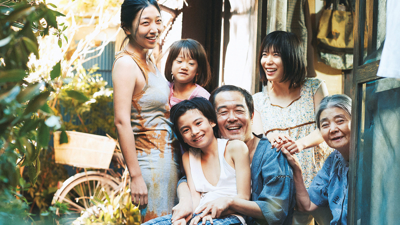


The latest film from Japanese director Hirokazu Kore-eda, known for his tender portraits of interpersonal connection, surprised many when it took home the Palme D’Or at this year’s Cannes Film Festival. Kore-eda has been a regular on the festival circuit for decades now, but his is the kind of intimate, unadorned filmmaking we don’t normally associate with major accolades. But beneath the deceptive simplicity of Shoplifters is a wellspring of emotional complexity.
Kore-eda’s fable, which focuses on a de facto family of laborers who moonlight as petty criminals, is at its best when documenting the deviant acts its protagonists carry out in broad daylight. Their actions — their very way of existence — go unobserved by the outside world until Kore-eda’s camera gives us a closer look. This family’s lifestyle may be jury-rigged, but Kore-eda’s filmmaking is anything but. His patient compositions are often compared to those of the late Japanese director Yasujiro Ozu, but the detailed images and devotion to those who make a life at society’s margins also bring to mind the French anarchist and “poetic realist” filmmaker Jean Vigo.
Kore-eda doesn’t pass judgment on the family’s poverty or means of paying the bills — he merely collects experiences, just as the family collects, as their young “son” describes it, objects “that don’t belong to people yet.” In the hands of a lesser talent, the details here — a sassy, scamming grandma and two remarkable child leads, for example — could be dismissed as overly quirky or precious, but Kore-eda’s take is just right. Whether or not Shoplifters deserves one of the year’s most prestigious prizes is in the eye of the beholder. But this is the kind of earnest and organic filmmaking that, in an ideal world, would be the first choice of families in search of wholesome holiday viewing.



Post a comment as anonymous
Report
Watch this discussion.
(0) comments
Welcome to the discussion.
Log In
Welcome to the discussion.
Keep it clean. Please avoid obscene, vulgar, lewd, racist or otherwise abusive language. Comments featuring hate speech or threatening or violent content will not be tolerated.
PLEASE TURN OFF YOUR CAPS LOCK.
Be truthful. Don't knowingly lie or mislead.
Be proactive. Use the “report” link on any comment that violates our comment policy.
Share with us. We'd love to hear your feedback.