
Sometimes life can be unreasonably hard. The daily abuse the world doles out leads many to search for a way to cope. In the modern era, many of us turn to some sort of escapism — whether it’s books, movies, video games, anime or TV, we’re drawn to fiction, where we don’t have to be ourselves for a time. From the suspense in the pages of And Then There Were None to the power fantasies of Dragon Ball Z or crafting your own stories in the world of Skyrim, we all have the media we disappear into — our place of comfort to escape a hostile environment where even just being our authentic selves is sometimes unacceptable.
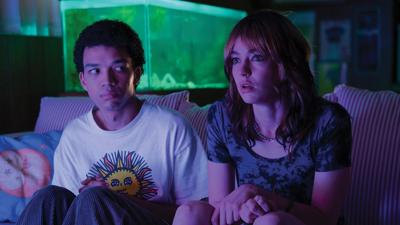
In 1990s America, I Saw the TV Glow’s Owen (Justice Smith, with a younger version played by Ian Foreman) starts at a new school where they meet a brooding outsider named Maddy (Brigette Lundy-Paine). The two quickly bond over The Pink Opaque, a late-night show about two teenage girls who fight a monster of the week. Owen and Maddy grow closer as their school and home lives become more oppressive and as classmates start to find out about their queerness. (Maddy is a lesbian and Owen is asexual and deeply closeted as genderqueer.) But their lives are drastically changed when their favorite TV show is suddenly canceled and Maddy disappears.
Even though I Saw the TV Glow is a phenomenal piece of fiction that is highly relatable to anyone who enjoys escapism, you’ll definitely get more mileage if you’re someone who spends time in queer circles. Owen is both asexual and genderqueer, but the language for those things wasn’t exactly in the common lexicon in the ’90s — so Owen isn’t able to really understand themself. Maddy, however, understands who she is and knows she can’t fit within the cishet mold. Owen tries to fit into a cishet lifestyle, and never really gets to understand their feelings outside of that box.
Owen is also one of the best depictions of asexuality on screen to date. Many characters have been labeled asexual by their creators outside of the work itself, but very rarely is a character both asexual in a way that’s obvious within the media itself and also not attached to a cartoonishly exaggerated depiction of neurodivergence. Owen shines by avoiding stereotypes. They feel like a normal person and not a larger-than-life personality, and Owen provides a realistic depiction of the issues that people on the a-spec (asexual spectrum) and genderqueer individuals often face — not always understanding their own feelings, and trying to still move through life with part of themselves locked away.
After Jane Schoenbrun’s success with 2022’s micro-budget We’re All Going to the World’s Fair, they’ve got a much heftier budget to work with this time around, and it definitely shows. There is a very distinct visual style here — hazy purple tones and a deep, dark color palette complemented by the radiant pink glow of cathode-ray tube screens. Schoenbrun took their own experience with TV that they adored — including Buffy the Vampire Slayer and The X-Files — and how much that had an impact on their journey to “cracking the egg.” (That’s trans community slang for when someone realizes they are trans.) Schoenbrun set out to craft a visual depiction of the trans experience, including the early phases of escapism and the first cracks in the egg. The director has created a unique style of filmmaking as one of few authentic trans voices in the film community.
Whether you are seeking a deeply trans story, great asexual representation or are someone who simply knows what it’s like to delve deeply into escapist hobbies, I Saw the TV Glow delivers, thanks to Schoenbrun’s unique voice. It’s wildly entertaining on the surface, but it’s more and more emotionally devastating the deeper you dive in.



Post a comment as anonymous
Report
Watch this discussion.
(0) comments
Welcome to the discussion.
Log In
Welcome to the discussion.
Keep it clean. Please avoid obscene, vulgar, lewd, racist or otherwise abusive language. Comments featuring hate speech or threatening or violent content will not be tolerated.
PLEASE TURN OFF YOUR CAPS LOCK.
Be truthful. Don't knowingly lie or mislead.
Be proactive. Use the “report” link on any comment that violates our comment policy.
Share with us. We'd love to hear your feedback.