


Writer-director Barry Jenkins' Moonlight tells the story of a man named Chiron at three stages of his life: as a boy, a teenager and a young man. Chiron is a gay African-American, and some of the details of his life, such as his mother’s drug addiction and the tough Miami neighborhood where he grew up, are drawn from Jenkins’ life, though Jenkins is a heterosexual man adapting a play by a gay writer. I don’t want to deny the specificity of Moonlight, though I think its tale of violence against difference, swaggering machismo and emotional repression is ultimately an American story, not just an African-American one. Heard any “locker room talk” lately? In fact, Moonlight could ring true in just about any culture where patriarchy reigns.
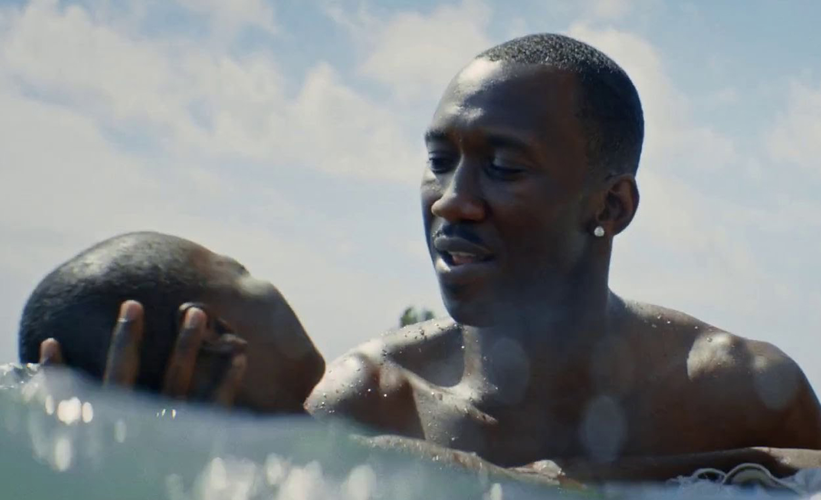
Moonlight begins with the young Chiron (Alex Hibbert) running from bullies. He winds up in an abandoned crack den, where he’s discovered by drug dealer Juan (Mahershala Ali). Juan takes Chiron home, where he befriends Juan’s girlfriend Teresa (singer Janelle Monáe). The next day, Chiron goes back to his mother Paula’s (Naomie Harris) apartment. She yells at him for hanging around with a dealer, but her protective ways soon disappear when she develops a crack habit. In the second part of the film, Chiron (Ashton Sanders) is now a persecuted teenager. He has a sexual encounter with a friend who later betrays him. In the third part, Chiron (now portrayed by Trevante Rhodes) follows in Juan’s footsteps, becoming a hyper-masculine Atlanta drug dealer.

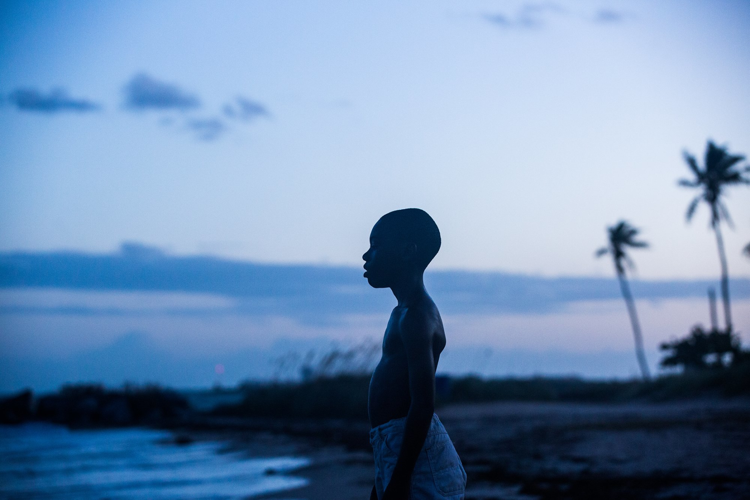
In the time since Jenkins’ debut film, 2008’s Medicine for Melancholy, he’s improved his craft greatly. Moonlight demands to be seen on the big screen: It has a physicality and a weight, and its view of Miami is dreamlike and trippy without overplaying the neon and pastel colors that tend to dominate films and TV shows set in that city. Jenkins shot in Cinemascope, often using Steadicam and a tilted camera — the cinematography often feels somehow both jerky and smooth.
Thanks to directors like Jenkins, Ava DuVernay and Ryan Coogler, we may be in the midst of a new wave of African-American filmmaking. The tropes of the last such flourishing, in the early ’90s, have long since become clichés. Jenkins’ treatment of subjects like drugs turns them on their head, and Harris’ portrait of a horribly strung-out crackhead, who at her lowest, essentially mugs her son, is harrowing. Juan turns out to be a benign surrogate father to Chiron, even as he sells Paula drugs that are destroying the boy’s actual family — a lesser film would play this for cheap irony. Moonlight refuses to do so, or to condemn Juan.
The third part is the weakest section of Moonlight, but the film is greater than the sum of its parts, and I think it plays relatively weakly because Jenkins has built up so many expectations by this point. The common contemporary narrative of gay life is that “it gets better” — LGBT people escape from bullies and move to cities where they find communities and partners. If your ticket out of high school was a trip to a juvenile detention center rather than a high SAT score, your fate is likely to be somewhat different. The adult Chiron is a hip-hop gangsta introduced to us as he drives to the Goodie Mob’s paranoid “Cell Therapy.” Chiron’s vulnerability — and, yes, his sexuality — behind his gold grill and muscles is obvious to everyone except him.
On TV, we’ve seen a similar kind of gay African-American masculinity represented by Omar on The Wire, but in cinema — even American independent cinema — we simply haven’t seen gay African-American masculinity represented. There are of course more queer rappers and R&B singers beyond Frank Ocean, but so far he’s the only prominent one to come out, even though it obviously hasn’t hurt his album sales. Openly gay rappers like Le1f and Mykki Blanco get plenty of press but play to tiny audiences. If there were more new films this good being made, talk about the death of cinema and the superiority of current American TV would cease.
Email arts@nashvillescene.com



