
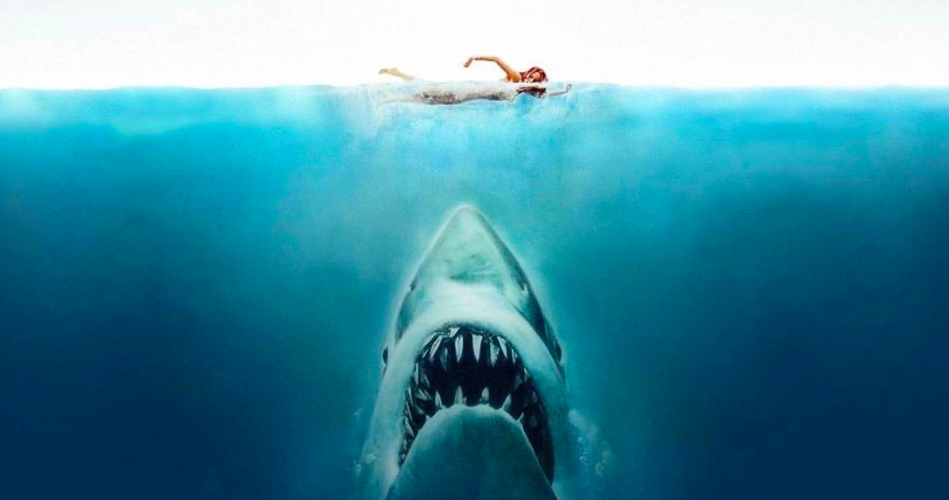


The safe assumption — the one that has been preeminent in assorted thoughts about this whole endeavor — is that for a 3-D conversion of Jaws, the movie that redefined the business of film the world over, to make it into theaters, it would have to be good enough for Steven Spielberg to sign off on it. Plus there's the fact that there are so many shots in Jaws that already use foreground/background contrast and depth of frame that you can’t help but trip out on the possibilities.
When they first announced this conversion, I immediately thought of the dolly-in and zoom-out that accompanies Chief Brody’s realization of what’s happened with young Alex Kintner. I thought of Matt Hooper’s discovery of what lurks in the half-sunk remnants of Ben Gardner’s boat. I thought of Quint’s first appearance, gradually unveiled in that tracking shot that winds through the community gathering. I thought of the many menacing shots of dark water stretching into the horizon.
So it’s a relief that the 3-D version of Jaws is such a satisfying experience. It’s not going to eclipse anyone’s enduring memories of the traditional version, but it’s a remarkable exercise in finding new angles on a classic that by this point already feels part of our cultural DNA. The best simile I can summon is that this version of Jaws is like an ideological cousin to the 1998 Gus Van Sant remake of Psycho, but the problem is people love to hate on that film, rather than engage with it as an act of critical theory. That’s OK — interpretation is not a dictatorship. But if you go into Psycho ’98 expecting classic entertainment rather than a rigorous exercise, you’ll be a tad disappointed. Jaws in 3-D does not have this problem, because despite the academic jollies and stereoscopic theory in play, it is still Jaws — one of the best-constructed screenplays of the modern era that is accomplished enough as a thrill machine that you can often miss how gloriously weird it is.
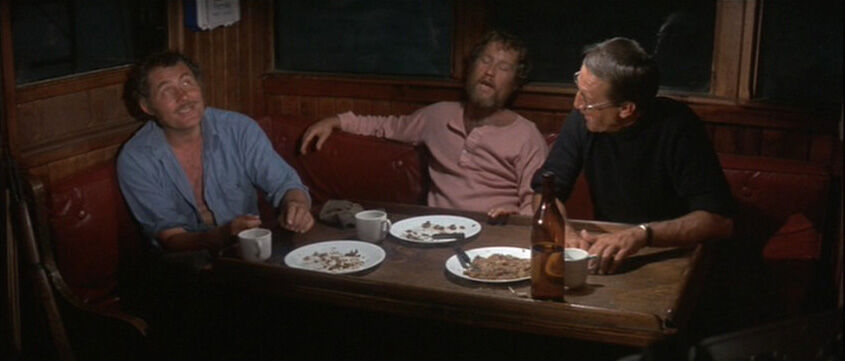
There are things that 3-D does, things that sculpt physical space, that are simply impossible to do without excessive, thematically undercutting narration. Allow me to get a bit eggheady for a moment. In a two-dimensional image, you can show characters next to each other. But in a three-dimensional image, you can show characters among each other, an interaction that requires more effort to put into words than simple prepositional phrases. A two-dimensional image is text. A three-dimensional image allows visual subtext, which is a whole new set of possibilities. The cabin of The Orca is a small, cramped space, one that our central triumvirate can only all fit in when drinking, and in 3-D it becomes a psychologically compelling place as well.
Can you recommend a 3-D experience just based on vibes? Mostly abandoned in the U.S. except as an add-on by some of the big franchises for the first week of shows, 3-D is being kept alive thanks to 4DX technology (sometimes) and residual experiments in the form (like the refit of Dawn of the Dead, finally getting something close to a proper release the weekend before Halloween). Corporate greed and indifferent conversions did their damnedest to kill it off completely, and I’m sure there are an inordinate amount of think-pieces of the "Who Cares?" ilk. As someone who still searches for a 3-D-capable home system, I believe there is a spark in the medium still, especially when there are so many film texts to explore.
Why Jaws? What made someone decide to expand this particular film? I have no idea. But there’s no better course of action for tech-heads, film freaks, stoners, grad students, Hoopersexuals and shark marks in theaters this week. Accept the mystery, and see this remarkable effort while you can.



