


The 13th Amendment ended slavery. But there’s a loophole embedded within it: “except as a punishment for crime.” Ava DuVernay’s groundbreaking documentary 13th seeks to show the far-reaching ripples of this clause.
Through interviews with experts in public policy, prison reform, law and social work, DuVernay outlines how white supremacy changed its form with every advancement in civil rights, reacting to emancipation by locking people up arbitrarily and leasing them to coal mines, farm plantations, brickyards and railroads. As schools and public places desegregated, black people were further criminalized through slick rhetorical moves by politicians. When black Southerners began to effectively vote en masse after the Voting Rights Act, Richard Nixon declared a War on Drugs — a dog whistle targeting people of color. Every administration since has contributed to the film’s startling statistic: The U.S. is home to 5 percent of the world’s population, but 25 percent of the world’s prisoners.
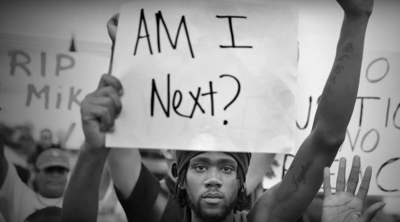
Luminaries like Angela Davis, Van Jones and Jelani Cobb are included in the cast of more than three dozen interviewees. Michelle Alexander acts as an anchor, and her exhaustively researched book The New Jim Crow provides further reading for eager viewers. Interviews overlay archival news footage, stills of lynchings, clips of civil rights activists and Black Panthers, Klan rallies and Black Lives Matter demonstrations, and brutal prison surveillance videos. The 1915 film The Birth of a Nation figures prominently in the film’s visual narrative, alongside stump speeches by presidential candidates. DuVernay weaves political theater with pop culture and commerce, right up to Tennessee’s own Corrections Corporation of America and the stealth corporation lobbyist group American Legislative Exchange Council.
Viewers may be surprised to find Republicans interviewed, too. Newt Gingrich himself declares, astoundingly, “The objective reality is that virtually no one who is white understands the challenge of being black in America.”
A moody score by Jason Moran ratchets up the tension, and the soundtrack navigates the waters of oppression and resistance. Memorably, a performance of the old folk tune “There’s a Man Going ’Round Taking Names” by opera singer Lawrence Brownlee is featured as an overture to the familiar black-and-white photograph of Trayvon Martin — his eyes peering out from within his hoodie.
The film’s talking heads and archival footage may seem dull to some, but the directness is, in fact, its main strength. DuVernay packs 150 years into 100 minutes, a timeline that singles out themes and brings them back together like arrows on a chalkboard in the most riveting lecture of your life. There is no dressing up the historical forces that molded mass incarceration, nor its reality today. Anyone in doubt of DuVernay’s visual storytelling chops should rewatch Selma. DuVernay and cinematographer Bradford Young can make the moment after a bomb blast look like a ballet.
In fact, it’s impossible to watch 13th without thinking of DuVernay’s Selma, without connecting the dots between the sacrifices made by civil rights activists and the New Jim Crow that rose up to criminalize their children. The snake sheds its skin. It shape-shifts. It adapts.
“What does it mean to be a criminal in this society?” asks a young Angela Davis into a megaphone.
“Whose life do we recognize as valuable?” asks Michelle Alexander.
13th establishes these as paramount questions for our age. The film — which is currently available to stream on Netflix — will be screened in the International Lens series with an introduction by Frank Dobson, director of Vanderbilt’s Black Cultural Center. Don’t miss it.
Email arts@nashvillescene.com



