

Of all the movies in Akira Kurosawa’s classic-filled canon, it’s kinda wild that longtime Kurosawa admirer Spike Lee chose to remake the legendary Japanese auteur’s 1963 crime story High and Low, repackaging it as his latest Black comic thriller Highest 2 Lowest.
Like nearly every Kurosawa film, High and Low (which, as part of the Belcourt’s ongoing Kurosawa retrospective, will screen a couple more times this Sunday) is about honor among men. Kurosawa’s adaptation of pulp novelist Ed McBain’s 1959 page-turner King’s Ransom is basically two movies in one: a soul-searching morality play and a sweaty, relentless police procedural. The first half of High and Low is basically a chamber piece, with most of the action taking place in the living room of Kingo Gondo (Toshiro Mifune, Kurosawa’s longtime leading man), a wealthy footwear magnate. In a case of mistaken identity, a mysterious criminal kidnaps Gondo’s chauffeur’s son, and Gondo must decide if he should use money he’s finagled for a business move to rescue the child. This half shows why High is considered a master class in blocking, as Kurosawa cleverly positions characters in shots that look like paintings of pensive despair. The second half takes it to the streets, as a diligent police department (led by Tatsuya Nakadai’s swarthy inspector and Kenjiro Ishiyama’s bald-headed chief detective) works day and night to find the culprit and retrieve Gondo’s cash.
As much as High presents a postwar Japan where both the haves and have-nots are prisoners in a society fueled by class and capitalism (the real villains are Gondo’s heartless creditors and higher-ups, who are more concerned with money than saving people), it is an ultimately optimistic tale. Considering the deeply corrupt times we’re currently living in, a story of a captain of industry and an entire police force selflessly working to (I’m sorry about this) do the right thing feels almost like a soothing fairy tale. Kurosawa even provides some sympathy for the kidnapper, whose nefarious plan was brought on by years of living in seedy squalor.
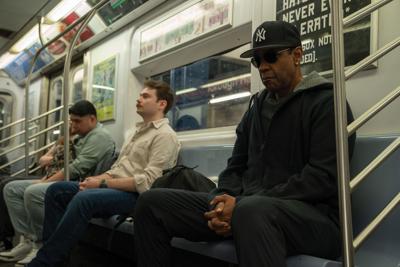
Lee’s Highest 2 Lowest is also about finding hope for humanity in a divisive world. Set in modern-day New York (Lee and frequent cinematographer Matthew Libatique go above and beyond presenting the Big Apple as the most amazing place on earth), the movie features Denzel Washington as David King, a veteran Black-music mogul. (Think Diddy without all of the … allegations.) King goes through the same situation as Gondo: He debates taking the $17.5 million he was going to use to buy back his record label to save the son of chauffeur/bestie Paul (Jeffrey Wright), who’s been kidnapped by a spiteful MC (rapper A$AP Rocky, really leaning into the brattiness). Since this is a New York story, the police (including Allstate pitchman/Oz alum Dean Winters as the resident racist detective) are more of a nuisance than a vital component, treating King like royalty and his ex-con pal Paul like a possible suspect.

Michael B. Jordan stars in crowd-pleasing genre mashup, opening wide Thursday
As expected, Lee (along with screenwriter Alan Fox) works in a lot of social commentary amid the melodrama. Highest touches on everything from the cultural and corporate appropriation of Black music (between this and Sinners, that’s a major topic for Black auteurs this year) to social media savagery and, of course, our scandal-obsessed celebrity culture. The Gen-Z crowd might find some of this too get-off-my-lawny, as Washington’s old-school music man is constantly reminding his son and others that the internet isn’t real life. (Something Washington spent some of his Gladiator 2 press-tour time commenting on.) But Highest is still an energetic, entertaining blast, and perhaps the only movie you’ll ever see in which the most exciting set piece takes place smack dab in the middle of the Puerto Rican Day Parade — with Latin jazz legend Eddie Palmieri (who recently passed away at age 88) onstage providing the fiery soundtrack.
As an Inside Man stan, I love it when Lee gets into popcorn-movie auteur mode, making a rousing, damn-near-operatic actioner that takes place in the city he calls home and slyly touches on pressing issues. Once again, he works wonders with Washington (his resident Mifune). The man who was once Malcolm X continues to rule in his shits-and-giggles era, giving one of his most playful performances as a smooth-talking family man who keeps it cool and loose even when he has to step up and get serious.
In his own smart-ass, socially relevant way, Lee does his boy Kurosawa proud by taking one of his most humane masterpieces and giving it a crafty, contemporary, visually breathtaking update. High and Low continues to be something special, but Highest 2 Lowest is something else.



Post a comment as anonymous
Report
Watch this discussion.
(0) comments
Welcome to the discussion.
Log In
Welcome to the discussion.
Keep it clean. Please avoid obscene, vulgar, lewd, racist or otherwise abusive language. Comments featuring hate speech or threatening or violent content will not be tolerated.
PLEASE TURN OFF YOUR CAPS LOCK.
Be truthful. Don't knowingly lie or mislead.
Be proactive. Use the “report” link on any comment that violates our comment policy.
Share with us. We'd love to hear your feedback.