
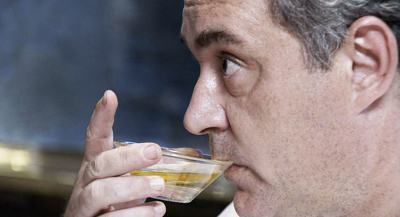
Amid what seems like a thousand-year-flood of kitchen reality shows on TV, it's hard to imagine there's a restaurant left in the world with enough novelty and intrigue to support a 90-minute documentary. But there is — or at least there was until this summer: El Bulli, the showplace of Spanish chef Ferran Adrià, the Picasso of avant-garde food. Adrià shockingly folded El Bulli in July, saying he would cease to feed the general public (actually the rarefied couple thousand who managed to book reservations each year) and would turn his skills to a new cause: an educational institute devoted to the boundary-pushing cuisine that made him famous.
That makes the movie El Bulli: Cooking in Progress a historical document, capturing the restaurant in its heyday of 2008-'09. Occupying a beachside villa two hours outside Barcelona, El Bulli was unlike any eatery most Americans could imagine. For one thing, dinner consisted of 35 courses lasting up to four hours. For another, the restaurant operated only six months out of the year. During the other six months, Adrià and his team migrated to a lab to research, experiment and craft the next menu.
"Team" is an important word. Filmmaker Gereon Wetzel records a kitchen where Adrià is less the menu's author than a sort of artistic director who shapes and develops the ideas created by his talented minions. In the season the film covers, Oriol Castro, Adrià's right-hand man, emerges as El Bulli's flesh and muscle. While the chef remains a cerebral (though omnipotent) presence, it's Castro who wrangles the experimental dishes, supervises the junior chefs and presents their work to the boss in a way he hopes won't irritate the maestro.
Adrià pioneered the notion of using lab technology such as liquid nitrogen or engineered gums to remake food in mind-bending ways. The term "molecular gastronomy" is often attached to El Bulli, but Adrià rejects it. He just calls it avant-garde. "Going to eat in an avant-garde restaurant gives you something like a creative emotion," he tells his troops. "It's not just about 'Mmm, that tastes good.' You feel something. You think, 'Killer,' regardless of whether it tastes better or worse."
The documentary's strongest when showing the brainwork of coming up with a "killer" food concept, and the hours of slog required to translate that into an edible product. A centerpiece is a cocktail of simple olive oil and water: The point is the pure sensation of the warring substances coating your palate and sliding down your gullet. (In the end, even Adrià decides the cocktail is "too extreme" and tarts it up with additional ingredients.) Then there's the "disappearing ravioli," a tiny bolus of pine essence wrapped in starchy cellophane that begins to melt away on contact with its dipping sauce. This embodies the fleeting evanescence of a meal — even the restaurant itself.
In some ways, though, it's a symbol of the movie's limitations as well. El Bulli the film successfully counters critics who dismiss Adrià as a crackpot or con man, and watching the chef dynamos try to crack the hard nut of kitchen and conceptual creativity is diverting. But the movie ultimately frustrates. No matter how clever the ideas behind the food may be, the experience is a bit hollow for us who never get a taste. A ravioli that disappears as you consume it may be compelling in the abstract — but because the restaurant is gone and its methods so difficult to duplicate, that's the only way we'll ever experience it. El Bulli the film is a pleasure to consume, but don't be surprised if 15 minutes later you're still hungry.
Email arts@nashvillescene.com.



