

Disclosure Day, opening wide Thursday, is Steven Spielberg’s 37th directorial feature, and at least the fifth foray into his favorite daydream: What if aliens existed? Here the premise is slightly altered, establishing that alien contact occurred several decades ago, but has been covered up in a scheme to keep the public in the dark. It’s not a groundbreaking idea to assert that the government has been lying to us, but the immediate acceptance of alien existence as fact sets the film up for a 0-to-60 acceleration into the world of a high-stakes political thriller, mixed with the hope and shining veneer of a magical childhood memory.
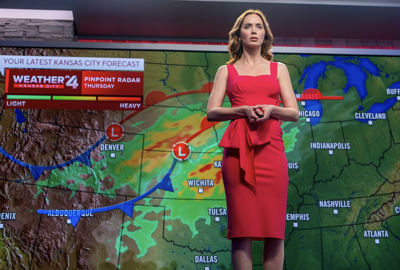
This is by no means Spielberg’s masterpiece, but it’s a solid entry in his filmography. Emily Blunt strikes a masterful balance with a character — Kansas City meteorologist Margaret Fairchild — who would’ve come off as ridiculous in the wrong hands. Her performance is worthy of an Oscar nomination, as is Eve Hewson’s supporting role as conflicted ex-nun Jane Blankenship. Josh O’Connor’s performance as whistleblower Daniel Kellner is serviceable, but an uneven script — penned by frequent Spielberg collaborator David Koepp — leaves him with some difficult line deliveries, particularly in the first act.
The score by the legendary John Williams grows from an understated echo to a vivid backdrop for the climactic third act. There’s no earworm theme here, but the score doesn't suffer as a result. And to clear up any remaining questions: No, this is not a sneaky sequel to Close Encounters of the Third Kind or any of Spielberg’s other extraterrestrial-focused features. That’s not to say Disclosure Day is wholly dissimilar to its predecessors — for one thing, Spielberg pretty much only knows how to make one kind of alien. If you are hoping to see creature design that diverges from a grayish little guy with spindly limbs and big eyes, you’ll leave disappointed.
If you’re looking for traditional, hard sci-fi, you won’t find that here either. But that’s not really what Spielberg does — his genre films share more dino-DNA with magical realism than with traditional science-fiction. At its core, Disclosure Day isn’t really even about the aliens; it’s about humanity’s innate capacity and fundamental right to believe in something bigger. Colman Domingo’s character Hugo Wakefield says as much deep into the second act: “We exist to believe, and to be believed in.”
In a way, Disclosure Day is Spielberg’s most religious film. Early critical reactions to the movie included film reporter Bill Bria’s description of the script as “X-Files meets the Bible,” which sounds crazy, but isn’t exactly wrong. There’s not a specific belief system advocated for here, but rather a push for belief in general — belief in others, and one’s own humanity, the ties that bind us all. Some will no doubt find it preachy, but anyone who grew up with that iconic “I Want to Believe” poster on their wall might just feel a little spark reignited as they leave the theater.
Spielberg might be reheating his own nachos to an extent here, but no one makes better nachos. It’s now rare to see a non-franchise, non-IP summer blockbuster, and Disclosure Day is worth the price of admission for that alone.



