


Everything was better when I was a kid — cartoons, Coca-Cola, rock 'n' roll, air travel, lawn darts, and most of all, pro wrestling. Sure, now we have the Internet and hip replacements, but I'd gladly hobble to the library if it meant going back to the days when guys like Bobo Brazil, Killer Kowalski and Haystack Calhoun were dropping my jaw every Saturday morning with their ridiculous personas and zany antics. Of course, that was long before Vince McMahon and his steroid-popping goons sucked the soul out of the "sport" and turned it into a corporate behemoth.
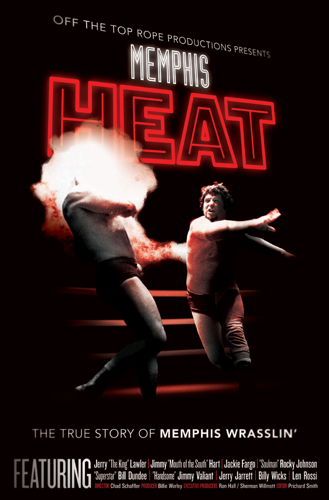
If you, too, long for the days when pro wrestling was more carnival sideshow than glitzy spectacle, you won't want to miss Memphis Heat: The True Story of Memphis Wrasslin'. Based on Ron Hall's book Sputnik, Masked Men and Midgets: The Early Days of Memphis Wrestling, the documentary intersperses vintage wrestling footage and still photos with present-day interviews with the wrestlers, promoters and refs who worked "The Territory" — centered in Memphis and including Nashville, Little Rock, Louisville, Evansville, Ind., and other surrounding cities — from the 1950s into the '80s. The end result is an often hilarious and occasionally poignant snapshot of a bygone era, when pro wrestling was still a wacky subculture where eccentricity reigned supreme.
Of course, when you're dealing with a cast that includes the likes of Jerry "The King" Lawler, "Superstar" Bill Dundee, "Handsome" Jimmy Valiant, Jimmy "Mouth of the South" Hart and Jackie Fargo — superstars of the Memphis wrestling scene — making an entertaining documentary is like shooting fish in a barrel. Still, director Chad Schaffler and producers Hall and Sherman Willmott deserve credit for filling that barrel with water and stocking it with fish, then firing away. There's no narration, and while some voiceover might have been helpful in providing context, this isn't an examination of Balkan diplomacy or the yellow fever epidemic of 1793. Through judicious editing, Schaffler manages to fill in a lot of the historical blanks: For instance, pro wrestling comes by its carnival sideshow aura honestly — it originally began as a carnival sideshow. Regardless, you don't need much backstory to appreciate the irrepressible Fargo, practitioner of the legendary Fargo Strut — a bruiser who crows, "I was meaner than a damn rattlesnake and tougher than a two-dollar steak."
While much of the film highlights the bravado and theatrics you'd expect, there is a fascinating and detailed look at the Lawler/Andy Kaufman feud — but if anyone emerges as the movie's hero, it's Sputnik Monroe, whom the late producer Jim Dickinson once hailed as the man who integrated Memphis. An especially affecting segment details the white wrestler's arrest for drinking with his African-American friends at a "Negro cafe" on Beale Street. Monroe hired renowned black attorney Russell Sugarmon to defend him, paid the $25 fine, and headed back to the Beale Street bars. He then used his clout to do away with the "crow's nest" — the black section of Ellis Auditorium — and allow blacks to sit wherever they could afford a ticket, no small feat in 1961 Memphis. As wrestling promoter Jerry Jarrett explains, it was said at the time that there were three pictures that black Memphians had in their homes: Jesus, Martin Luther King and Sputnik Monroe.
Memphis Heat is sure to make baby boomers wax nostalgic. But ultimately, anyone who enjoys campy shtick, outrageous personalities and absurd theatrics — in other words, anyone worth knowing — should be heartily amused.
Director Chad Schaffler will host a Q&A at the 7 p.m. screening Friday.
Email arts@nashvillescene.com.



