
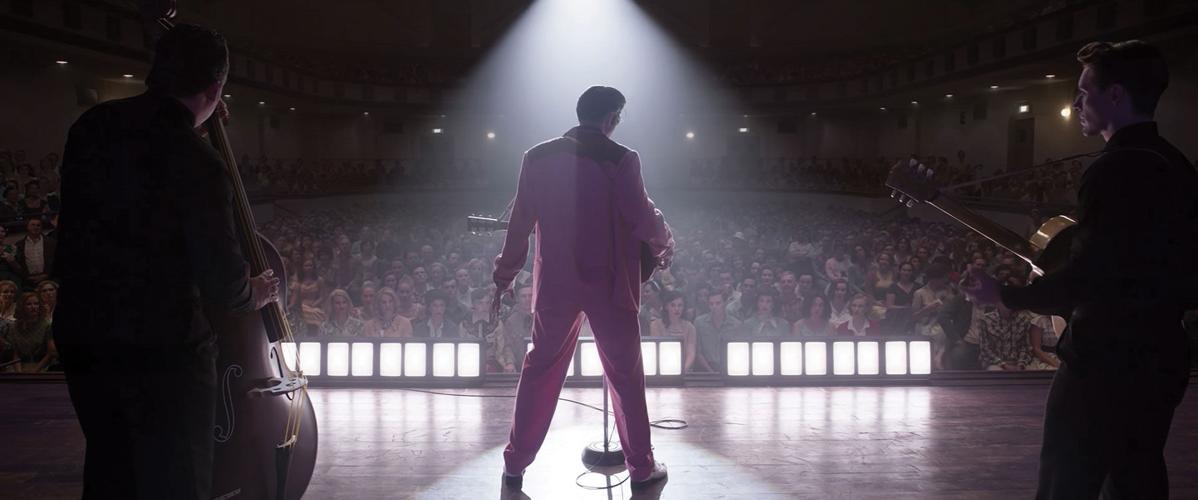
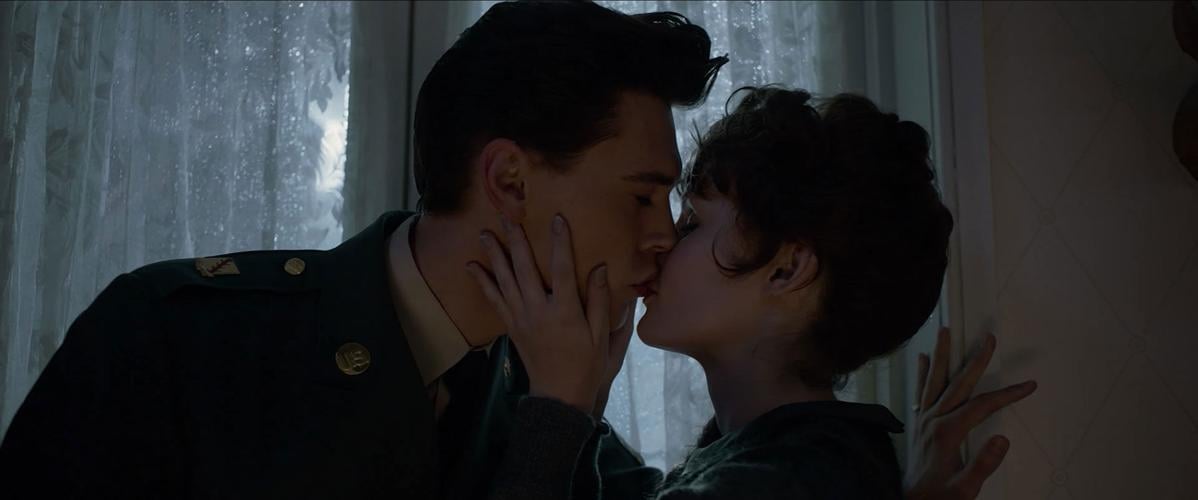

From the opening logos of Elvis, the promise is rhinestones and spectacle. That’s certainly one of the three tenets — alongside livewire innovation and a Breaking the Waves level of fatalism — that define this jagged but ultimately rewarding riff on the life of Elvis Presley. This isn’t Rocketman, which remains the way to do an artistically cohesive and expressive rock biopic, but it’s imperative to state that after its first, disastrous trailer, Baz Luhrmann’s Elvis is a remarkable achievement. It is three films battling it out with one another for much of the runtime, but it’s still so much better than one could have hoped for.
As has been the case with Luhrmann’s films since 2001’s Moulin Rouge!, Elvis is a film that understands the protean nature of popular music, and as such it remixes itself as it goes along. Famous/infamous since the film’s Cannes premiere is the post-Army montage of Elvis’ ascent into movie stardom, scored to a blend of “Viva Las Vegas” and Britney Spears’ “Toxic,” which is a masterful discussion of the power wielded over artists by whoever happens to be holding the purse strings at any given moment. The film itself makes the choice to open with a wallow in opulence that also feels like Scorsese’s 1995 Casino, the Vegas Strip illuminated in classical passion and contemporary flash, grounding us in the story of Andreas van Kuijk, aka Col. Tom Parker (Tom Hanks), the opportunist/criminal/intermittent genius who helped skyrocket Presley to the top. Parker then helped engineer the gaudy cage that would keep him displayed through a protracted decay before the eyes of the world. Periodically the film feels the need to tell the audience about itself, usually through the voice of (initially) Elvis’ mother Gladys Presley, later the Colonel. And it’s in this way, in its exploration of parasocial relationships, that Elvis (the film) finds its hook for modern audiences unfamiliar with the Presley legacy.
Carnival-funhouse metaphors are always a good foundation, and the early characterization of Parker as a carny and a huckster is the most effective representation of this cipher who only exists as a reflection of Elvis. We’re told he has gambling debts and a past creeping closer, but for how much the opening 10 minutes focus on him and how he becomes the structural engine of the rest of the film, Parker is simply whatever it is the script needs him to be — a supernatural force, an unhinged leech, a membrane stuffed with dreams, avarice and adrenaline. He is all of these things, and it makes sense that Hanks would embrace this opportunity. (As I love Cloud Atlas, I am firmly on board for films in which Hanks makes a choice and doesn’t let go until it thunders.) As the film goes on and Elvis gets a bit more into his addictions, Hanks looks more and more like Larry Miller.
This is a film entranced by the concept of sexuality, never quite escaping the pearl-clutching era it has grounded itself in, which, honestly, is an interesting choice that for the most part works. Li’l Elvis (Li’lvis?) grows up in the literal geographical intersection between the sexual and the spiritual, careening between a juke joint and a tent revival that are across a construction pit from one another, absorbing everything he sees, hears and feels. This sets up genuinely effective split-screen flashbacks later on. The film’s first third at times feels like a superhero origin story, the man with the bullet-time pelvis destined to free the 1950s from its institutional fear of hips, brought to life in the film’s first truly insane sequence — a performance at a baseball stadium that manages to feel like both Hairspray and Gimme Shelter.
Elvis’ ’68 Comeback Special — like Liza With a Z and Grace Jones’ One Man Show — is one of the enduring classics of the musical program for television, and Luhrmann spends the most captivating portion of the film focusing on the many factors that went into its making. The procedural approach to great art is always a worthwhile choice, and it yields the most rewards in evaluating the artistic identity that Presley put forth and envisioned for himself. Immediately following the sweltering press screening, the order of the evening was a comfy shower and a viewing of that special.

In his acting debut, Alton Mason, who plays Little Richard, is amazing. Olivia DeJonge, this film’s Priscilla, does her best, but it’s an underwritten and moderately schematic part. Mickey Reece’s Oklahoma-shot 2017 indie film Alien is a great comparison piece; it was made with almost no money but gets at the emotions of the Elvis experience in a way that this big-budget telling only hints at. (That film’s Priscilla, Cate Jones, is one of the great performances in 2010s indie cinema.) And in the titular role, Austin Butler really does have fun with this. He’s very good, and charming in unconventional ways that never burn the audience out on a persona that’s been part of pop culture for 60-plus years.
The film loves Panic Room-style diegetic identifying architecture, though there are a few too many whirling crash-zooms on the exterior of the International Hotel — a facade that occupies a significant portion of emotional real estate in the Presley legacy. But that becomes a default camera move, ultimately robbing the gesture of significance. Even so, given the myriad potential sins that could derail something of this scale and ambition, this is small potatoes. What lingers are a muddy message about the racial quagmire of America, a truly star-making performance from Mason (and it’s transcendently fitting that Little Richard is reclaiming the spotlight from Elvis in his own movie), and the direct consumptiveness of the end times, where everyone knows the end is near but the show has to go on.



