
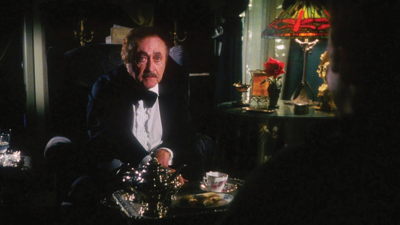

It's rare that you'll see an experimental film night devoted to a director who spent much of his career making drive-in horror movies, episodes of Charlie's Angels and Dynasty, and TV movies like Devil Dog: The Hound of Hell. But highbrow and lowbrow have more in common with each other than either has with the middle, and even in his gun-for-hire TV work, the late Curtis Harrington found ways to sneak in glimmers of the dreamy atmospherics that distinguish some of his best films.
Harrington's wider reputation these days rests largely on cult movies such as the Piper Laurie drive-in shocker Ruby, the twisty James Caan-Simone Signoret suspenser Games, and the early John Savage psychosexual thriller The Killing Kind — commercial entertainments that nevertheless sleepwalk an edge between perverse realism and nightmare. But long before those, Harrington was a key figure in early American avant-garde cinema: a comrade and collaborator with Kenneth Anger (that's Harrington in Caligari makeup in Anger's "Inauguration of the Pleasure Dome") and a maker of macabre, poetic shorts.
These ghostly familiars form the basis for "The Short Films of Curtis Harrington," this month's entry in Third Man Records' Belcourt-sponsored Light and Sound Machine. Transfixed and transformed by a childhood glimpse of a billboard for The Bride of Frankenstein, Harrington returned to horror throughout his career: Thursday's program traces a perfect circle from his first film — his teenage 1941 adaptation of "The Fall of the House of Usher" — to his final film 61 years later, a remake titled simply, "Usher."
But horror was to Harrington something like religious epics were to Anger: Hollywood mythmaking at its most ritualistic, even orgiastic. He worshiped fading glamour queens, working so often with Old Hollywood stars — Ann Sothern, Gloria Swanson, Debbie Reynolds, Shelley Winters — that he was once considered a kind of heir to George Cukor. At the same time, he moved among the emerging circle of occultists, self-proclaimed mystics and sex-magick adherents who heralded the creepy-crawly underbelly of the SoCal counterculture. The subject of 1956's "The Wormwood Star" is Marjorie Cameron, the artist whose late husband, Jet Propulsion Lab founder and occultist Jack Parsons, believed he'd summoned her into existence through a masturbatory rite with L. Ron Hubbard.
Thursday's seven-film program also includes "Fragment of Seeking," his 1946 queer-cinema prelude to Anger's "Fireworks"; his recently restored 1952 color film "The Assignation"; 1948's "Picnic," championed by no less an admirer than Jacques Rivette; and 1949's haunting "On the Edge," starring the director's parents. The program starts at 8 p.m., but arrive early for a preshow that covers all facets of Harrington's career — as difficult as that sounds.
Email arts@nashvillescene.com



