

IndigeNash just keeps growing.
The Native-led art and music festival, now in its third year, has more than doubled in events since its genesis. Organizers have also doubled the event’s fashion showcase and gallery presence and added a full additional day of programming since last year.
The six-day event, which lasts from Nov. 17 to 22, will feature musical performances, art exhibitions, a comedy night, film screenings, culinary offerings and an artisan market, among other events led by people with Indigenous heritage across various venues in Nashville.
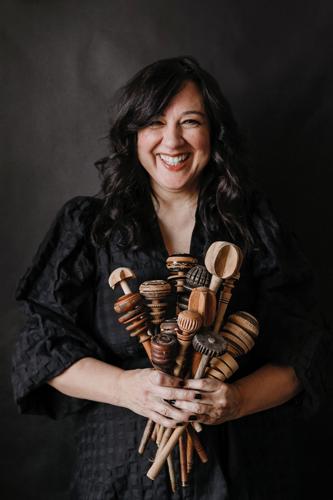
One of the highlights of this year’s installment is the The Indigenous Story of Cacao Chocolate Museum, led by locally based chocolate historian Sophia Rea. Rea has been collecting chocolate artifacts for 35 years, and she will display some of her collection at RADAR615, complete with olfactory offerings, from Nov. 18 through the end of the year.
It’s the only Indigenous-led chocolate museum north of the Mexico border, Rea tells the Scene.

Sophia Rea
“This is a different type of museum in that it is coming from the perspective of those who first cultivated cacao, and these are of course on Indigenous land by Indigenous people,” she says.
Rea’s work focuses on what she calls the “hidden history” of Native Americans cultivating cacao. A recent archaeological study even connects cacao to the present-day state of Georgia, proximity that brings additional meaning to Rea’s museum debut.
“Number one, we are all standing on Indigenous land,” she says. “And number two, most of the foods that we’re consuming, we’re not thinking about, but they are Indigenous foods. Pumpkins, cacao are Indigenous foods, grits are Indigenous. I just want people to connect with that. Indigenous people are sophisticated, and they were sophisticated, and we have brought so much to our culture.”
Because of the Indian Removal Act signed by President Andrew Jackson in 1830, the Indigenous identity is fragmented, explains Joe Clemons, the festival’s art and community lead. Clemons says he grew up in Lebanon, Tenn., and yearly powwows were the only way to attempt community with other Indigenous people.
The festival is about Indigenous artists connecting with one another, as well as allowing Indigenous people whose ancestors were removed from Tennessee to come back. In addition, Clemons hopes the festival will inspire relationships that allow more art by Indigenous artists to be shared year-round in Nashville.
“Because of removal,” Clemons explains, “there’s something inherently powerful about coming here from Oklahoma or from Wisconsin — from somewhere where there are reservations and where there are tribes — because there’s a little bit of a reclamation in that.”
Native American identity is constantly evolving, including for many of the IndigeNash organizers, who share cultural attachment, memories of Indigenous family members, and relationships to other Indigenous people, but do not have enough Native American ancestry to be considered part of a tribal roll with the federal government.
“That really is part of the conversation — what do we look like in the future?” Clemons says.
The experience of people with both Indigenous and Black ancestry, who face two lines of historic discrimination, is one that artist Gary L. White will explore in his panel on Nov. 19 at 3 p.m. at NKA Gallery.
Identifying as Afro-Indigenous is by no means a new thing, White tells the Scene — it’s just not well-documented. Many Afro-Indigenous folks were historically classified in censuses as Black, as all of the Indigenous people were supposed to have been removed under the Indian Removal Act.

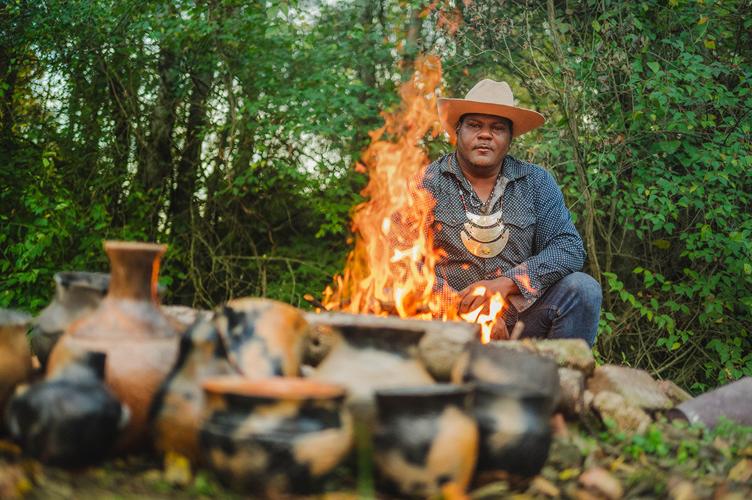
Open-flame-fired pottery by Gary L. White
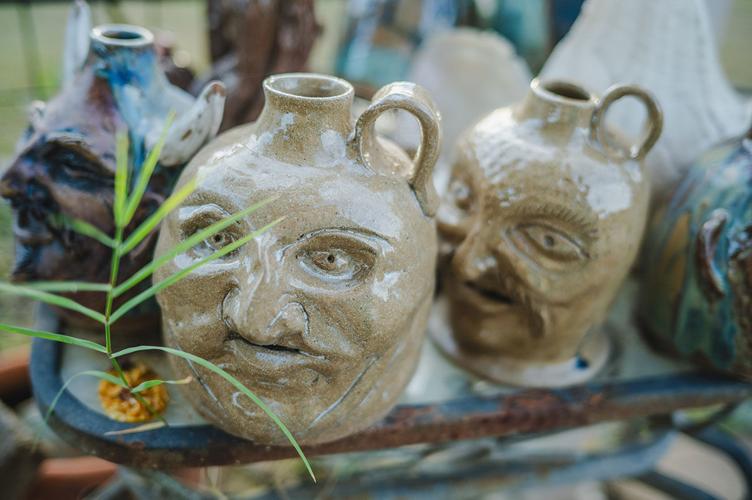
White sees himself as a bridge between the two cultures with the goal of sharing an emphasis on spirituality, which he incorporates into his sculpture work. White will also share his pottery, which he molds with natural clay and fires in an open flame in the same tradition that he was taught by his Cherokee grandmother at 11 years old.
“It’s just a way for me to not escape, but to recenter and ground, especially in this crazy world we live in,” White says. “For me, art-making is more of a spiritual practice than anything. Because when I’m working on things, my mind is here, and I’m in the past, and I’m also in the future. It’s a sacred time.”
Through his art, his ancestors can have an eternal life, he says.
“The way that I live, the way that I even see the world and think about the world is from the [Native American] viewpoint, because that’s what was taught to me,” he says. “So it’s handed down — the language, songs, crafts, cooking, all of these things.”


Post a comment as anonymous
Report
Watch this discussion.
(0) comments
Welcome to the discussion.
Log In
Welcome to the discussion.
Keep it clean. Please avoid obscene, vulgar, lewd, racist or otherwise abusive language. Comments featuring hate speech or threatening or violent content will not be tolerated.
PLEASE TURN OFF YOUR CAPS LOCK.
Be truthful. Don't knowingly lie or mislead.
Be proactive. Use the “report” link on any comment that violates our comment policy.
Share with us. We'd love to hear your feedback.