
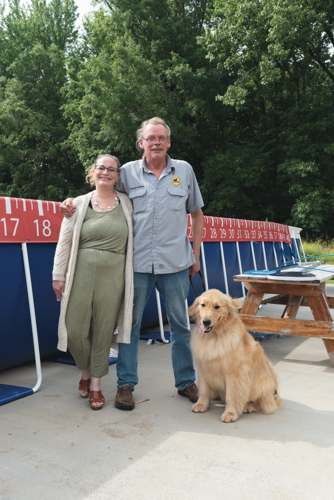


Ken and Brenda Knabenshue with Sonny
In 2018, 6,435 American veterans died by suicide, according to the Department of Veterans Affairs. That’s roughly one every 81 minutes, and many veterans service organizations believe that number is undercounted. Despite accounting for less than 8 percent of the overall adult population, veterans constitute nearly 18 percent of all adult suicides in the U.S.
According to the American Society for the Prevention of Cruelty to Animals, 670,000 shelter dogs are euthanized annually — though the actual number could be far higher there as well.
A highly successful Tennessee-based nonprofit is trying to turn both of those numbers around.
Born into a military family in Fort Campbell, Ken Knabenshue followed the tradition and joined the Army. After his discharge he was in a car accident, and his doctor suggested he might need a service dog. Knabenshue learned that a trained service dog can cost between $12,000 and $15,000, with waiting lists often upward of five years.
But Knabenshue had experience training dogs. Prior to his military service, he’d even won competitions. So he reached out to service-dog organizations to learn about the process for getting a dog ready for service work. Despite his injuries from the wreck, he was able to successfully train his own service dog — that’s when the lightbulb went off.
The VA estimates that nearly 2 million disabled veterans, including those suffering from post-traumatic stress disorder, could benefit from a service dog. Perhaps paradoxically — because of improvements in health care that have reduced battlefield fatalities — the rate of disabled veterans is growing. While soldiers returning from war have long suffered from what we now call PTSD, there’s now a much larger focus on the disease from the VA and Defense Department — and service dogs, along with therapy and prescriptions, have been found to be an effective method of treatment.
The conventional wisdom since the founding of The Seeing Eye in 1929 (in Nashville, no less) has been that service dogs must be certain breeds. But now animal behaviorists and researchers are finding that any sufficiently healthy dog can, if trained at an early enough age, work in service.
Even shelter dogs.
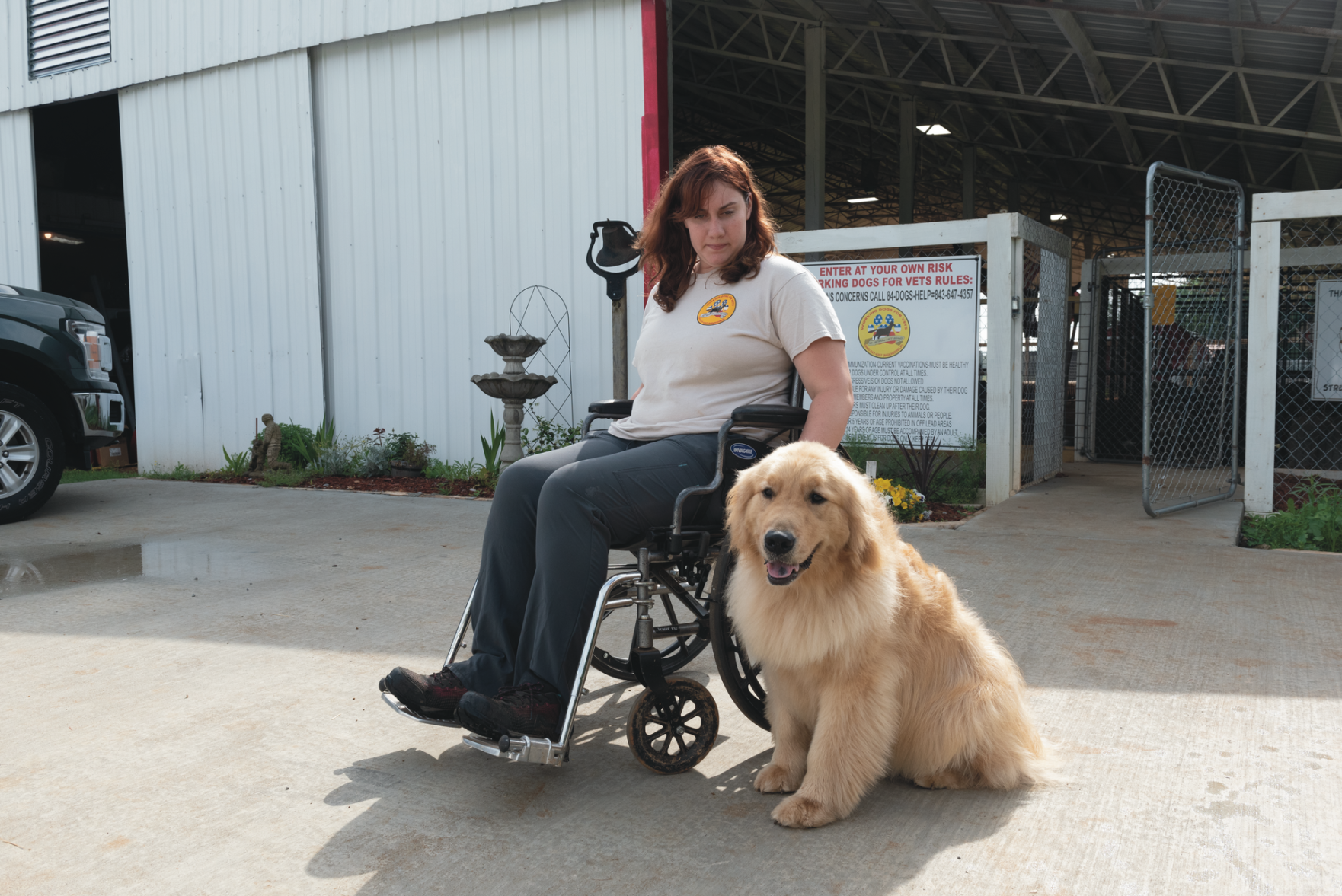
In 2012, Knabenshue — armed with his new knowledge of service-dog training and a mission to serve shelter animals and his fellow veterans — founded Working Dogs for Vets in Lawrenceburg, Tenn., to, as he puts it, “save lives on both sides of the leash.” Three years later, he incorporated the group and it received 501(c)(3) status.
WDFV works with more than 100 shelters around the country, with the partner shelters identifying dogs that are young enough to participate. It has an army of volunteer trainers throughout the country, plus facilities in a handful of states, including a new 22-acre campus in Lawrenceburg. Dogs are paired with qualifying vets, who agree to participate in a year or more of training. They also agree to return and help train the next class of dogs, providing a constant stream of new trainers and a lifeline for veterans.
The success rate is remarkable. According to in-house studies, the average client is on 10 to 15 medications when beginning the program; 81 percent reduce or eliminate medication post-graduation. There is a 95 percent reduction in the occurrence of nightmares and night terrors and a 98 percent reduction in suicidal thoughts.
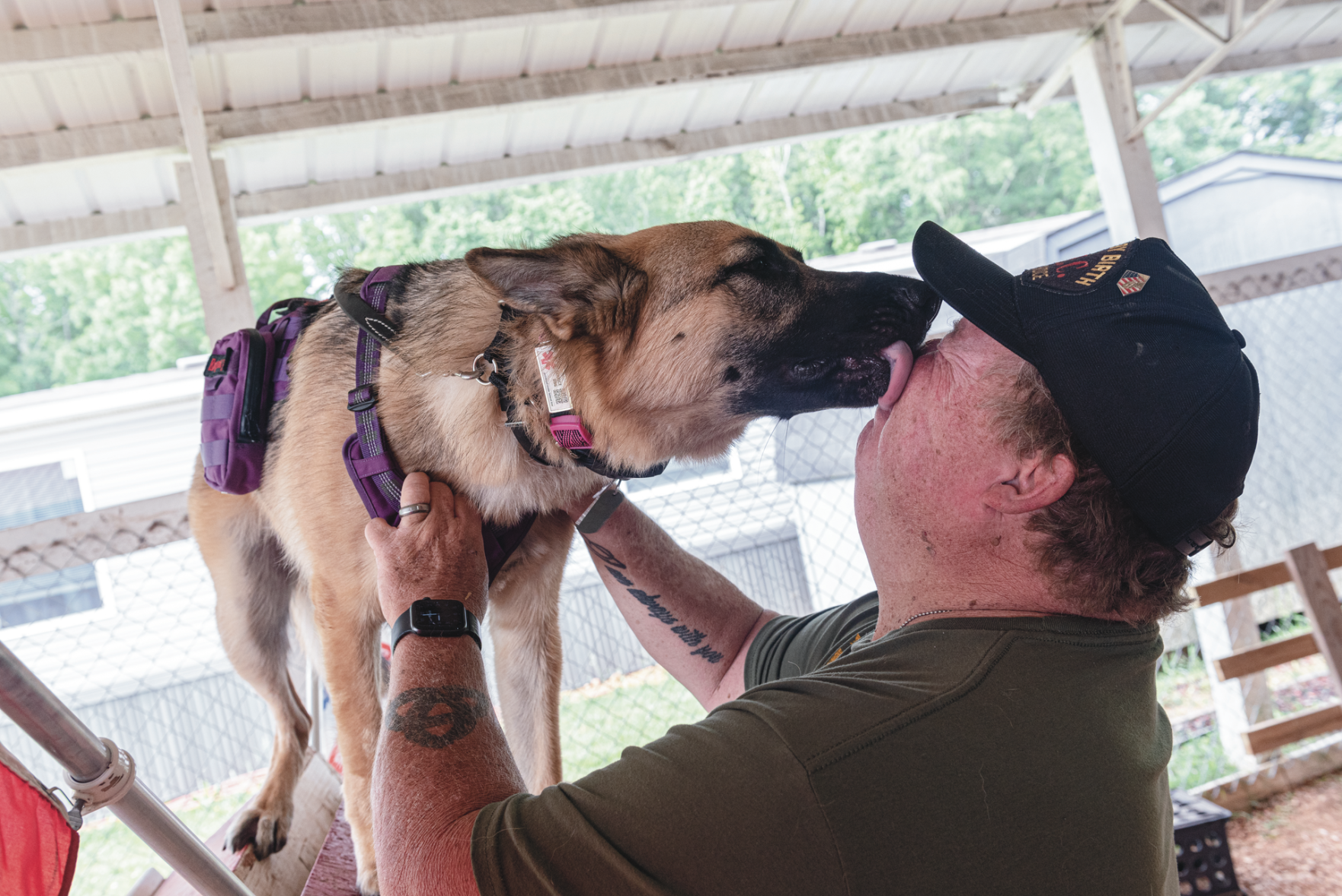
Andy with his dog Lucy
Before receiving their service dog, 85 percent of participants reported that symptoms associated with PTSD played a major role in their inability to enjoy activities. That drops to 5 percent after graduation. Graduates are able to attend school or work with more consistency and report being more effective. In fact, the Teamsters’ latest collective bargaining deal with trucking companies allows WDFV animals to ride in the cab of the semi with truck drivers who have graduated from the program. A WDFV graduate was the first service animal ever photographed with a president, during a Gold Star Families reception with then-President Donald Trump in 2018.
In less than a decade, WDFV has become the largest service-dog training group in America. There are now nearly 2,100 dog-and-vet teams around the country, at least one in every state.
That may seem like a drop in the bucket given the statistics, but for the dog who found a new purpose and the veteran (and the veteran’s family), it’s a miracle.



