
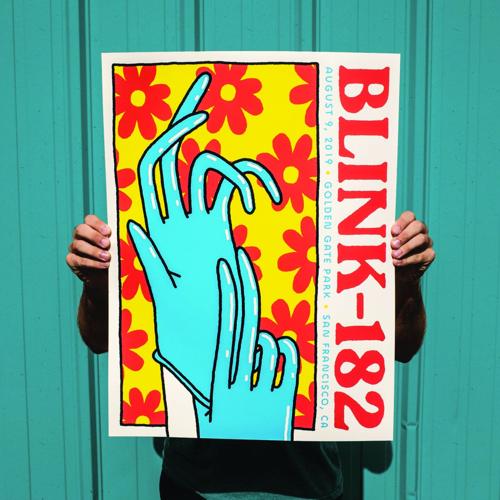
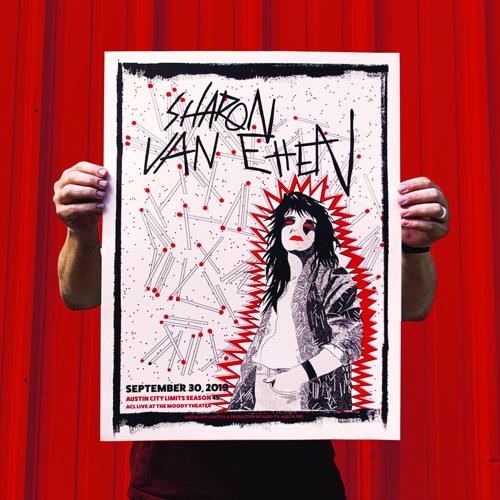


Grand Palace original design
AI-generated art has evolved past the melted faces and overabundance of fingers that defined early tools like Dall-E 2. While these images — which churn through and reassemble the work of actual artists without permission — still often display quirks that betray the fact that they’re machine-made, they’ve reached a level of “good enough” that AI posters and logos swarm social media.
Matthew Sharer, art director at Grand Palace Silkscreen, says he’s been disappointed seeing community events advertised with AI-generated flyers and that he’s actually reached out to folks offering to make something for free instead.
“We all live in Nashville, where it’s increasingly harder to even survive and live, but I’ll do a free drawing for somebody that’s doing something that I think is positive,” Sharer says.
The custom silkscreen printing shop on Dunn Avenue has received AI artwork from prospective clients, but it has yet to print any of them onto a poster or shirt. That’s not due to any particular stance or policy, but because the designs just aren’t screen-printable.
Sharer demonstrates the process with a few stencil-like screens that overlay to create the iconic logo of radio station WNXA, with its crossed dynamite sticks. Each layer would be a different color with bold, crisp borders. AI-generated designs are often low-resolution; colors aren’t separated, and the images have blurry edges. While design issues preceded the proliferation of AI art, the technology starts more people off on the wrong foot, says Sharer.
Although someone could prompt AI to spit out a more printer-friendly version, illustrators at Grand Palace recommend seeking a professional instead.

Grand Palace original design
Grand Palace founder Bingham Barnes says AI art hasn’t affected the customer base of physical print products, but the encroachment of the tech into the design field has been more noticeable. Barnes notes that the sticker shock of designer fees has often been a “hurdle” for customers — and now they can turn to free AI products.
“There is where we get into … the value of creative work, and a lot of different people’s perception of it is that it’s not something they should have to pay a lot for,” says Barnes.
He adds that if a logo or poster for your company or brand is important for you, then it should be important enough to hire someone who “knows what they’re doing.”
Sharer says the technology hasn’t shrunken his pool of design clients, partly because it’s still emerging tech. He also says he’s spoken with other designers who feel that many of the folks using AI for posters, flyers and logos probably weren’t going to hire designers anyway.
AI-generated art has also started to bleed into the tattoo industry. There’s even a robot that inks humans down in Austin — photos of it in action look like scenes from a health clinic. But an established artist like Elisheba Israel Mrozik isn’t too afraid of a machine uprising.
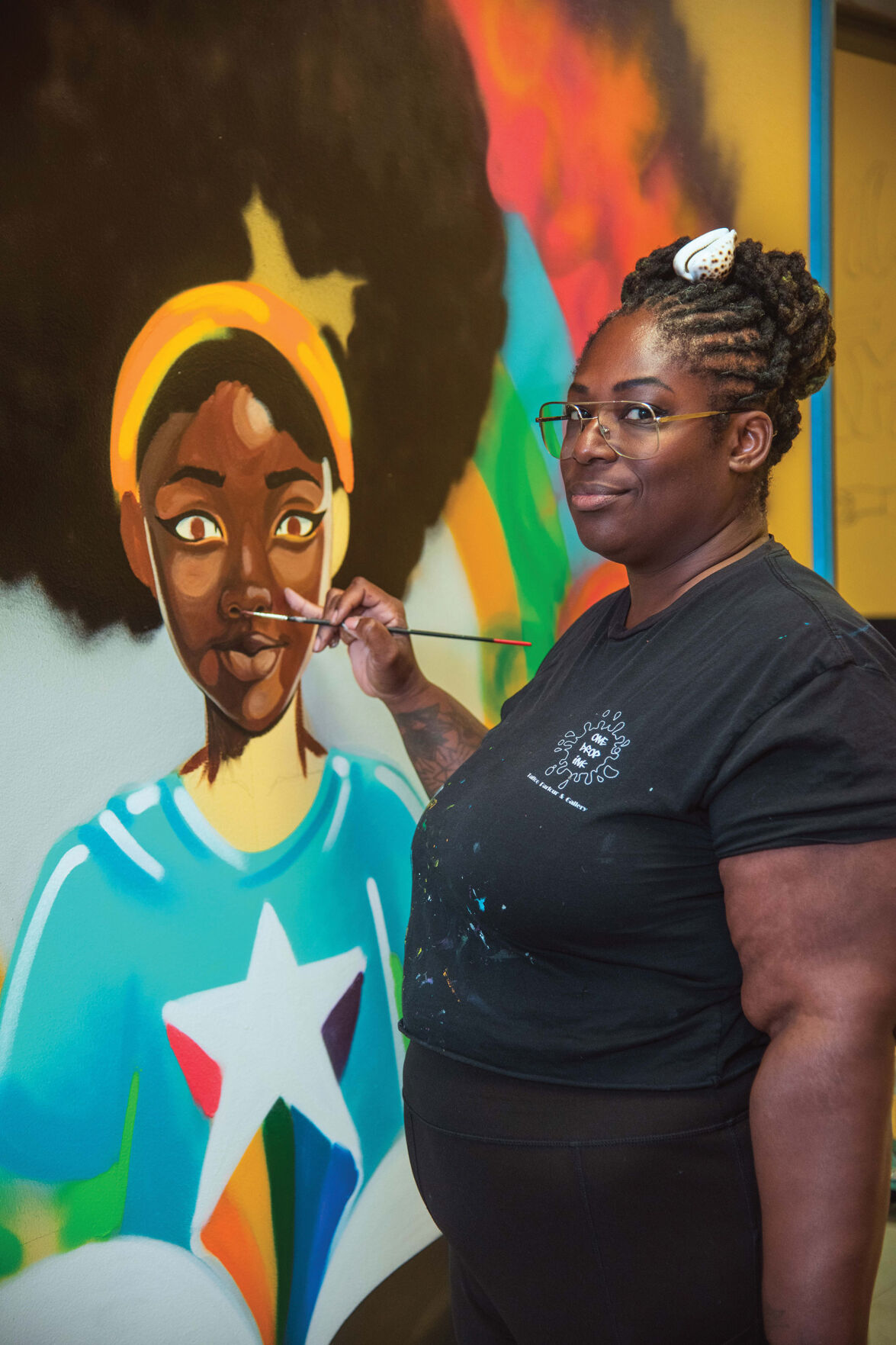
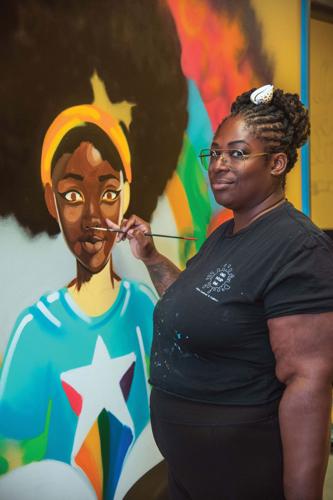
Elisheba Israel Mrozik
Mrozik — former owner of now-closed One Drop Ink on Jefferson Street — has a studio in a looming garage, and sits at a table covered with tactile elements. Mrozik is a heralded tattoo artist and recognized artist and muralist — she currently has a room-filling installation on display in the Frist’s In Her Place exhibit.
Mrozik, as she takes a file to a crown-shaped figure she removed from a silicone mold, says artists will need to argue their value in this economy: “You’re not going to appeal to somebody’s better interest. You’re not going to appeal to their morality. You need to figure out why you’re worth money.”
In the fine and public arts sectors, Mrozik proves her worth through her connection to the community, transforming their words into “visuals or programmatic elements that connect with them.”
As a tattooer, her personality and rapport with clients keep customers returning. She’s honest about what does and doesn’t work for a tattoo, and isn’t condescending about it. Mrozik says it takes time and energy to build a loyal customer base, and AI tattooing will make it harder for newcomers to find their own.
Mrozik’s tattoo clients usually bring in a crop of reference images to show what they’re looking for. Sometimes they bring AI-generated designs. That doesn’t bother Mrozik much: The final product will be something new and unique, not a copy of any reference.
Mrozik has experimented with AI — using its image generation to play with different angles of a flower, for example — but ultimately she feels it’s important the art is the product of her own imagination as much as possible.
“Art is the one human thing,” says Mrozik. And then, more wistfully: “It’s the last human thing.”

Touring Nashville’s zine scene, investigating the resurgence of VHS, considering the influence of AI in graphic design and more



Post a comment as anonymous
Report
Watch this discussion.
(0) comments
Welcome to the discussion.
Log In
Welcome to the discussion.
Keep it clean. Please avoid obscene, vulgar, lewd, racist or otherwise abusive language. Comments featuring hate speech or threatening or violent content will not be tolerated.
PLEASE TURN OFF YOUR CAPS LOCK.
Be truthful. Don't knowingly lie or mislead.
Be proactive. Use the “report” link on any comment that violates our comment policy.
Share with us. We'd love to hear your feedback.