
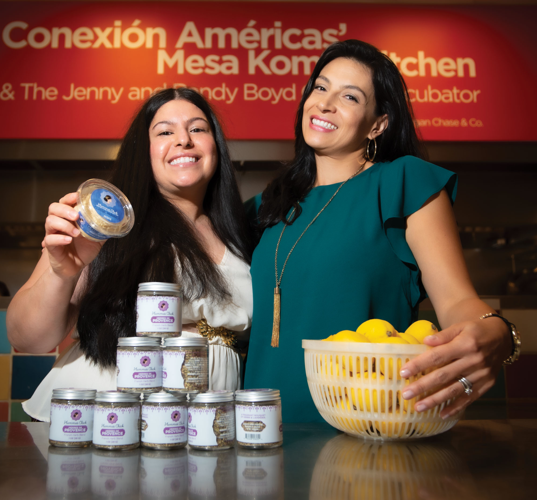
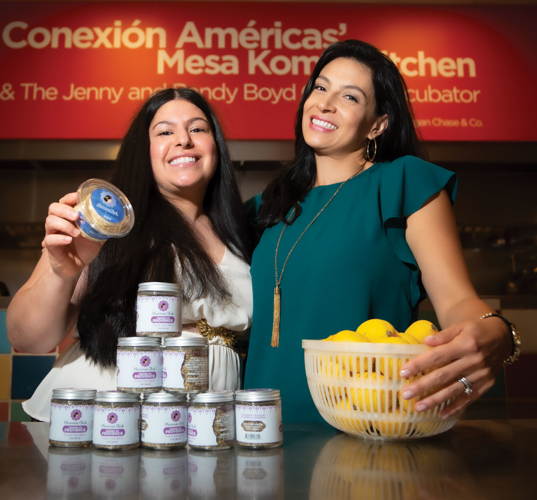


Java Hemmat and Martha Silva
When local pastry chef and author Lisa Donovan heard that her friend Caleb Zigas was launching a nationwide book tour for We Are La Cocina: Recipes in Pursuit of the American Dream, she was ready to show off Nashville’s immigrant food scene.
“We are fortunate in the truly diverse food being made in this town,” she says. Donovan recruited Sean Brock, Bastion’s Josh Habiger, Folk’s Michael Matson and others to participate in a pair of events highlighting the book. “This is such a great opportunity to look up and out,” she says. Rest assured, this is not your standard book tour.
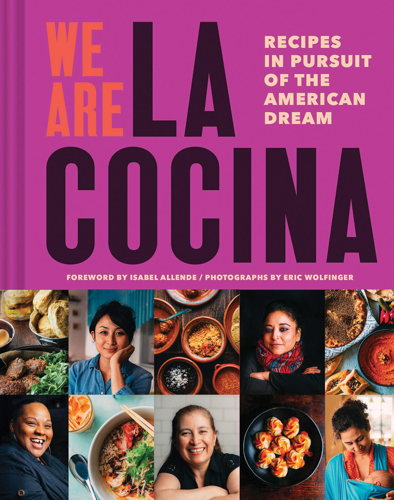
Zigas is executive director of La Cocina, a San Francisco-based nonprofit that helps low-income food entrepreneurs build businesses. The book, which he co-wrote with others on the La Cocina team, was published in June and is part cookbook, part documentation of several immigrants pursuing the American Dream. We Are La Cocina documents the stories of more than 40 women from the Bay Area who used the nonprofit’s culinary incubator to create businesses, preserve traditions, feed people and change lives.
“The thing I appreciate [about La Cocina] is their ability to provide a direct pathway to self-sufficiency and business ownership, primarily to women and immigrants,” Donovan says.
With assistance from the city’s top chefs as well as Jennifer Justus, culinary community liaison at The Nashville Food Project, Donovan helped design what Justus calls “a proper Nashville welcome.” The events are a collaboration of three nonprofits — La Cocina, Conexión Américas and The Nashville Food Project — all working in various ways to support New Americans as well as an independent bookstore, the chefs and other businesses.

The book tour isn’t just a means of selling books. In fact, Zigas says La Cocina will lose money on the tour itself, but thinks it is vital to encourage conversations and help the food entrepreneurs meet others with similar goals.
Donovan and Justus helped La Cocina plan back-to-back events this week. Saturday night, Sept. 28, there’s a dinner at The Nashville Food Project, a $150 evening that includes some of the city’s best chefs cooking with entrepreneurs from La Cocina and using some produce from TNFP’s Growing Together farm for New Americans. A copy of the book is included in the ticket price. If tickets sell out, there will be a waitlist to join.
“It’s always a really cool thing when you get to cook a meal with talented friends for a great cause,” says Bastion’s Habiger. “La Cocina’s work rings current, especially in this industry, and to be able to help shed some light on it is something I’m really proud of.”
In addition to Habiger and Brock, Que Delicias’ Elvira Vasquez — an entrepreneur who works at the Mesa Komal culinary incubator at Conexión Americas’ Casa Azafrán — will cook at The Nashville Food Project’s dinner. (Mesa Komal is Conexión Américas' culinary incubator in Casa Azafrán and a component of Conexión Américas' economic integration program.) Pastry chef Donovan will make desserts. Woodland Wine Merchants will supply wine, and the Fairlane Hotel will house out-of-town guests.
But you don’t have to have $150 to get the La Cocina experience in Nashville. The next afternoon, Sept. 29, a group will meet at 2 p.m. at Conexión Americas for a discussion of the book and the entrepreneurs’ stories. The event is free, and books will be for sale via Parnassus Books. (Advance online registration is requested.) Participating in the discussion will be: Nashville’s Java Hemmat of Hummus Chick; Nafy Flatley of Teranga; Reem Assil of Reem’s California; Alicia Villanueva of Alicia’s Tamales Los Mayas; and Zigas.
“It is important to recognize that immigrants contribute to every meal we eat every day,” explains Martha Silva, senior director of of economic integration at Conexión Americas. “We’re not only talking about the hands of cooking, but those picking the tomatoes.”
Conexión Americas began thinking about opening a culinary incubator as early as 2010, although it didn’t have the funds at the time. The kitchen opened in 2013 and provides a place for business owners to rent kitchen space without having to invest in their own commercial kitchens (or having to figure out what the code and permit implications would be to step out on their own). La Cocina was a model and an inspiration for Mesa Komal, Silva says.
Hemmat launched Hummus Chick, a wholesale hummus supplier, using the Mesa Komal kitchen and now is also the project’s client relationship manager. One of the biggest rewards of being involved with Mesa Komal, she says, is working with other entrepreneurs from roughly eight different cultures and learning about their experiences as well as their kitchen techniques.
“We want you to buy the book because you are excited to read it,” Zigas says. “But in the process, we hope you find yourself inspired. We hope you cook some of the recipes. At the end, we hope you experience the range of the emotions that these entrepreneurs have. We hope you get a little bit angry.”



Post a comment as anonymous
Report
Watch this discussion.
(0) comments
Welcome to the discussion.
Log In
Welcome to the discussion.
Keep it clean. Please avoid obscene, vulgar, lewd, racist or otherwise abusive language. Comments featuring hate speech or threatening or violent content will not be tolerated.
PLEASE TURN OFF YOUR CAPS LOCK.
Be truthful. Don't knowingly lie or mislead.
Be proactive. Use the “report” link on any comment that violates our comment policy.
Share with us. We'd love to hear your feedback.