
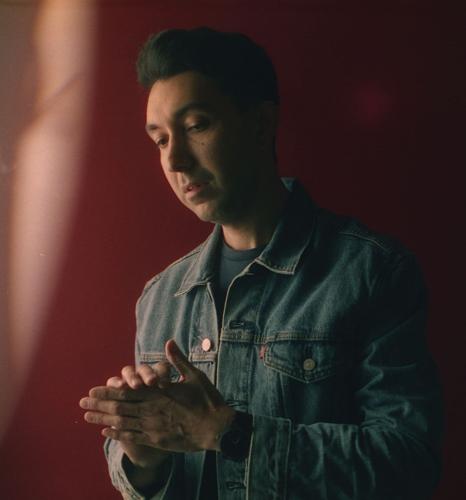
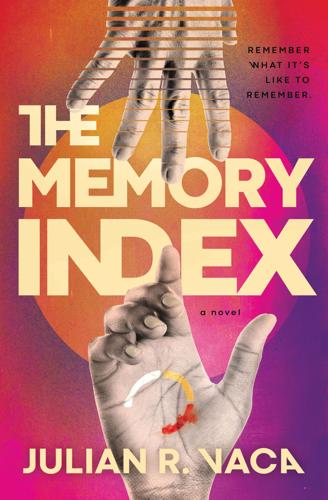


In Nashville author Julian R. Vaca’s young adult sci-fi novel The Memory Index, a plague-like illness known as Memory Killer is devouring the memories of people the world over. A device called a MeReader scans everyone at 16, discerning each person’s degree of memory loss. It separates people into a caste system of “recollectors” and “degenerates.” Lose too many memories, and you’ll need a handler to accompany you in public. Lose even more, and you’ll be institutionalized in the mysterious and malevolent Fold.
A large corporation provides the means for artificial recall — a process in which people use devices to routinely experience old memories that they have lost or are in danger of losing. It’s an exciting sci-fi premise with loads of opportunity for world-bending consequences that speak to the loss of privacy and proliferation of data mining that dog us today.
Here’s what’s most surprising about this premise: The year is 1987.
By setting the novel in the pre-internet days, Vaca capitalizes on opportunities to surprise us. He also creates a rich atmosphere that’s dotted with cultural touchstones. He even created a playlist of all the songs the characters listen to, and the book has an original song, “Remember Me,” by Nashville duo Jessie Villa and Stephen Keech.
Vaca’s heroes are four high school students who have been enrolled in a study as the test subjects for a new device that will supposedly advance artificial recall. But they’re not going to participate without a fight. I enjoyed Vaca’s take on the ’80s’ cinematic teen character tropes. The central teenager is Freya, a 17-year-old Mexican American who is mourning the recent death of her father. Vaca, who is a first-generation Mexican American himself, says exploring Freya’s character spoke to his own heritage and history, and the result is a degree of authenticity that brings heady themes down to the ground.
The sequel to The Memory Index, The Recall Paradox, is due out in April 2023. I talked with Vaca about his books, the ’80s and the theme of grief.
I really loved all of those ’80s touchstones in the novel. What drew you to that decade?
The first thing that really interested me about setting the book in the ’80s was the fact that if there was this sort of plague-like phenomenon like Memory Killer, how would an analog world confront something like that. In a lot of ways, the story almost doesn’t really work in 2022, where smartphones are everywhere, and there’s advancements with micro technology … and certainly on the medical front, too. There was this excitement and intrigue of taking that kind of idea, but putting it in an analog world. [With] my background in going to film school, I just really love those sort of old-school VHS camcorders and all that analog technology. And so immediately, that was one of the first things that drew me to that decade. Then the other thing is atmosphere. I love a novel that has a rich atmosphere, where you feel like the setting and all the different elements of locations and the culture kind of become a secondary, tertiary character to the story. And there’s just something very familiar about that decade. And so I thought, “Man, if I could do this right, it could give the readers a sense of groundedness.”
Obviously there’s that risk of the ’80s having been in vogue for a while — you don’t want it to feel gimmicky. … If I do this, I need to make sure it’s intentional. I would definitely say that the other big component to that atmosphere is that the music, the soundtrack needs to be authentic. And then also, lastly, I was born in ’87, so I was a child of the ’90s. However, I grew up in a household where … my dad was a huge cinephile. And so we were consuming and devouring lots of ’80s movies and music.
What are some of your favorites?
Oh, gosh. Well, I think there is only one flawless, perfect movie, and it is the first Back to the Future. … In film school, we talked about [how] that script really executed an interesting concept. … Edward Scissorhands was one of my all-time favorite movies. … And then of course, who doesn’t love all the John Hughes movies? ... 16 Candles, Breakfast Club. With my story, I sought to make it a kind of cocktail of all those different elements.

There’s a whole philosophy of memory in the book — the characters even take a class about it. How did you conceive of this philosophy, and what kind of research did you use to develop it?
So I definitely went down many rabbit holes and researched through medical blogs and did actually pass ... the fourth draft of the manuscript to a medical professional friend of mine. I definitely wanted to make sure that the research was there. But honestly, the seed of the idea came from my fascination with childhood amnesia and this idea that we don’t really remember anything before, like, 3-and-a-half [years old]. That fascination is where it all kind of started. I started confronting philosophical questions about memory. One of the characters in the book poses a question — she says, “Are we more than the sum of our memories?” as an identity question. And then in the second book, one of the questions that I confront is, “What’s a more terrifying thought — losing your memories, or confronting the really difficult ones?” And so I just realized as I was thinking through the story and as I was crafting the manuscript, memories play an integral role in our day to day. … All those kinds of different questions and interests led me to concepting the story. There’s just a lot of cool things out there about how our brains store memories, and all of the different research that went into how many memories we actually do retain on a given day, and how many we actually lose.
All of the friends have experienced some kind of a loss that they’re still grieving. Why is it important that young adult readers meet characters who are experiencing this?
In a lot of ways with The Memory Index, there was this opportunity for me to speak into my childhood and my heritage. … Then there was this other element of my interest with memory and how it interplays with our day-to-day and our identities. The third [element] is definitely grief. Grief, and specifically with infant loss, plays a huge part in my story. Writing this became an exercise in a lot of ways of processing that grief. I think about some of my favorite young adult novels: Looking for Alaska by John Green. Most recently, I’ve read Jeff Zentner’s The Serpent King. And then he also wrote In the Wild Light recently, which is a stellar book, but there’s a whole host of different young adult books out there that tackle grief and loss very well. It was just really important for me to be able to speak to that, because I’ve experienced it. And I’ve found that when I was younger, talking about vulnerable things like loss and grief were kind of taboo. And it’s really now our generation, I feel like the pendulum is kind of swinging. And we’re seeking to empower young people to embrace confronting grief and loss, and mental illness is at the forefront of the conversation. So that was super important for me.



