
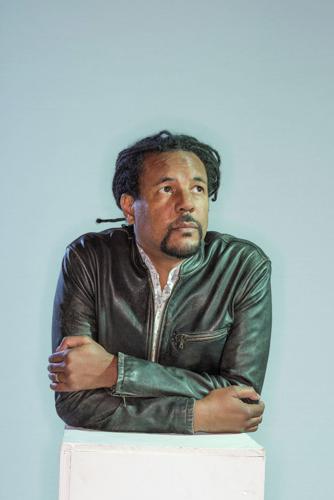


Around this time each year, the Nashville Public Library announces its Nashville Reads title, an annual citywide read intended to broaden Nashville’s literary horizons and open up a forum for discussion. This year, the bibliophiles are ambitiously honoring author Colson Whitehead for all of his work.
Whitehead is among four authors in history to win the Pulitzer Prize for Fiction twice, which he did in 2016 and 2017. Both of the winning books are exceptional works about weighty historical topics — The Underground Railroad follows an enslaved woman who escapes and flees north, and The Nickel Boys is based on a real-life Florida school for boys, where physical and sexual abuse occurred for decades without intervention.
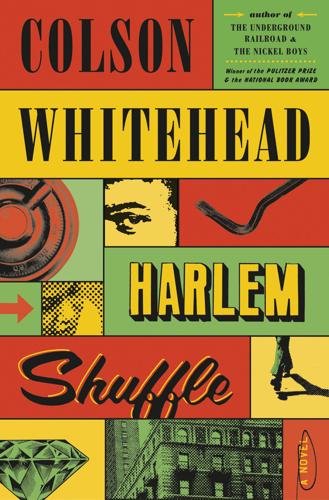
His new novel is something else entirely. A crime caper, Harlem Shuffle is set in 1950s-’60s Harlem, where a square but relatable furniture salesman named Ray Carney fences stolen goods to create a better life for his family. Harlem Shuffle is a page-turner with a plot that keeps you guessing, and Whitehead’s expertly researched setting provides a backdrop for Carney’s meditations on class, power and morality.
Whitehead is headed to town for the Nashville Public Library Foundation’s Literary Gala, and he’ll deliver a public lecture at 10 a.m. Saturday, Nov. 13, at Martin Luther King Jr. Magnet High School. The Scene spoke to Whitehead by phone about Harlem Shuffle, his alt-weekly roots and more.
You were an alt-weekly guy when you were starting out at The Village Voice. Did that work impact your development as a writer?
A huge development. The great thing about being at The Village Voice is that it was a writer’s paper. Once you’d have your foot in the door, you’d get hit up by the music editor or the book editor to get an assignment. That assignment leads to other stuff if it works out well. Growing up, I most admired people who wrote about books one week and movies the next week and music — being one of those pop-culture gurus, and so it was a delightful time. In terms of work, if you’re handing in your copy, working with this editor, that editor, you become less precious. You learn to self-edit before you hand it in so you’re not embarrassed. If you have to get paid so you can keep your lights on and get food going, then you learn how to sit down for four, five, six hours and be your own boss. Definitely that discipline I’ve used since — no one cares if you write or not. You have to care. You have to learn the tools of discipline and sitting at the desk.
What drew you to the crime caper form to write Harlem Shuffle?
Heist movies, whether it’s Ocean’s 11 or Rififi ... Asphalt Jungle, The Killing. And I was thinking, “Oh, how much fun they had thinking up those stories. Can I do that?” So I just gave myself permission to do a form that I really enjoy but from my own individual angle.

Do the plot and mechanics of that and maneuvering come along with the character development, or do you have an idea of the thematic stuff first?
You know, both. I want to do a heist. OK. When? Where? Who’s gonna do it? I picked New York, I have a place. 1964. I thought that would be a good background. Then Carney starts to take shape. You know, in thinking about fences, I discovered that a lot of them have businesses where they do legit stuff in the front and all the illicit stuff is going on in the back, and that kind of speaks to a divided nature. That’s a good psychological template for Carney. One decision leads to another and you have to follow up on it. You have a character and a family and an outlook, and things start coming together.
Have you found that Southern audiences are distinct in any way?
I did travel much for work to the South for Underground Railroad, and I was delighted that part of the South embraced the story. I’ve never read in Alabama or Mississippi, but definitely North Carolina, South Carolina, Georgia were very welcoming, and I’ve had multiple trips down there. We all have to reckon with the past, and I’m glad that some parts of the South are open to it even if other parts are not.
Have you felt a lightness with Harlem Shuffle, compared to The Nickel Boys and The Underground Railroad?
It’s very different in tone. I usually switch back [and forth] between a book that’s more serious and a book that has more humor. So doing Nickel Boys and Underground back to back was a different rhythm for me. Obviously this doesn’t grapple with American history in the same way. It’s a crime story; there’s more room for play and for humor. So immediately when I started writing it, it was a very different book with a very different tone, and it was nice to be able to make some weird jokes again.



