
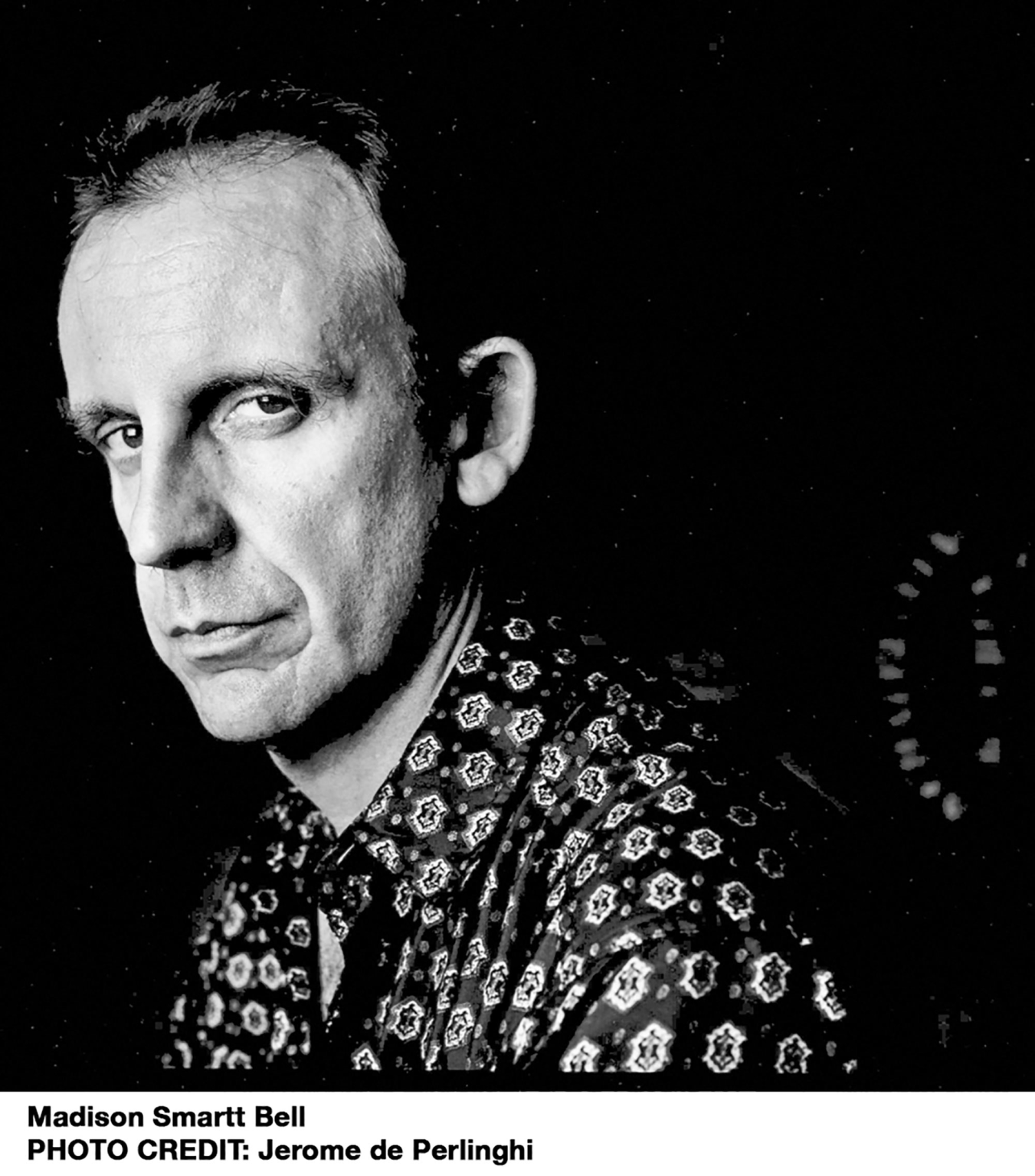


In the preface to Child of Light, the biography of novelist Robert Stone, Madison Smartt Bell describes Stone as a man who “confronted the world with the bright, acidic irony of an extraordinarily perceptive, bitterly disappointed idealist.” The book follows Stone from his 1937 birth to a single mother in New York until his death at 77 in his Key West, Fla., home, with his wife Janice by his side.
Stone was an admired short-story writer and journalist, but he’s best-known for his eight novels, including 1974’s Dog Soldiers, which won a National Book Award, and 1981’s A Flag for Sunrise, a Pulitzer Prize finalist. His protagonists are often American adventurers and expats drawn toward confrontations with the ugly flipside of exceptionalism. He has been compared to everyone from Melville to Flannery O’Connor. Bell, on the other hand, argues persuasively for Stone’s unique place in American literature. “Comparisons serve best to set him apart,” Bell writes. “As for his work, there is nothing else quite like it in the entire American canon.”
Bell, a Nashville native, answered questions via email.
You note in Child of Light that Stone didn’t care much for celebrity. What do you hope readers will take away from your account of “a hell of an interesting life,” as Janice Stone describes it?
Stone didn’t much care about the celebration of his personality. He cared about the celebration of his work quite a bit. So I’m taking the opportunity to do the latter directly; it’s a critical biography in the sense that it does contain detailed discussion of all his novels and many of his stories.
It was indeed an interesting life — and a typical American life in the sense of exemplifying our old belief that anybody who tries hard enough (and gets lucky) can rise from the most miserable poverty and deprivation to success and prosperity. Stone in fact performed that maneuver, although not in Horatio Alger style (a comparison I’m sure he would have scorned). In this very general way, he actually did live that version of the American Dream, but he was also intensely, and intelligently, skeptical about it. Every major novel he wrote drills into disillusionment with some phase of American life in his time.
What are the particular challenges of writing a biography of someone you knew well and admired?
I’m not sure I thought about that consciously in the writing. A couple of reviews so far (Harper’s, American Conservative) have noted my lack of distance from the subject and then decided to forgive me for it. (I doubt I’ll be so lucky with everybody.) I think maybe an early conversation with Janice is relevant. I was still considering the project, as was she — I asked her how frank she wanted to be about a couple of dicey topics, and after some deliberation she said she thought Bob would want the whole truth told, and that was what she wanted too. At that point I thought, OK, let’s do it.
Janice Stone’s voice is central in the biography, and she was a central figure in Stone’s career. She dedicated herself to supporting and enabling his work. Could he have been the writer he was without her?
No. I don’t think so. I mean, he was the one with the vision and talent, but he was also one of the great procrastinators of all time, and he had a lot of bad habits that would have proved fatal much sooner if not checked. Janice could get him to finish things, and I think he grew to depend on her doing that fairly early in the marriage. Without her, there’d have been a lot less finished work and more than likely a much earlier grave.
Stone once said: “That is my subject. America and Americans.” Do you think anything about our current political and cultural moment would surprise him?
The extremism might. Or not. I thought I could see it coming in the 1990s — that the identity politics practiced so vigorously by the left would eventually produce a reactionary, exterminate-the-aliens movement on the right. I would bet Bob saw that in formation too, although we didn’t talk about it.
His first novel, A Hall of Mirrors, is seen by a good few readers as predictive of Trumpworld. In the novel’s climax, a white supremacy movement provokes a violent crisis, enabled by under-the-table machinations by a business guy. That episode is fueled by a corruption of the media quite similar to the evolution we’ve seen in our time: from Medal of Freedom winner Rush Limbaugh, through Fox News and the Balkanization of opinion facilitated by the internet, finally producing the hegemony of “alternative facts.” I would say that Stone deduced those mechanisms in that mid-1960s novel; they have become much more powerful since.
To read an extended version of this interview — and more local book coverage — please visit Chapter16.org, an online publication of Humanities Tennessee.



