


From “Isn’t the World Just a Great Big Pyramid Scheme?,” Gabriella Torres-Ferrer
Not everyone finds it helpful to point out the silver linings to a global pandemic. People have less bandwidth for frivolous pleasures, even though you’d think there would be more time for everything. So if I say it’s the perfect time for Unrequited Leisure’s online exhibition, it’s not because art is here to deliver us from the collective episode of The Twilight Zone we’re all stuck in. It’s because Future Framed Works showcases the best ways that art is constantly adapting and evolving, pushing imagination and expectations.
The exhibition takes the form of a dedicated website, and hosts four video works by four artists — Liat Berdugo, Gabriella Torres-Ferrer, Rebecca Forstater and Bahareh Khoshooee — that are loosely based on performances in online spaces. The exhibition statement says it’s experimental, but that’s not to say it’s unthoughtful or carelessly conceived.

From “Internet Aerobics,” Liat Berdugo
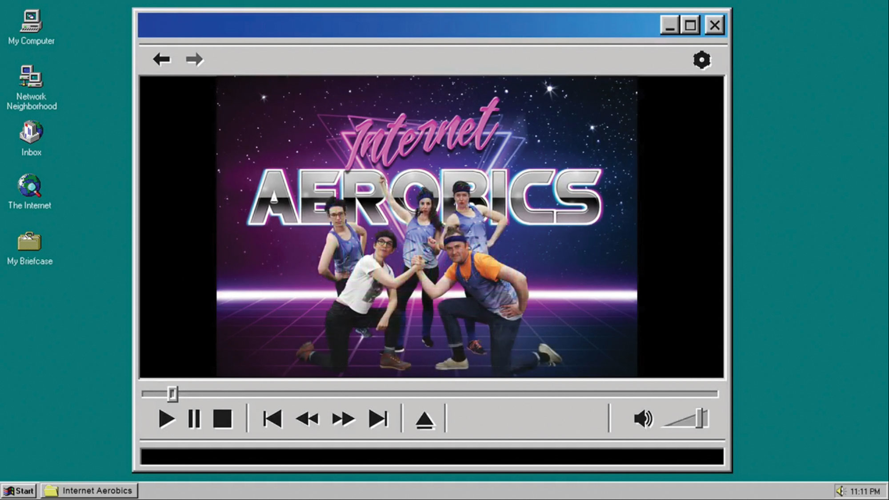
Berdugo’s “Internet Aerobics” is a 20-minute video that apes the corny aesthetic of late-’80s and early-’90s aerobics videos, but is also a strangely sweet ode to the online age. Three women in hyperlink-blue leg-warmers and sweatbands perform choreographed routines to songs about the internet, like Le Tigre’s “Get Off the Internet.” It’s a joke that should overstay its welcome after about two minutes, but thanks to the artist’s dedication to detail — the ethernet cables the performers use as exercise props, the canned applause between tracks, the bland computer-lab setting — it works. Berdugo, who is based in Oakland, Calif., has performed the piece as a participatory event in recent years, leading groups of people through the motions of internet adoration via cardio. It’s tongue-in-cheek and campy, but also enthusiastic about the very thing it makes fun of — both aerobics and online culture. The lightheartedness makes it an ideal point of entry for a show of video art that doesn’t take itself too seriously.
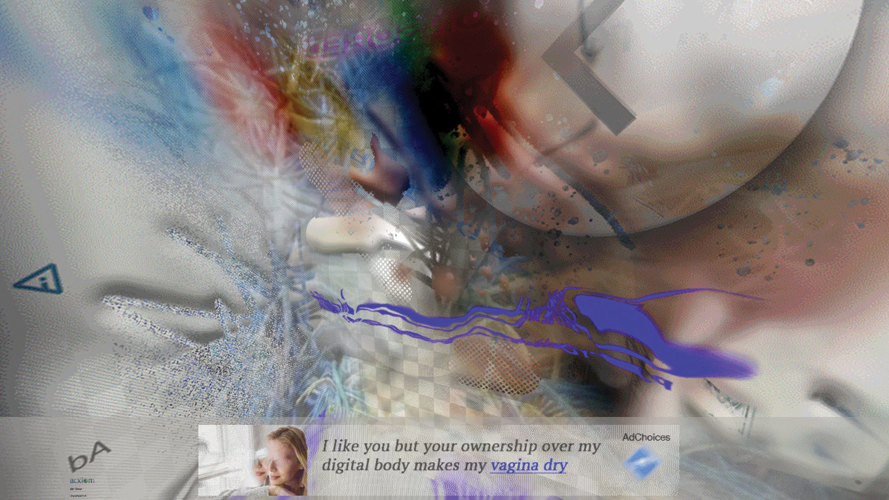
Torres-Ferrer’s interactive piece is the exhibition’s highlight, even though you have to navigate away from Unrequited Leisure’s website to fully access it. The piece, titled “Isn’t the World Just a Great Big Pyramid Scheme?,” is what I imagine the internet would look like in a dream. Vaguely sexy but also bland and nonsensical, it’s seductive in a way that reminds me of a phrase a friend once used to describe a downbeat ambient song: “suicide beige.” In her artist’s statement, Torres-Ferrer calls the piece “a commercial web détournement,” and the interface encourages you to explore the surface of the website like a creepy internet stalker. There’s a Winamp music player that plays atonal noise, empty corporate-speak like “bypass the classic power contra-power strategy,” and intentional misspellings that bring to mind glitchy auto-translation apps.

From “There’s Enough for Everybody,” Rebecca Forstater
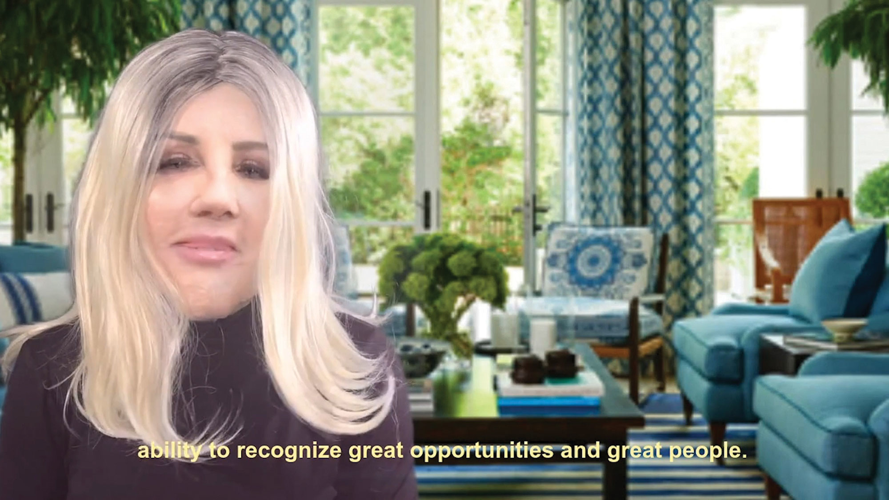
If Torres-Ferrer’s piece feels like a dream about the internet, Forstater’s “There’s Enough for Everybody” feels like a dream about QVC. Forstater creates a lo-fi version of deepfake technology by wearing silicone masks of cast members of The Real Housewives of New York City, then running them through a Snapchat face-swapping filter with a photo of the cast member’s face. She talks about making chicken Parm with a rubbery, unmoving facial expression and a thick Long Island accent, and it makes me never want to eat anything ever again. It’s a bizarre dive into the uncanny plasticity of reality television and social media, and I almost wish I knew more about the Real Housewives franchise, just so I could soak in the references.

From "MaxMotives," Bahareh Khoshooee
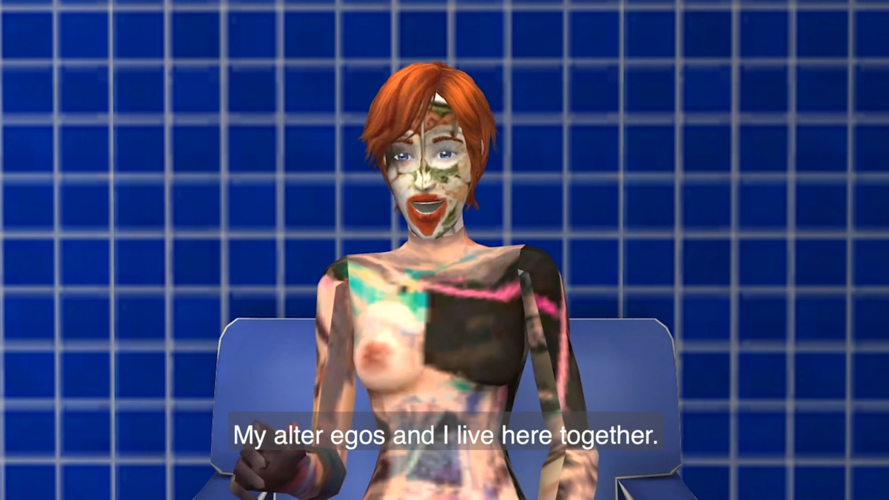
“MaxMotives” is one of a series of works by Khoshooee, a New York-based artist from Tehran who went to art school in Tampa, Fla. She references that confluence of cities in her art with an interest in diaspora culture and fragmentation. Khoshooee’s contribution to Future Framed Works is the first episode in a fictitious reality show in which her virtual alter egos discuss a new baby. One alter ego has an on-camera interview that mimics the “confessional” trope of reality TV, and speaks in Farsi with subtitles running beneath her. The mundanity of her words — “If I’m being honest with you, I think this baby, um, is my baby” — is set against the extravagant aesthetics of cyberspace. It’s Big Brother filtered through New Wave futurism, at once boring and visually rich, and it’s a perfect fit for an exhibition about the uncanny and the mundane.
The entire exhibit feels extremely cohesive, which is mostly due to the curatorial acumen of gallery directors Chalet Comellas Baker and Clinton Sleeper, but also because the web design is structured to tie each video together. Each piece appears on the same static-filled surface with the same floating blue squares that travel across the videos as they play. It’s slightly annoying, but it’s such a confident addition that it reads as visionary. In the world of digital art exhibitions — which is the only kind of art exhibition we really have right now — style isn’t separate from substance. There is no simulacrum when “online-only” is all there is.



Post a comment as anonymous
Report
Watch this discussion.
(0) comments
Welcome to the discussion.
Log In
Welcome to the discussion.
Keep it clean. Please avoid obscene, vulgar, lewd, racist or otherwise abusive language. Comments featuring hate speech or threatening or violent content will not be tolerated.
PLEASE TURN OFF YOUR CAPS LOCK.
Be truthful. Don't knowingly lie or mislead.
Be proactive. Use the “report” link on any comment that violates our comment policy.
Share with us. We'd love to hear your feedback.