

It begins within the void. It is never explained whether this is some physical space (or absence thereof) beyond the universe, or if it is a metaphorical representation of the internal. But Daniel Isn’t Real, the second feature from director/co-writer Adam Egypt Mortimer, is creative in its cosmology and nimble in its structure, so it works both ways. This is a kindhearted but emotionally rigorous journey to the precipice of madness that isn’t afraid to go Screaming Mad George when the time comes to spread the splatter.
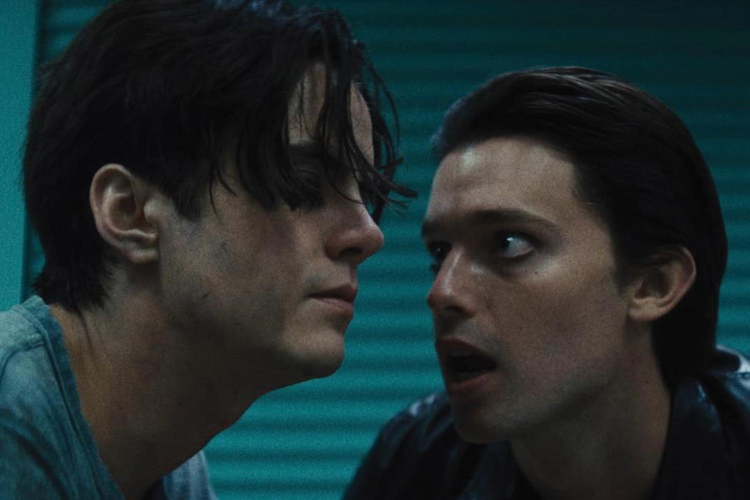
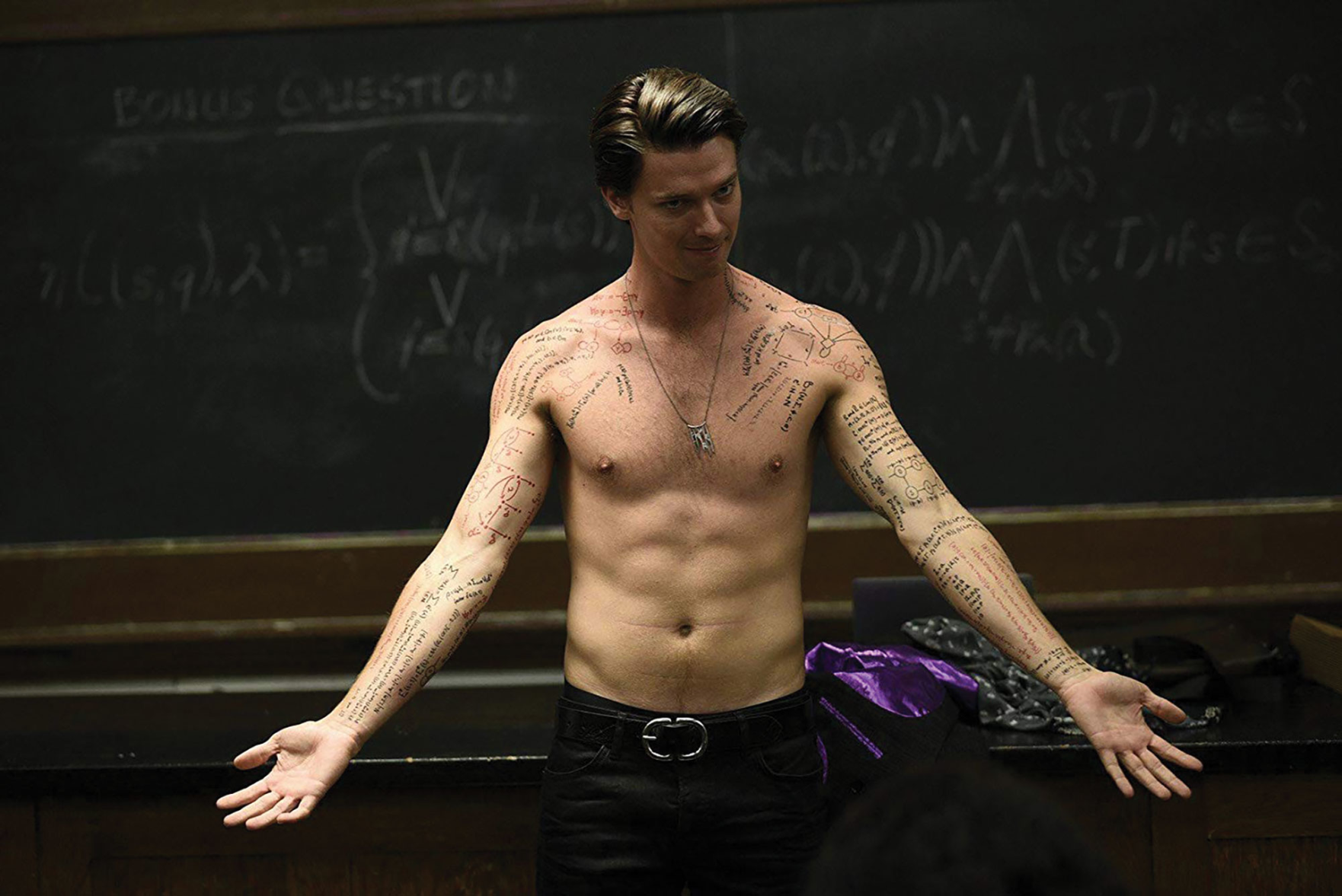
Luke (Miles Robbins, superb at walking a very challenging emotional tightrope) is a college student dealing with doubt, the legacy of mental illness in his family, the engine of desire and the reappearance of his imaginary friend from childhood Daniel (Patrick Schwarzenegger, charmingly menacing and menacingly charming, leaning more on Kennedy charisma than Schwarzenegger physicality). Luke has returned to a sprawling, book-strewn brownstone filled with shattered mirrors. After having to break down a bathroom door, he finds his mother Claire (the still-iconic Mary Stuart Masterson) in the midst of a full-on Whalestoe Letters-style dissociative and suicidal episode. “I didn’t like what I saw in there,” she says, explaining why she’s broken all the mirrors. It was a moment of unspeakable horror that introduced Daniel and Luke when the latter was a child, and another that separated the two. And now, in the middle of a situation no one could be expected to bear, Daniel has returned, summoned from the subconscious, with all of his tendencies toward creativity and chaos.
The film is based on co-writer Brian DeLeeuw’s novel In This Way I Was Saved. A different animal than its source material — and still an exceptional work of adaptation — Daniel Isn’t Real takes the book’s literary bent and exigeses and finds their expression in a visual medium. There’s no way to represent on screen the psychic linchpin of the book-within-a-book Alexandra Tithe’s Shadow Life: A Novel without resorting to narration, but Mortimer and DeLeeuw translate the Nightingale family tragedies into the realms of art and photography perfectly. Fans of the book need not fear — the two works coexist in the uneasy space that Luke and Daniel share.

The look of the film is sleek but textured. Cinematographer Lyle Vincent helps conjure a straight-up paranoid fantasy of New York City propelled through real streets, art exhibits, assertive women who know how to find their lighting and who eschew being anyone’s abstract construct, strobe-lit acid-squelch/knee-slap disco freakouts, clackety subway trains, and into the kind of loneliness that eats away at your certainties and happens only when surrounded by millions of other people. The last time a film was this able to collapse the passage of time and make a viewer feel deeply as if still in the manic-but-giddy uncertainties of youth was Donnie Darko.
Daniel Isn’t Real is a remarkable film — a visceral portrait of mental illness, a haunting nightmare of cosmic body horror, and an emotional grenade that goes off long after you’ve finished the film. It’s got that lingering devastation that colors whatever you do for the next few days, where everything seems normal, and then without warning a synapse fires, and you remember, and you’re trying to hide these unexpected tears from onlookers. Daniel Isn’t Real makes the act of being alive into a form of intimate exposure, and if it did nothing else, it would be an incredibly valuable work for making general (read: neurotypical) audiences aware of that. But there are moments in this film that rival the trippiest aspects of Season 3 of Twin Peaks, ledge-based cosmology and all.
This is a film that frustrates the urge to solve puzzles; there aren’t clues to solve. But it’s the best film of the year, and worth the time of anyone interested in essential voices in cinema. Clothe your secrets in the reddest of sackcloth. Or designer suits.



