
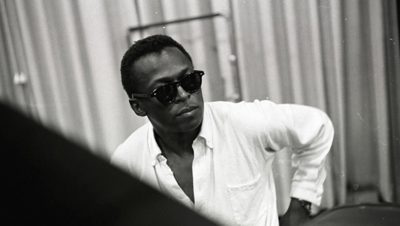


Stanley Nelson’s comprehensive Miles Davis: Birth of the Cool does the finest job possible of showcasing an incredible array of accomplishments, while neither deifying or sanitizing the legend at its center. Rather than opting for either a biopic-style feature or a strict by-the-numbers documentary, Nelson combines what works best from both.
There’s ample dramatic character flourishes and reflections to let both hardcore fans and newcomers recognize both Davis’ brilliance and his hair-trigger temper. The famed trumpet player and composer was capable of remarkable insight and creativity, but obsessive about his music and career to the point of immense selfishness and cruelty. Some critics have taken issue with Nelson’s choice to use actor Carl Lumbly as the film’s narrator — Lumbly employs an impersonation of Davis’ trademark raspy voice. While it wouldn’t have been my personal preference, it doesn’t interfere with the story’s flow in any fashion.
Despite its title, Nelson’s treatment doesn’t limit itself to an examination of the historic 1949 and 1950 Birth of the Cool sessions, which signaled a shift in the jazz world from bop’s rapid-fire tempos and fierce harmonic explorations to a softer, more lush style. Instead, Nelson begins with Davis’ earliest days as a teen prodigy sitting in with Billy Eckstine’s heralded big band, before moving to his days as a restless Juilliard student roaming 52nd Street in search of Dizzy Gillespie and Charlie Parker. From there the film explores every phase of Davis’ career, interspersing interviews with an array of critical insiders, former bandmates, close personal friends, children, and former wives and lovers.
Sometimes, like when the camera focuses on the faces of French performer Juliette Gréco or Davis’ former wife Frances Taylor Davis, the moments lurch from poignant to sad, humorous to regretful. There are two key figures Nelson evidently couldn’t get to speak on camera: Davis’ third wife Cicely Tyson — whose role in assisting his career and helping him kick drugs in the mid-’80s is duly noted — and second wife Betty Davis, the vocalist who was so influential in his change in musical directions during the ’70s.
It’s instructive to hear from such greats as Herbie Hancock, Wayne Shorter, Jimmy Cobb and more recent band members such as Marcus Miller, James Mtume and Mike Stern. They constantly cite Davis’ steadfast desire to always push ahead, as well as his ability to get the most out of his bands with limited instruction. “I pay you to rehearse in public,” Hancock says Davis told him at one point. As far as audience reaction? “Let me take care of that,” Davis would say.
The film also features an exceptional selection of archival footage, from live performances and studio recordings to pre-show photos and television appearances. Even so, two of Davis’ greatest friendships don’t receive much attention. One was with Gil Evans, who is covered in terms of specific recordings, but not as much in regard to tips Evans gave Davis about orchestration and arranging. The other somewhat overlooked friendship was with former San Francisco Chronicle jazz critic and founding Rolling Stone editor Ralph J. Gleason. The two were so close that upon hearing of Gleason’s death, Davis’ response was, “Give me back my friend.”
But Nelson doesn’t overlook or try to excuse Davis’ many flaws and lapses in judgment, and thus manages to offer a nuanced portrait of an undeniable genius. He doesn’t devote as much time to the music Davis made in the ’70s and ’80s, but there’s enough presented to accurately reflect the controversy and sense of betrayal some within the jazz world felt as Davis embraced the sounds and sensibility of rock and funk. The trumpeter not only abandoned the acoustic format he’d previously championed, but also changed his look and attire. He was still viewed as the epitome of hip by many, but the purist/snob sector (voiced here by critic Stanley Crouch) considered him a sellout and traitor.
Ultimately no life as rich, full and complicated as Miles Davis’ can be fully shoehorned into a single production. But Birth of the Cool is the best effort yet when it comes to presenting a musical genius and cultural icon who — despite his many weaknesses and demons — made contributions that will remain forever.



