

Once a month, reporter and resident historian J.R. Lind will pick an area in the city to examine while accompanied by a photographer. With his column Walk a Mile, he’ll walk a one-mile stretch of that area, exploring the neighborhood’s history and character, its developments, its current homes and businesses, and what makes it a unique part of Nashville. If you have a suggestion for a future Walk a Mile, email editor@nashvillescene.com.
The Route: Starting at the southwest corner of Morgan Park, north on Fifth Avenue North, then right on Buchanan Street. Right on Third Avenue, then right on the greenway into the park and back to the beginning.
Cranes: 5
Abandoned Scooters: 0
Cats: 0
Witches: 0
Water bubbles up from places unseen into a stone fountain at the southwest entrance of Morgan Park in Salemtown. The water feature is decorated with tiny taps, dripping water into a narrow trough that carries the stream downhill into the park proper.
The dogs out for their morning constitutionals ignore the warning that the water is not for drinking. (Dogs will drink anything.) Their people heed the caution.
The pleasant little bubbler is an homage to the early history of Morgan Park.
In 1909, Nashville’s Park Board purchased Frederick Laitenberger’s beer garden, which occupied the entire block at Hume Street and Fifth Avenue, and turned it into a park for the workers at the nearby Warioto Cotton Mills and the Morgan-Hamilton Bag Co. (later, and still, Werthan Mills). The park was named for Samuel Dodd Morgan, who founded those companies and had died nearly 30 years earlier. Morgan, “The Merchant Prince of Nashville,” is perhaps best known today as the man who chaired the commission responsible for the construction of the Tennessee State Capitol. He’s buried inside the walls, along with architect William Strickland. The men were often at loggerheads — as the arty minds of architects and the practical minds of the moneymen are frequently at odds — and the legend goes that their spirits can still be heard arguing today.
When Morgan was building his mills, workers drilled for water, hoping to hit one of the many springs that undergird this section of the city. They indeed hit a spring but learned quickly — no doubt via their olfactory nerves — that the water was sulphured, which would damage the mill’s equipment. Nevertheless, the spring became popular among Nashvillians, who believed the water cured a host of ailments — and also kept away cats and witches.
So popular was the water that when Nashville opened the park, they piped the water there and allowed Nashvillians to fill jugs, free of charge, for their own personal use (and also cat- and witch-deterrent purposes). In fact, the fountain was maintained well into the 1950s, and then the source was moved a few blocks south to Taylor Street. Today, the sulphur spring is buried and unpiped, the little fountain at Morgan Park simply commemorating it. (In addition to being unsuitable for human consumption, the water in the fountain is unsulphured.)
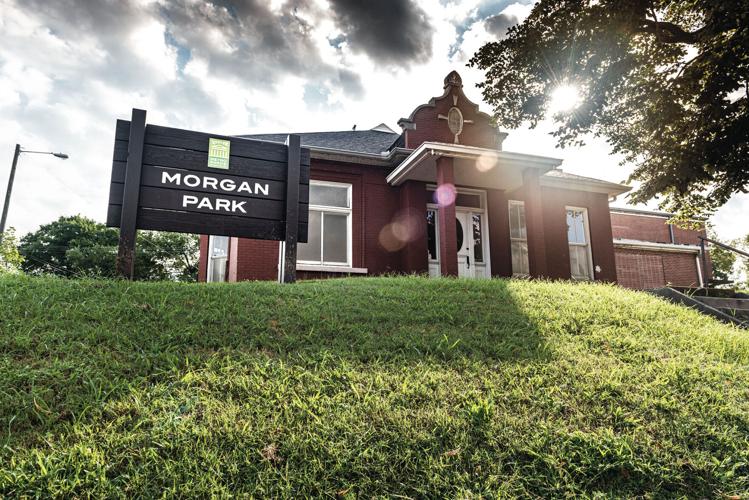
Morgan Park sits elevated above Fifth Avenue, a stone wall of some age holding back the earth. The community center is an amalgam of styles: the back section a rather conventional example of late-20th-century practicalism attached to a charming little fin de siècle structure that was the park’s original “House of Comfort,” which sounds euphemistic but isn’t.
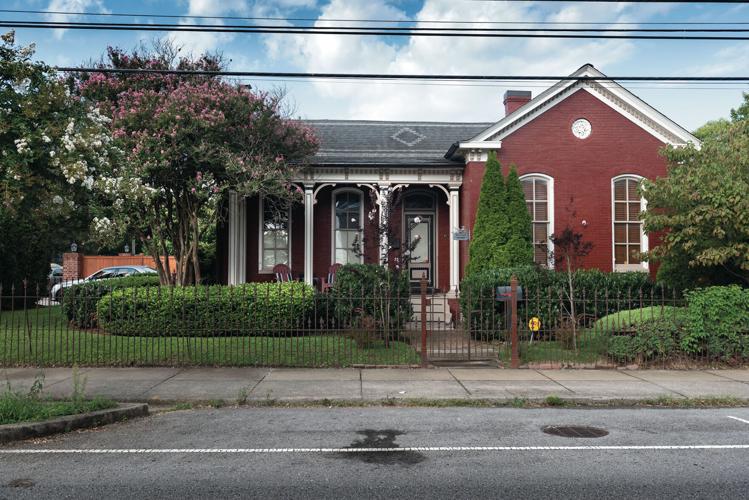
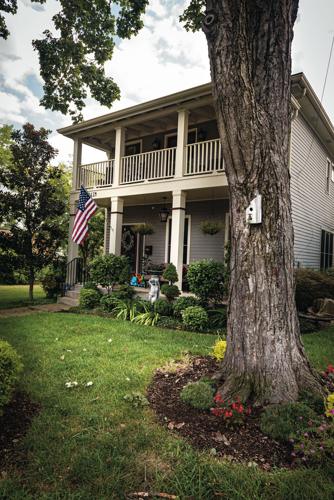
While various exemplars of “It City”-era architecture run along the stretch of Fifth across from the park, they more or less give way to lovingly refurbished, renovated and restored homes of Salemtown’s original period, around the time the mills opened. The mills’ workers came primarily from DeKalb County, 60 miles east, so the area was known as Kalb Hollow. A group of Methodist women opened a settlement house for the newly urbanized workforce. (Later it merged with other similar Methodist projects and became the Bethlehem Centers of Nashville.)
Salemtown remained a working-class neighborhood until fairly recently. Price pressure from similarly situated Germantown, new condo and apartment construction, and the conversion of Werthan Mills into luxury lofts — plus the general trend of real estate in the city — have home prices here in the high six or low seven figures, a stark departure from the area’s blue-collar roots.
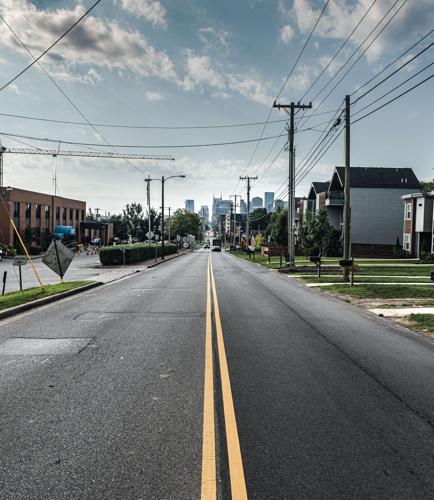
This stretch of Fifth has pleasantly wide sidewalks, allowing for plenty of room — even in these Somehow Still Socially Distanced Times — to allow a wide berth with two-way traffic. Almost every house has street parking exclusively, though the curbside spots are set off nicely by semicircular offsets — a traffic-calming measure — with blooming trees. Though not technically a designated historic district, the neighborhood maintains its classic character, no doubt a testament to an active group of homeowners. Even the new builds fit in. What would inevitably be tall-and-skinnies in other changing neighborhoods are, in Salemtown, not as tall and not as skinny and at least have a sense of the area’s architectural history.
Occupied now by the North Head Start, the Fehr School, built in 1924, was the site of a vitriolic protest in 1955 as four Black first-graders integrated the elementary school. More than 200 people jeered as they enrolled.
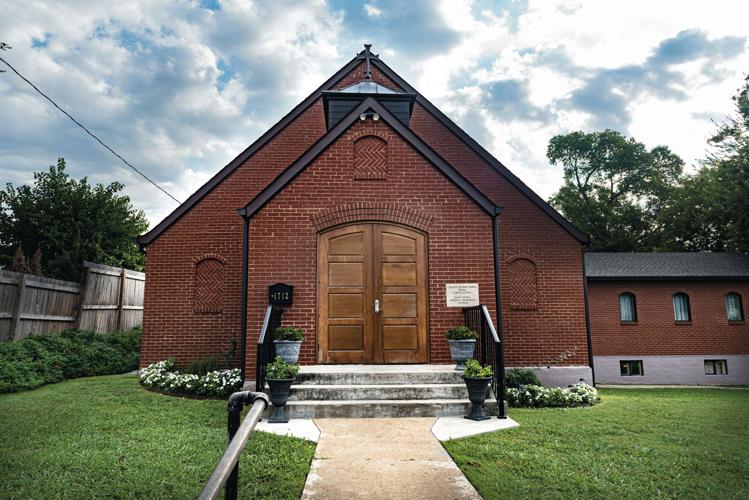
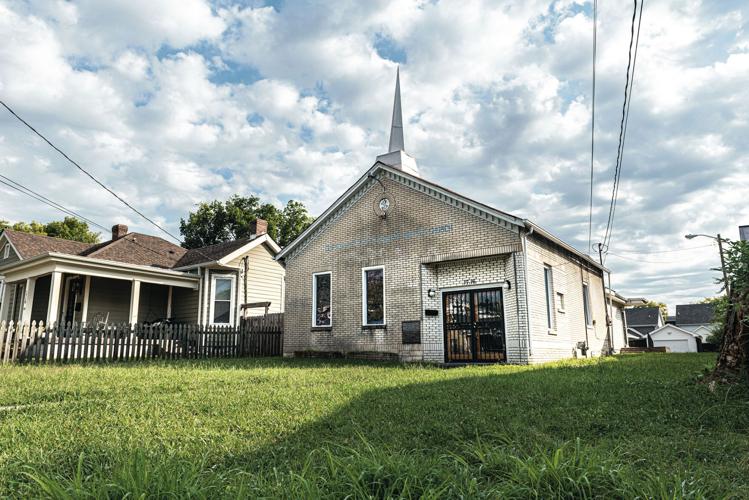
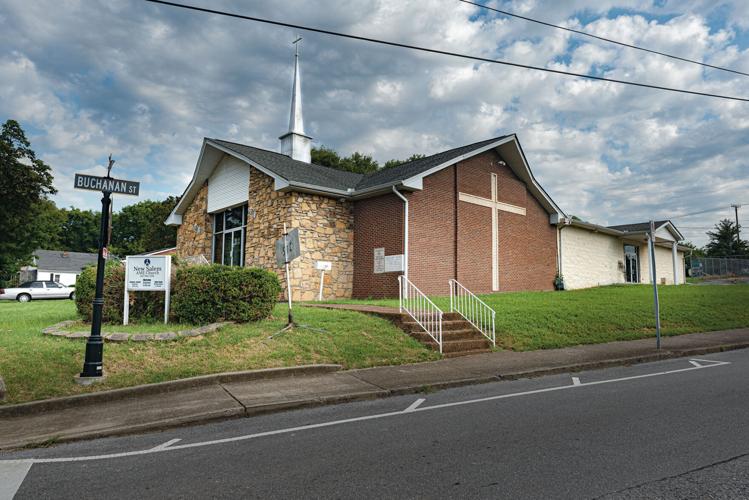
Two churches, which may seem a touch out place, are just beyond Fifth and Garfield. Saint Petka, a diocese of the Serbian Orthodox Church, was consecrated in 2019. Two doors down: Clifton Avenue United Baptist, some four miles from Clifton Avenue. Oddly, Cowan Street Missionary Baptist is also nearby, two miles and a river away from Cowan Street itself.
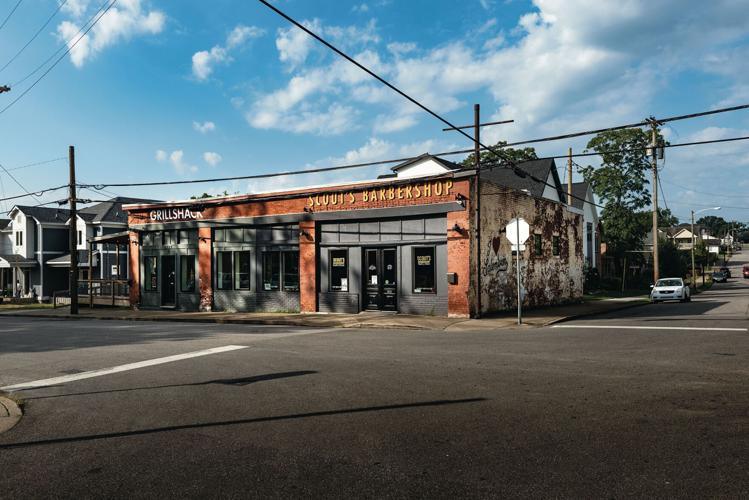
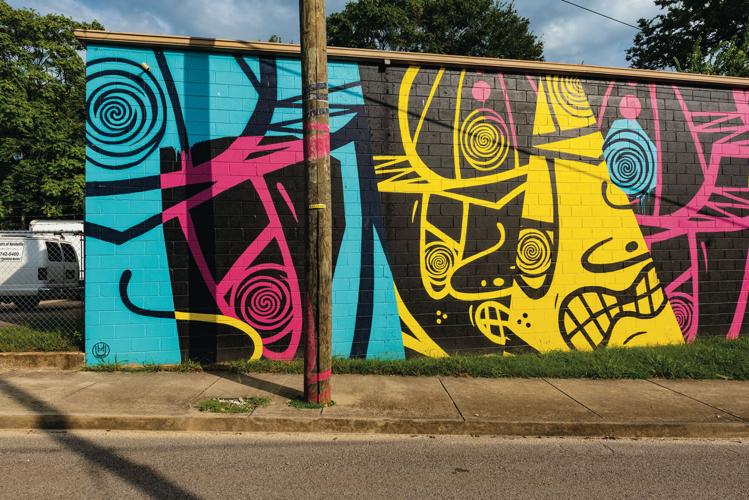
An old commercial space at the corner of Fifth and Buchanan is now home to a Scout’s Barbershop, a sure sign the neighborhood’s collar is more white than blue these days. The north side of Buchanan here is either vacant lots or commercial and warehouse space, while residences hang in on the south side, including a 121-year-old home under renovation at Fifth and Buchanan itself. One of the aforementioned warehouses features an abstract mural with the color palette of a 1990s All-Star game logo.
The sidewalk disappears at Buchanan and Third, but a brick ranch stubbornly stands guard as the tall-and-skinnies, townhouses and various other semi-attached pieces of modernity spring up alongside.
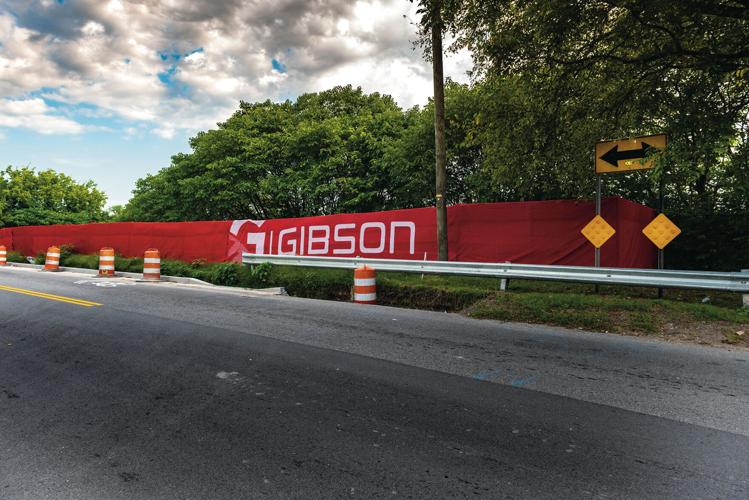
A massive wastewater plant construction project is underway next to the Metro Water Services customer service center and with it, according to District 19 Councilmember Freddie O’Connell, will come full sidewalk coverage, creating what he calls “effectively a linear park.”
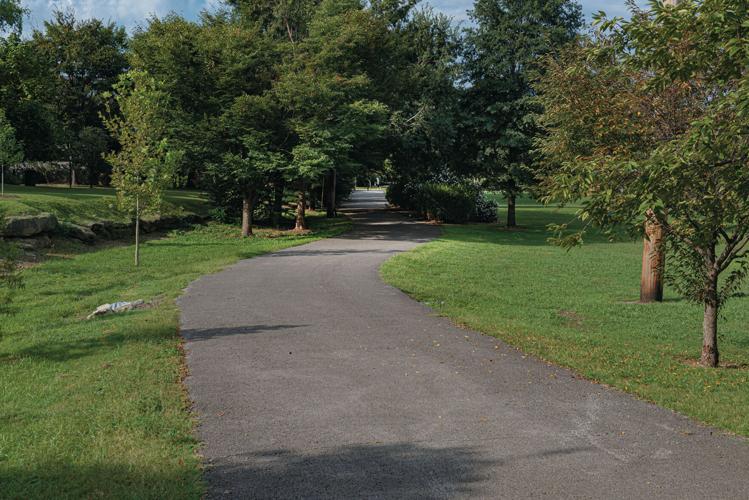
Third Avenue slides down to Morgan Park’s northeast side, which features a grand, open lawn slightly sloping to a wider if slightly less dominating analog of The Allee at Percy Warner Park.
A greenway connector sneaks into the park, an abandoned watercourse on one side and shady trees — welcome on a rapidly warming September morning — on the other. The trail winds up the hill and passes by the homage to the old sulphur spring. A few dogs lick at it curiously.
But no cats and witches are to be found.
Walk a Mile: Salemtown



Post a comment as anonymous
Report
Watch this discussion.
(0) comments
Welcome to the discussion.
Log In
Welcome to the discussion.
Keep it clean. Please avoid obscene, vulgar, lewd, racist or otherwise abusive language. Comments featuring hate speech or threatening or violent content will not be tolerated.
PLEASE TURN OFF YOUR CAPS LOCK.
Be truthful. Don't knowingly lie or mislead.
Be proactive. Use the “report” link on any comment that violates our comment policy.
Share with us. We'd love to hear your feedback.