


Once a month, reporter and resident historian J.R. Lind will pick an area in the city to examine while accompanied by a photographer. With his column Walk a Mile, he’ll walk a one-mile stretch of that area, exploring the neighborhood’s history and character, its developments, its current homes and businesses, and what makes it a unique part of Nashville. If you have a suggestion for a future Walk a Mile, email editor@nashvillescene.com.
The Route: Starting at Elmington Park, west on West End, then right on Craighead. Right on Central, then following the greenway back to West End, turning right and returning to the start.
Abandoned scooters: 0
Cranes: 0
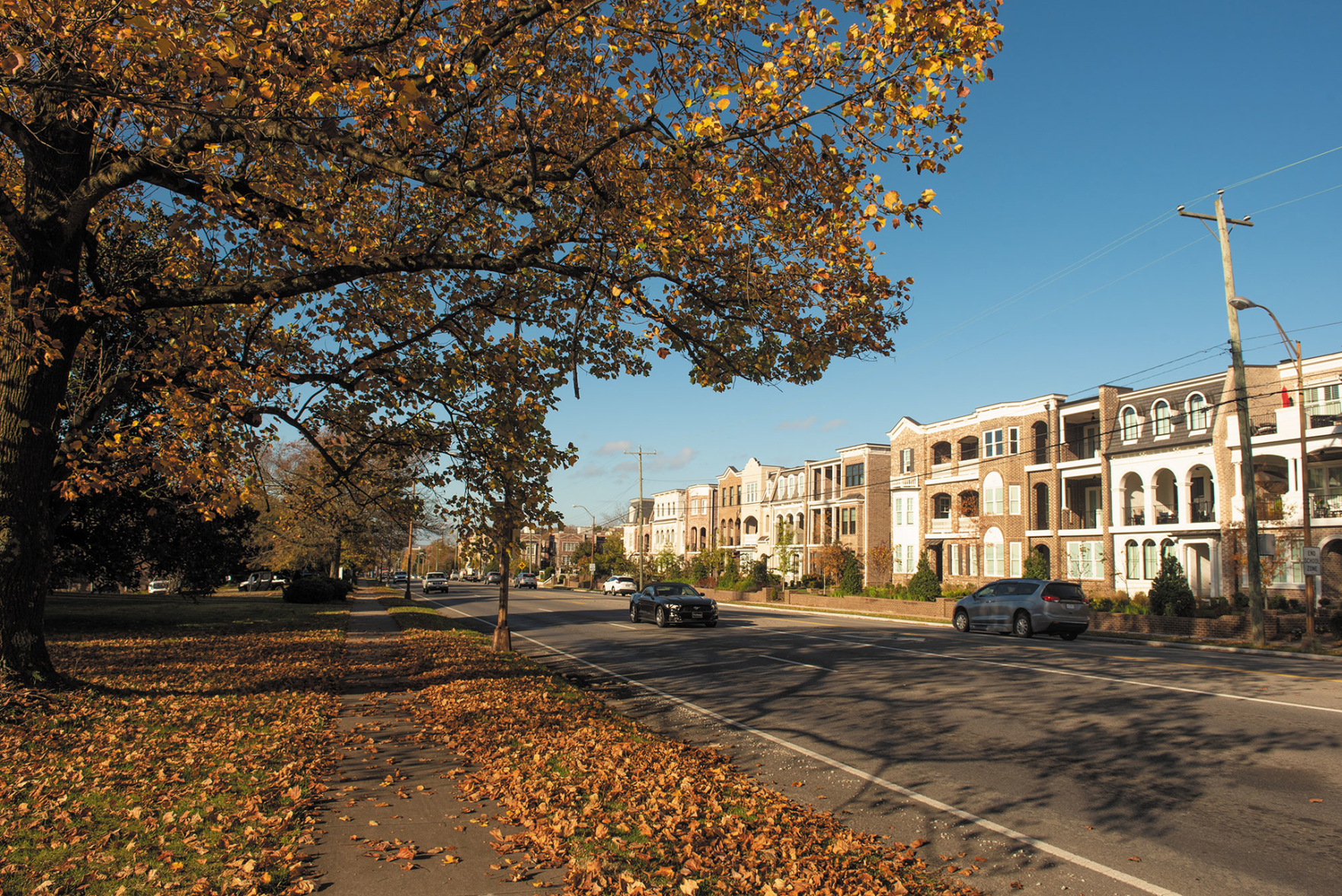
Even on unseasonably warm and clear days — the kind of day when you might wake up and take a look outside and suspect in your liminal confusion that you Rip Van Winkled your way from November to April — the autumn sky looks different from the summer one.
Scientists would probably say something about precession and axial tilt, how the sun’s relative angle to the Northern Hemisphere shifts the sky from its summer Capri blue to the azure of the Argentine flag. But on a cloudless morning at Elmington Park, the sun just beginning to top the office towers farther east on West End, the science isn’t nearly as important as the romance.
The knotty and twisted oaks — now largely denuded of their leaves, exposing the witches’ fingers of their tiniest branches — stretch their shadows like tendrils across the famously open and expansive field of the park. To certain eyes, this spot looks ideal for a languid game of cricket (and indeed, sometimes is used for such a purpose).
Elmington Park opened in 1927. It was originally part of Edwin Warner’s Elmington farm, as was Richland Golf Club (thus the anachronistic Golf Club Lane remains a mile south). At the time, Richland’s clubhouse stood at the southern edge of the park. The history of the Richland club could be its own story — Tennessean publisher Luke Lea offered the then-Nashville Golf Club acreage in then-remote Belle Meade, the club split over the offer, and a judge ruled neither the breakaway club nor the rump of the original could use the old name, and thus Richland Country Club and Belle Meade Country Club were born. But Richland’s presence on West End wasn’t meant to last forever.
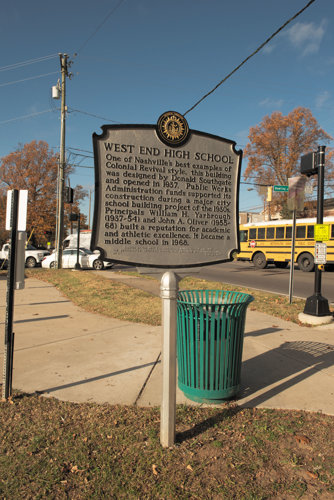
In 1935, the city approached the club to sell the property where its clubhouse sat, as the growing population needed a new high school. West End High School, designed by renowned Nashville architect Donald W. Southgate in the Colonial Revival style, was part of a burst of school building projects during the 1930s fueled by a study showing Nashville ranked at or near the bottom among Southern cities in nearly every metric of public education. Then-Mayor Hilary Howse, buffeted by New Deal-era Public Works Administration and Works Progress Administration grants, set the school system on an ambitious infrastructure program. West End High — with its distinctive bell tower holding a bell cast in the 1880s for North Nashville’s Buena Vista Seminary — operated as a high school until the 1960s. The school was renowned for its basketball team, which won four state titles in the 1940s and ’50s. (Its last, in 1954, is known in lore as the “All the way for Doc” team, as beloved retiring principal W.H. “Doc” Yarbrough made a surprise appearance at the state final, spurring the Blue Jays to the championship.)
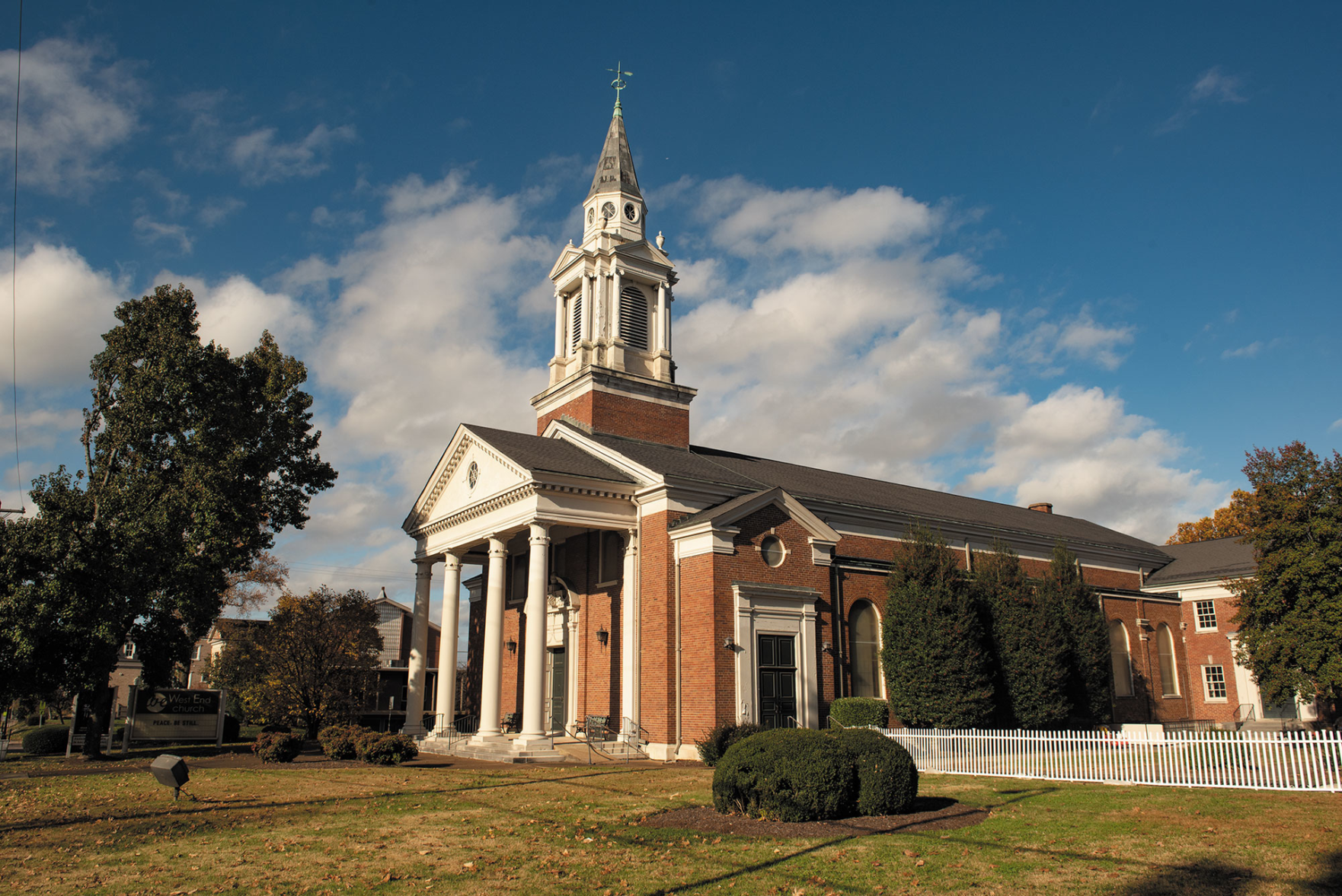
Eighty-three years after it was completed, the building still functions as a school, now West End Middle. Despite the noise of morning rush on nearby Interstate 440 and the usual bustle of West End Avenue, the area around Elmington Park nonetheless has the calming charm of a quaint town straight out of Thornton Wilder, with its well-maintained park, shady trees, postcard-perfect school and little pluralistic village of houses of worship: West End Church of Christ, looking like it was translated from some Connecticut township to the intersection of Bowling and West End; the Georgian brick of Congregation Sherith Israel with its contemporary annex; the more fully embraced modernism of Blakemore United Methodist.
Farther west, stately new townhouses line the north side of the road, each unit distinct from the next, but nevertheless built wall to wall. The homes share a bricked courtyard with fountains and topiary. The whole scene wouldn’t be out of place in Belgravia or Mayfair.
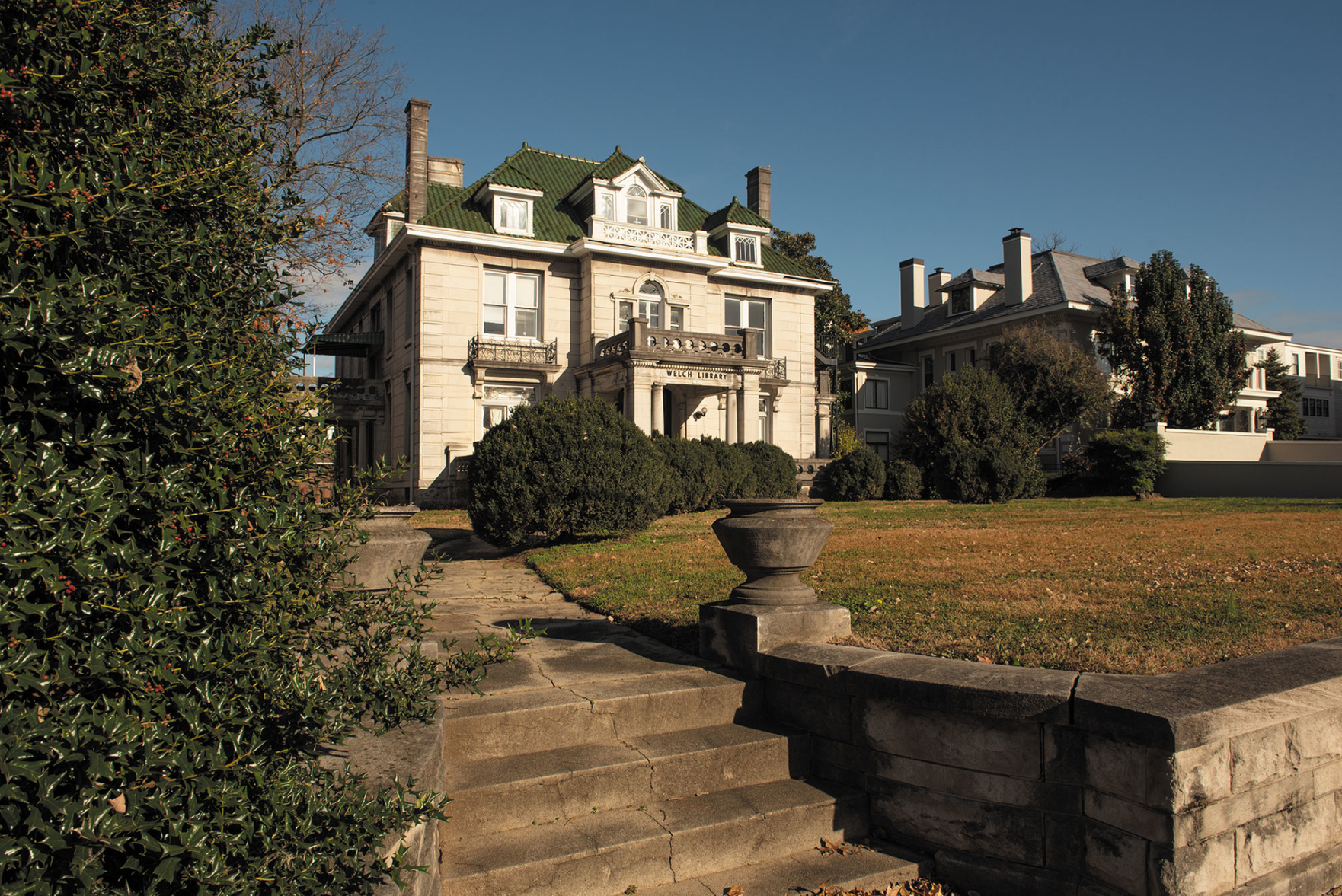
The school itself now decamped to Gallatin, the former campus of Welch College (née Free Will Baptist Bible College) sits at the corner of Craighead and West End, its buildings also designed by Southgate. Since the college’s move, some of the buildings have given way to development, but others still stand. The library, for example, with its grandiose porte-cochère, looks mostly well-maintained (though plywood has replaced glass in some places), and a lonely white cross stands sentry still in its gable window.
Craighead is the gateway to the Richland-West End neighborhood proper. In 1905, a group of investors led by Guildford Dudley Sr. purchased the land, originally part of the farm of John Brown Craighead, and laid out parcels and a grid of streets, neat as a pin — it was one of the first planned subdivisions in Nashville.
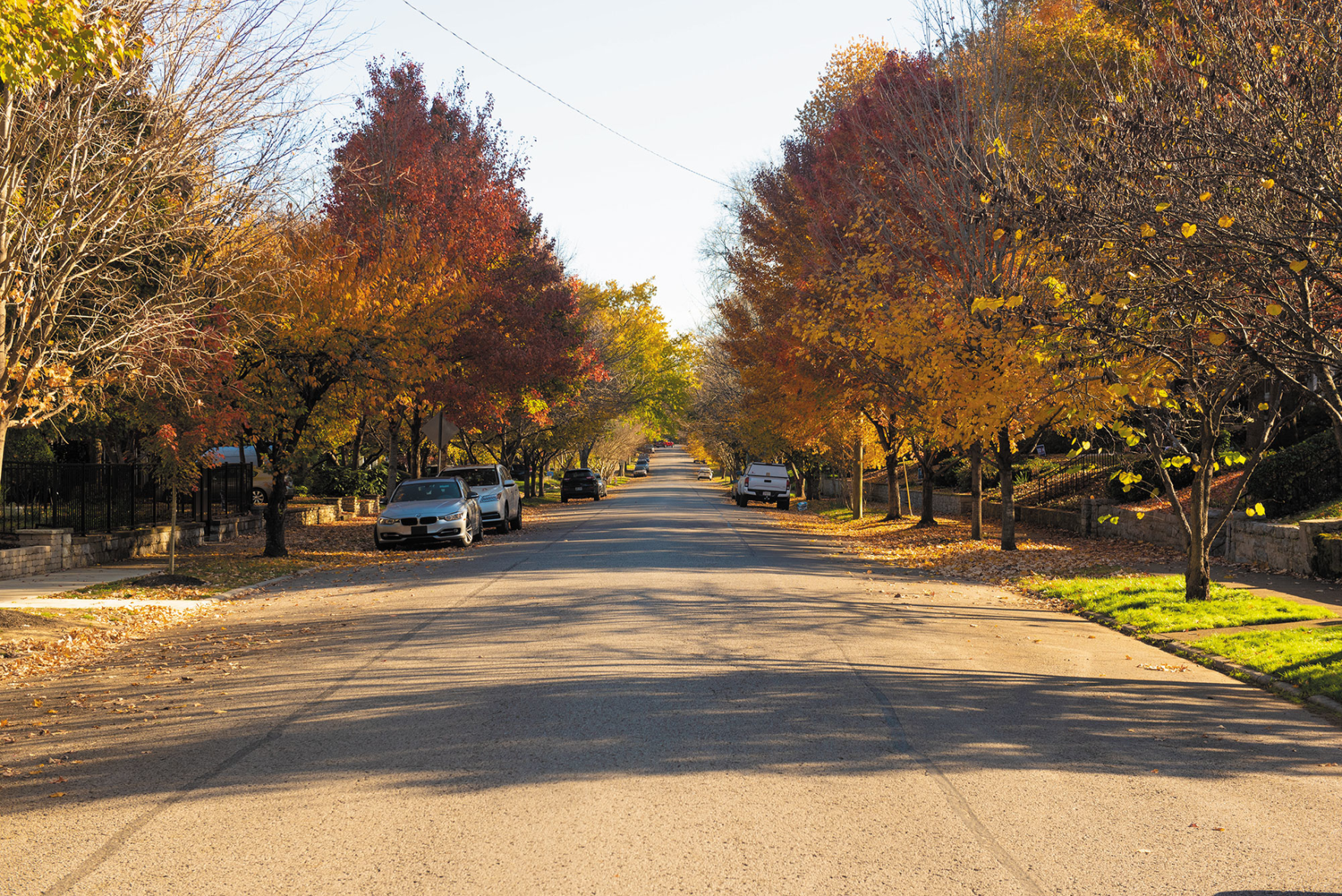
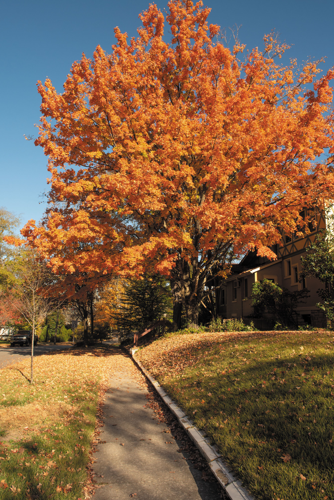
Other than a narrowing of the medians and other concessions to the automobile (a proper driveway is rare in the neighborhood; instead, staircases lead from the elevated yards to the sidewalk so as to facilitate the boarding of streetcars), the neighborhood is much the same as it was a century ago. The trees here have hung onto their leaves longer than their cousins along traffic-filled West End, heavy with golden orange adornments. Magnolias are common, but their waxy, dark-green leaves are drooping in anticipation of winter.
Central Avenue is a tunnel of autumn colors, and the families who have lived along the street and on Richland Avenue one block to the north are a biographical encyclopedia of Nashville. The aforementioned Mayor Howse lived nearby, as did a famous bootlegger. Howse, famously anti-Prohibition, allegedly procured his booze from this rumrunner, and thus the man wasn’t harassed by revenuers. Neighborhood legend says tunnels utilized for illicit liquor transport undergird the 3700 block of Richland. The Cain of Cain-Sloan lived here. The Lentz of the Lentz Public Health Center lived here. Locally loved horror host Cecil Creep did too.
The houses on Central — mostly four-squares but also bungalows, many built with the famous stone of Crab Orchard — are the oldest in the neighborhood (except for Craighead’s 1809 farmhouse, a few blocks north on Westbrook). They look meticulously maintained, but it wasn’t always thus. There was a steep period of decline in the neighborhood in the 1950s and ’60s; many of the homes were subdivided into rooming houses to serve the G.I. Bill-boosted college attendance boom. Many spent decades neglected. One home, frequented by Jimmy Buffett in the 1970s, was condemned because an opossum fell through the roof.
But the steady use as student housing had a benefit. Perhaps the homes weren’t kept to their Gilded Age standards, but unlike so many others of that vintage in Nashville, they were never torn down, because the steady flow of renters made them cash cows for their owners. Starting in the ’70s, less peripatetic types bought the houses, restoring them to their former glory.
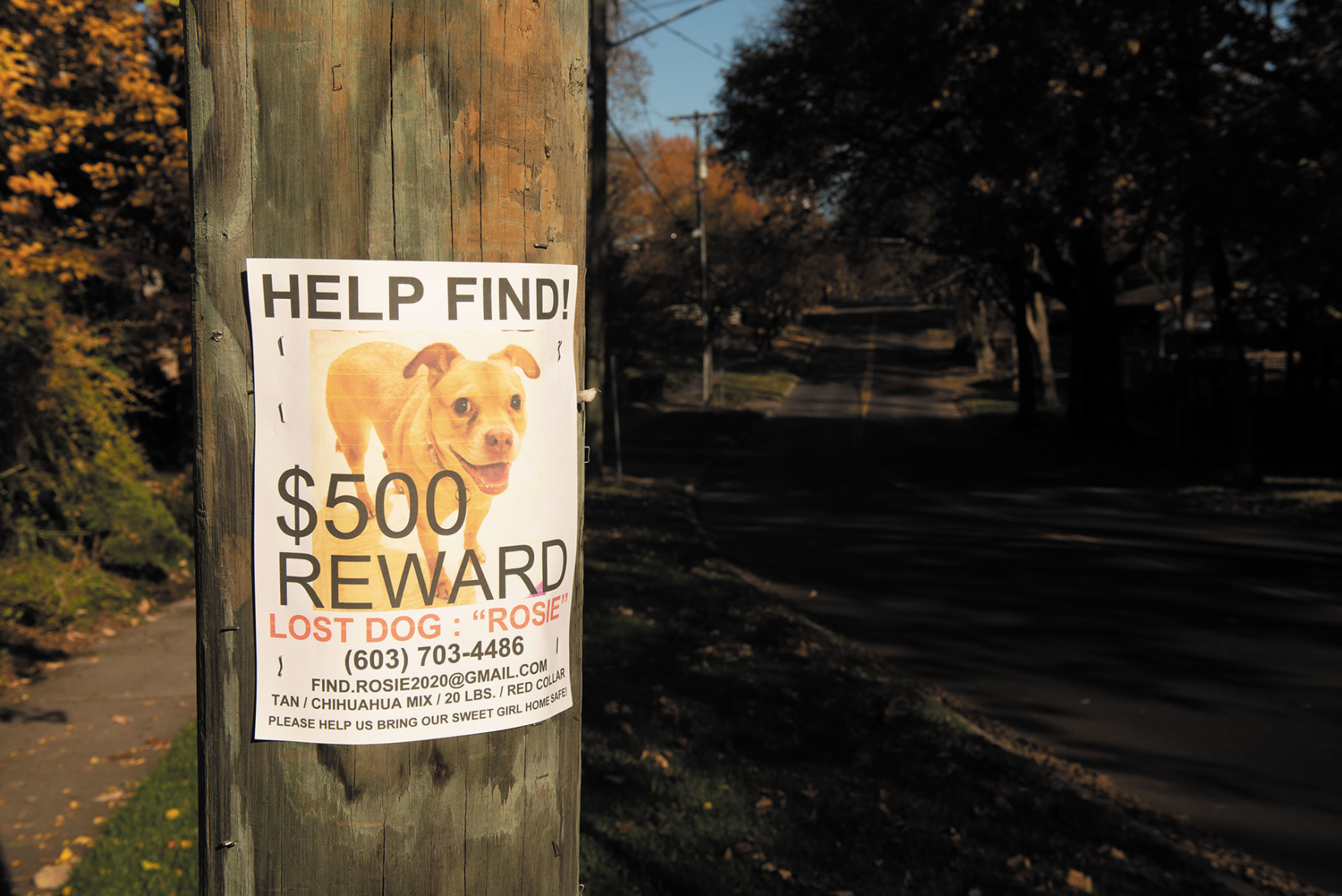
Families are back now (one along Central is growing, with a bright-pink balloon out front announcing a new baby girl), and the neighborhood has settled into upper-class stability. (A sign posted to a telephone pole promises $500 for the return of Rosie the Chihuahua — that’s like $100 per pound.) Farther west on Central, the bungalows are more numerous, their pastel exteriors contrasting with the ever-brighter orange of the changing leaves and the golden carpet of ginkgo leaves on the sidewalk. Some of the bungalows clearly spent time as duplexes, with door-shaped windows giving away their past as houses with separate entrances.
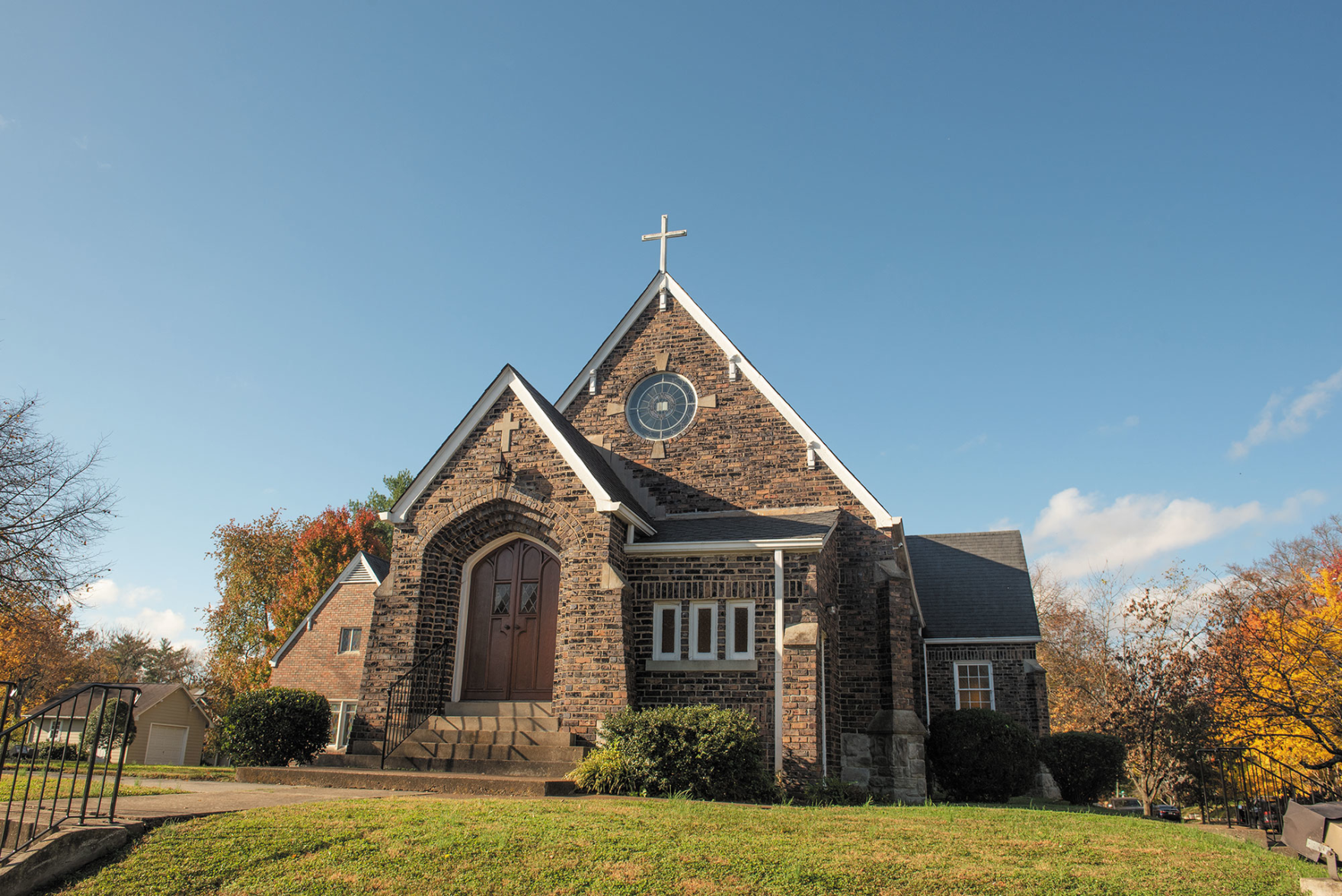
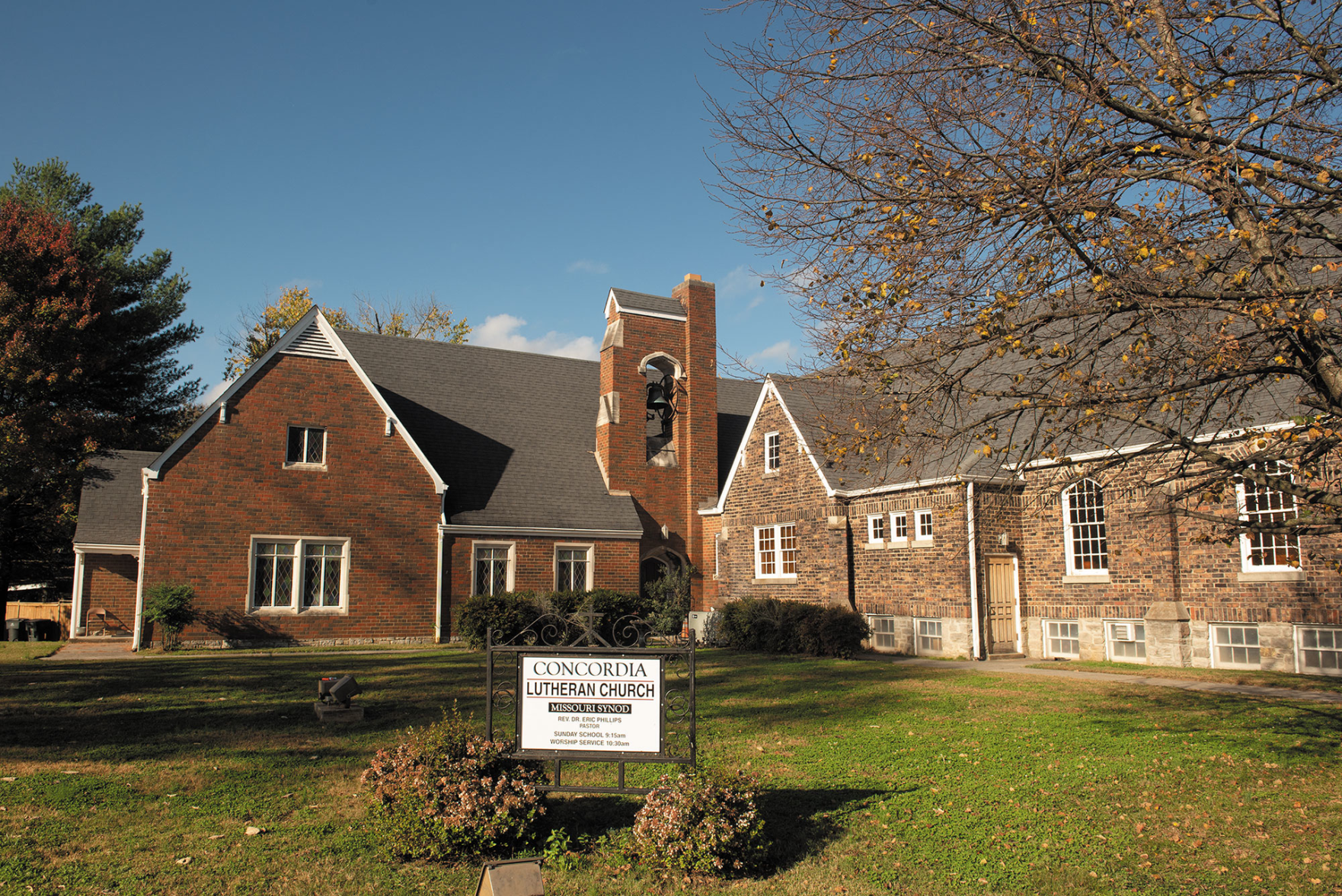
If the townhouses on the western edge of the neighborhood evoke the swing of London, the church at the east end of Central Avenue evokes the English countryside. The Gothic-style Concordia Lutheran Church was built in 1938 using bricks from the old Louisville and Nashville Railroad roundhouse, which was being demolished. (Some houses in the neighborhood also include this brick, which has an interesting weathering pattern, no doubt from decades of steam engines.) The church’s plot, like its residential neighbors, is elevated from street level, and parts of the church are built into this little hill. There are tiny windows at ground level. It looks like a place where Bilbo Baggins might worship. Befitting the Gothic look, the belfry in the bell tower is open to the world.
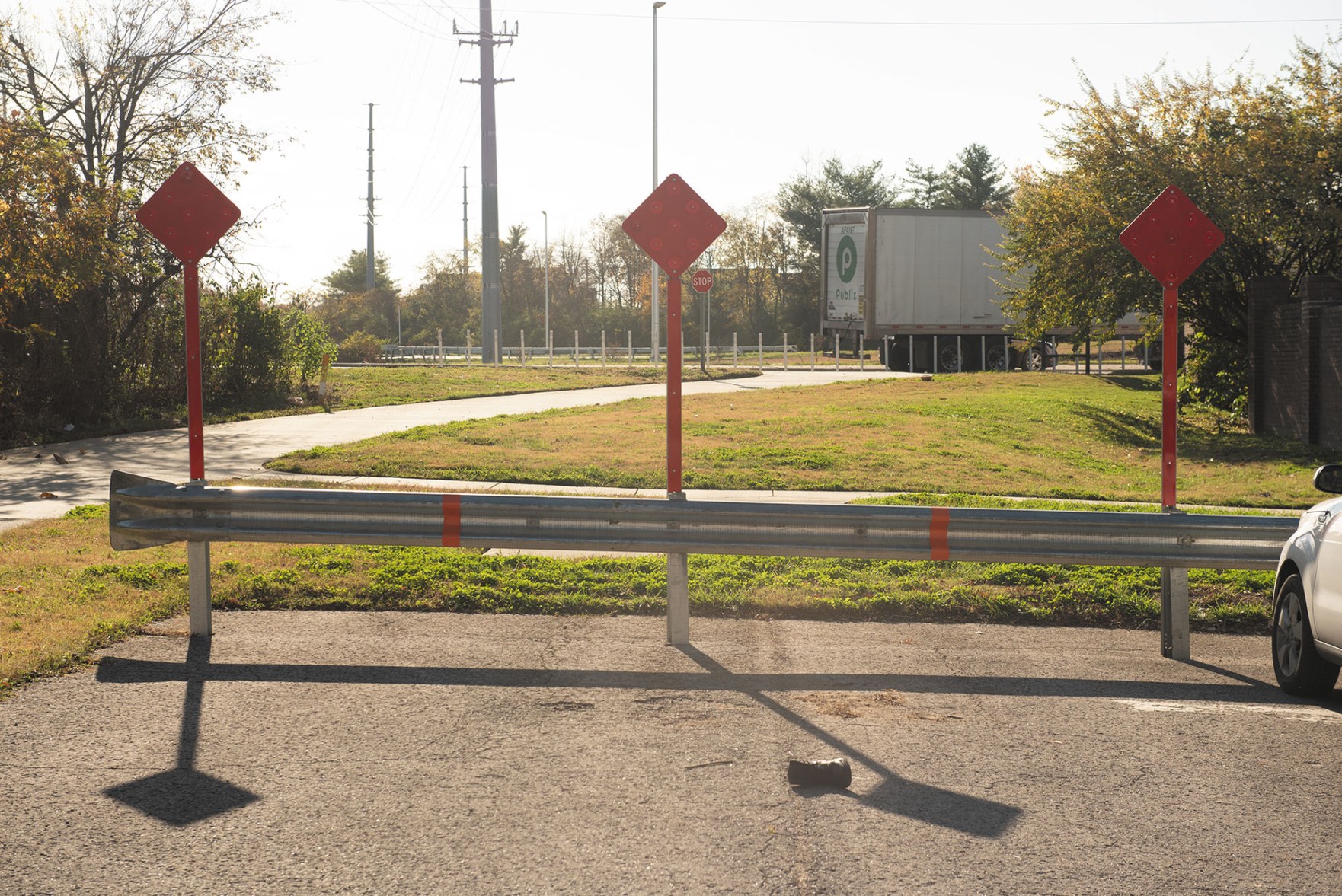
The 440 Greenway runs alongside West End Place, rolling out of the tree buffer just across from Concordia (and a home, clearly formerly with an upstairs apartment, as a door to nowhere opens from the second floor into oblivion). When 440 (then known as 440 Parkway) was originally conceived, a salve to the many angry homeowners was that the road would be bordered by an expansive trail system (and those ubiquitous noise-blocking walls). It took nearly 30 years, but a portion has finally been built.
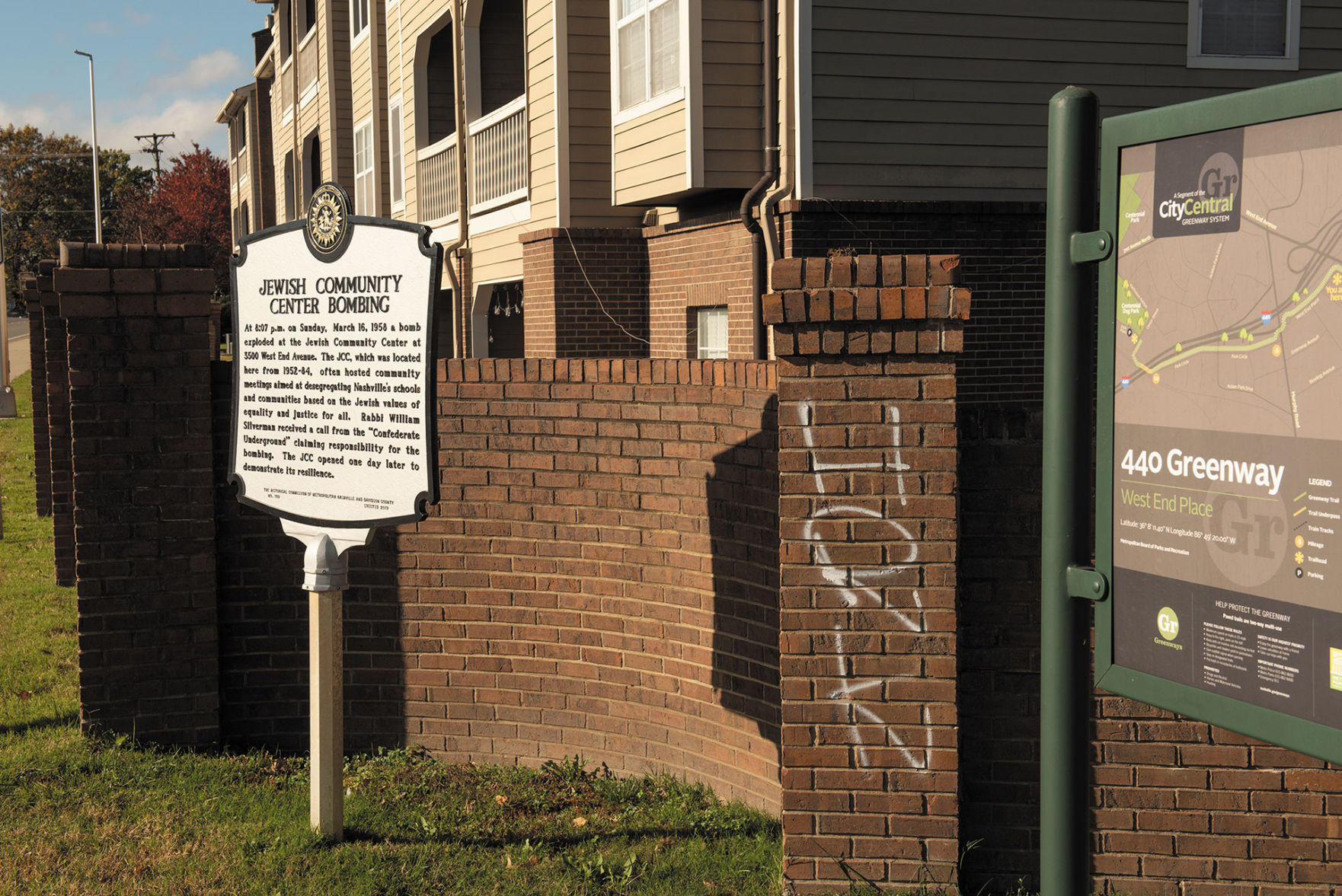
The greenway connects back with West End at the former site of the Jewish Community Center, which was bombed in 1958 — ostensibly because it hosted anti-segregation meetings — by a group calling itself the Confederate Underground. (So underground were they that they apparently didn’t realize that the most accomplished member of Jefferson Davis’ cabinet was a man named Judah Benjamin.) Undeterred, the JCC reopened the next day. This critical piece of Nashville’s civil rights history no longer stands — the JCC moved to Percy Warner Boulevard in the ’80s. Instead, there are some truly uninteresting condominiums. Sic transit gloria.
Turning west back on West End, Richland Place is this month’s entry as the building that could be a secret government facility, low-slung for a two-story building and mostly windowless. Back across the street, Elmington Park is coming to life, with a coterie of runners and dog-walkers taking advantage of the warm morning.
The great lawn yawns with emptiness, but eventually it will wake, and Nashvillians will head there to expend their pent-up energy in a variety of ways. (Ironically, given the history, driving golf balls is banned.)
And though it’s so close to the city’s teeming core, Richland-West End will once again realize its original purpose as a quiet — well, quietish — respite from all that busyness.