
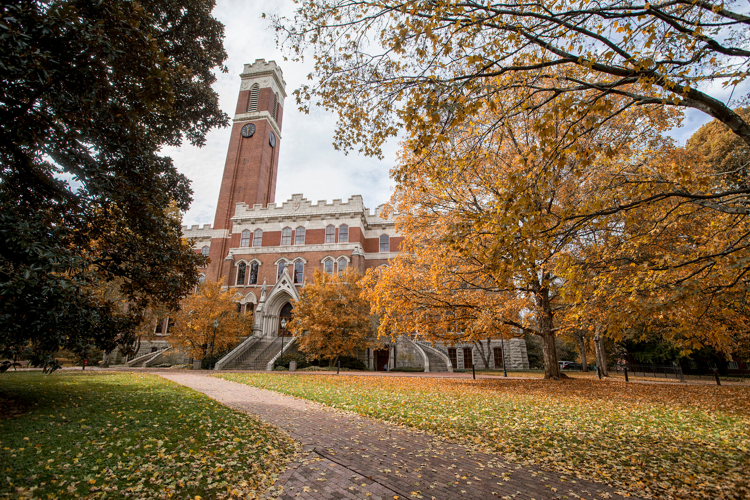

A Vanderbilt University residential adviser is calling on the school to address mold-related issues in student housing.
Benjamin Bryce, RA for Vanderbilt’s Morgan House, began searching for mold after experiencing symptoms of what he says is mold toxicity.
“I had a lot of upper respiratory [symptoms] — a cough … runny nose, general malaise, brain fog, that sort of thing," says Bryce. "All the while I was getting tested for COVID, I looked at flu testing and stuff like that. … It got to the point where it was debilitating. I couldn't work out, I couldn't do certain things outside. It was just really awful.”
Early on, Bryce was not aware of mold in his dorm and didn’t link his symptoms to it, but when he returned home for Thanksgiving, he noticed his symptoms “magically got better.” He says he then saw a TikTok video in which a student talked about mold at her campus, which led Bryce to check his dorm’s ceiling tiles.

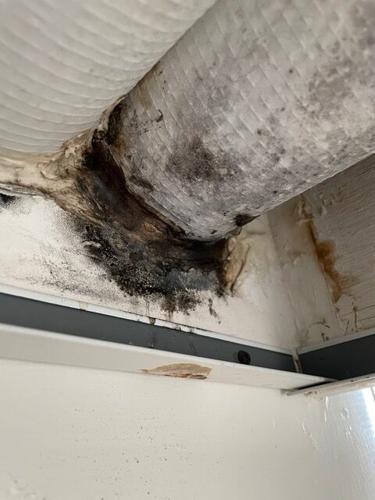
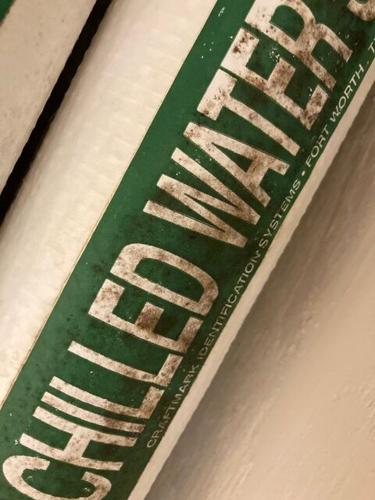
Mold Vanderbilt RA Benjamin Bryce says he found in a dorm
“What I saw, my jaw hit the floor,” says Bryce. “It was absolutely disgusting”
Bryce notified an administrator and asked to be moved to another room. His request was granted, and maintenance staff came to address the problem in his dorm. Bryce says one maintenance employee acted frustrated, “abrasive and explosive.” They cleaned the mold and Bryce moved back in, but his symptoms returned.
Bryce says he also met with Jim Kramka, Vanderbilt’s senior director of housing operations, after the mold was cleaned from his dorm to request further action from the university. He says Kramka was “dismissive” of his concerns. Kramka has answered to several reports of mold before. Vanderbilt's student publication the Hustler notes that mold is a recurring issue within Vanderbilt dorms and links similar articles from 2019, 2014 and 2008. Kramka has been mentioned in each article.
Vanderbilt requires undergraduate students to live in on-campus housing for all four years of college at a cost of $6,000 per semester.
Following the meeting, Bryce says he took matters into his own hands. He bought mold tests and shared the results in a dorm-wide email on Jan. 19.
“I am writing this to alert you that you may be being exposed to toxic levels of mold in your dorm, and Vanderbilt is doing nothing to alert you,” reads the email.
He went on:
I was told by 3 different providers that my chronic respiratory issues were being fueled by the mold presence and that my immune system was suppressed due to the exposure, allowing latent viruses from long ago to flare up. … Having absolutely no faith in Vanderbilt’s integrity or ability to be forthcoming with this information, and also knowing that they would never alert students to a potential exposure even after asking they do so, I ordered a $300 industry leading ERMI mold test. This test measures the presence of mold through a “Swiffer” method. In short, I swabbed various surfaces around my dorm, and the dorm above me (1007). When the results finally came back, I literally could not believe my eyes. The mold test found multiple toxic mold varieties present at 100x greater than normal limits, and two at a whopping 1000x greater than normal limits. The mold levels were so high that they even gave the following warning: Re-occupancy is ill-advised until further remediation and reassessment are conclusive. At current levels, my dorm is unlivable. And it's possible that yours is too.
Let me be clear: Vanderbilt does not care about you. They have gaslit me beyond comprehension and have continued to fail to take responsibility. The director of housing operations, Jim Kramka, (the guy who is supposed to be in charge of these issues) outright rejected a connection between my mold exposure and health decline, despite 3 practitioners diagnosing otherwise. In fact, he scoffed at my private mold test idea, noting that any results would not change their opinion of the mold crisis. They have failed to notify you, and will probably fire me as an RA for doing so. I know that people in our dorm are sick. I know that we are being exposed to toxic quantities of mold. I feel that it is my duty as a human being to warn you all that you might be sick because of the mold.
Bryce says that, within minutes, he received responses from concerned residents. He says other students revealed experiencing similar symptoms — though Bryce notes some may be the result of COVID-19 or the flu. He also says some students are afraid to speak up in fear of retaliation from the university.
“When I sent that email, I knew that I was probably gonna be on the chopping block,” says Bryce. “I knew that they’d probably try to fire me from my RA role. Now, it hasn't happened yet, largely because I think there's so much attention on me right now, but I still fear for my job.”

Mold Vanderbilt RA Benjamin Bryce says he found in a dorm
Since Bryce reached out to students, Vanderbilt has become more responsive. On Jan. 20, the university sent an email to Bryce and dorm residents acknowledging the situation and outlining steps the university is taking to address the issue. The email also notes that “it is not uncommon to have some level of mold within any indoor environment” and that most people aren’t allergic to it. Bryce says he got an email from the university about their plans to conduct additional testing.
“I'm happy," says Bryce. "I'm glad to see they're starting to take responsibility. I will say, though, that there is so much broken trust between students and administration, to the extent that students don't even trust Vanderbilt to be honest about the test results.“
Vanderbilt University representatives sent the following statement to the Scene:
Our residence halls are an integral part of the Vanderbilt experience, and promoting and protecting the health and safety of our campus residents is a priority.
We conduct regular structural and hygienic inspections and continue to follow established protocols. We are working closely with our on-staff industrial hygienist and remediation services and have engaged a third-party professional environmental testing company that uses an accredited lab.
We are working with residents who file reports to determine next steps consistent with our commitment to providing safe, secure, comfortable and healthy housing for residents.
Students who have maintenance issues are encouraged to notify the university as soon as possible, and to contact the Student Health Center with any health questions or concerns.
Bryce says he’d like an external investigation of the housing operations team, an official acknowledgement of the mold issues, an action plan that outlines steps to prevent future incidents and third-party testing for students who wish to have their rooms tested for mold.



Post a comment as anonymous
Report
Watch this discussion.
(0) comments
Welcome to the discussion.
Log In
Welcome to the discussion.
Keep it clean. Please avoid obscene, vulgar, lewd, racist or otherwise abusive language. Comments featuring hate speech or threatening or violent content will not be tolerated.
PLEASE TURN OFF YOUR CAPS LOCK.
Be truthful. Don't knowingly lie or mislead.
Be proactive. Use the “report” link on any comment that violates our comment policy.
Share with us. We'd love to hear your feedback.