
Erik Schelzig of the Associated Press has the story about how the State Board of Education is looking to slim down the requirements of what kids learn about Tennessee history by getting rid of “extraneous” stuff like why the state is named Tennessee in the first place and much of the interesting stuff women and minorities have done in the state.
The reason Laura Encalade, the director of policy and research at the State Board of Education, gives is “there was just a lot of content to cover each year and really too many standards for teachers to be able to reasonably get through in a single year as to the level of the depth and the rigor.” Let me tell you something, when a person whose job it is to communicate clearly talks like this, it’s because they’re deliberately obfuscating. Just hit words like “standards,” “rigor,” “level of depth” and hope people won’t think too hard about what you’re saying.
What she’s saying in plain language is that these things are too hard to teach about, so why not cut them?
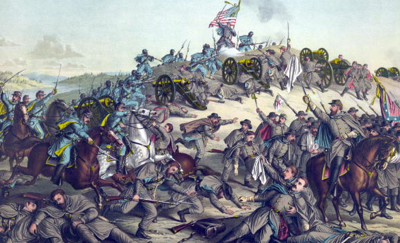
A lot of things they’re proposing to cut are upsetting but I’m most deeply confused and concerned about why, of all the Tennessee battles of the Civil War, Shiloh is the one that gets to stay. Is this cowardice about telling Tennesseans the truth? I think it is. Shiloh is an easy battle to discuss because it’s an obvious tragedy. Regardless of what side you’re (still) on, there’s no denying that 23,000 casualties is horrific. And, due to the hard work of veterans and their descendants, a lot of the battlefield has been preserved — there’s something to go see, a field trip you can take.
But is Shiloh more important than the Battle of Nashville, which is in danger of being cut? No. Just simply, no.
Shiloh, though horrific, is not even the bloodiest battle of the Civil War. Other than the massive casualties, the Battle of Shiloh didn’t change anything — the Union held that land before the battle and they held that land after the battle. If you’re a Civil War buff, of course you should know about Shiloh. If they have room for Shiloh and Hood’s advancement through Tennessee, of course they should both be taught. But my God, if you have to teach kids one thing they should take with them from the Civil War in this state, it should be Hood’s advancement toward Nashville and his eventual defeat at the Battle of Nashville.
Obviously, we shouldn’t be in a situation where we’re only teaching kids one thing about Tennessee’s role in the Civil War, but, if there’s one thing you should know about it, it’s that Nashville fell, in fact was the first Confederate capitol to fall, and the Confederates could not get it back. Nothing else about the Civil War in the state makes sense — nothing else about the war nationally makes sense — if you don’t know that fact. You can understand the war at a very basic level without knowing about Shiloh. The same is not true of Nashville.
Teaching kids Shiloh and skipping Nashville, then, is lying to them. It’s rewriting history to make the important thing invisible while distracting students from what’s missing with a gruesome spectacle. They get to learn something, but it’s not the thing they need to know. I mean, sure, I guess lying to kids and misleading them about their own history is easier than teaching them difficult facts they may not know what to make of — and that’s fine, kids. A lot of us grown-ups don’t know what to make of them either, not all the facts, anyway, and we’ve been trying to understand since it happened.
But we shouldn’t lie to the children of Tennessee about their own history. It’s deeply offensive that misleading them about what happened here and why is even up for public discussion. So what if lying to them is popular? It’s stealing the past from them. Granted, a lot of us have had our pasts stolen and rewritten and confused so deeply that, for instance, we argue that the Civil War wasn’t even about slavery. But just because something horrible has been done to us, that doesn’t make it right for us to do it to the kids.
Give them their history. Tell them the truth about it.



