



A new bill aiming to ban Pride flags from public schools will be debated during the upcoming session of the 113th Tennessee General Assembly, sparking concerns among some LGBTQ students and allied community members.
As introduced, House Bill 1605, sponsored by District 61 Rep. Gino Bulso (R-Brentwood), would ban the display of any flags other than those of the United States and the state of Tennessee from public schools and public charter schools.
While the bill's language doesn't explicitly mention Pride flags, Bulso is open about the origins of the bill, telling Scene sister publication The News he has received numerous complaints from Williamson County constituents — including parents and a school board member — specifically about the display of Pride flags in schools.
“Flags that are there to present a political viewpoint, that are really not for any educational purpose, but really simply to indoctrinate students with regards to a particular political point of view,” Bulso says. “We're going to be expanding the bill to add some substance to address other types of flags that can very properly be displayed without anyone trying to make a political statement, and we'll be adding something of a procedural effect with regard to how it may be enforced and by whom.”
Potential amendments will include exceptions for flags of other states, countries, provinces, other organizations such as a school's ROTC programs, flags honoring U.S. service members who are missing in action or held as prisoners of war, or “anything that has historical context.”
“There’s going to be an effort made to make sure that there are not any unintended consequences from the bill, because well-drafted legislation does not have unintended consequences,” Bulso says, adding that he wants to “continue to keep schools as a place to learn and not a place to be indoctrinated.”
Pride flags in schools have been a hot topic for months during public comment portions of Williamson County Schools board meetings, setting the groundwork for the legislation. Opponents of Pride flags in schools, including some parents and students, have argued during school board meetings that the flags are “inappropriate” tools of “indoctrination” and “political activism” that “push an agenda.”
Other parents and students have argued that the flags communicate to vulnerable students that there are accepting and supportive teachers and staff members who provide safe spaces for LGBTQ+ students. As reported by The Trevor Project’s 2023 U.S. National Survey on the Mental Health of LGBTQ Young People, LGBTQ students are at a high risk for harassment and mental health challenges related to their sexual or gender identity.
“To just send the message that queer people are inappropriate for schools is wild, because I'm a queer person in school,” Brentwood High School senior Amelia Croney tells The News.

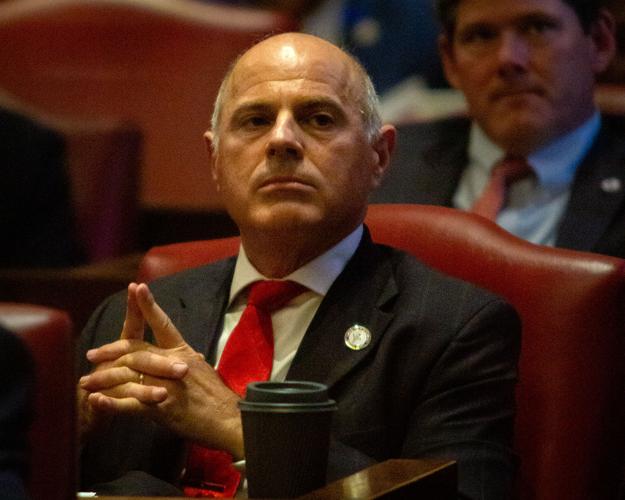
Rep. Gino Bulso
Croney serves as the student leader of the BHS chapter of Wilco Iris, a nonprofit, “student-led, adult-facilitated safe space for LGBTQIA+ teens and their allies, grades 9-12, in Williamson County.”
Croney has attended WCS since kindergarten, is a National Merit Semifinalist and is on track to serve as class salutatorian.
“I am Williamson County's poster child, and they still are trying to pass these laws that would harm me and make my educational journey less successful," Croney says.
Just prior to becoming a freshman, Croney came out, but says recent anti-LGBTQ legislation in Tennessee has made 2023 “really terrifying,” both in and outside of school.
Croney says that while some Pride flags or images of Pride flags are present in WCS schools, they are not as prevalent as some make it seem, telling The News that they are often found on the doors and in the offices of counselors, in some teachers’ work areas or on the clothing or property of students. She says some teachers display other small symbols to show they are inclusive, adding that other teachers have expressed that they choose not to display Pride flags for fear of complaints from parents.
Croney also says that one BHS teacher also displays two Gadsden flags, a symbol that, while rooted in the American Revolution, has since been co-opted by the American far right.
“They know that it will be enforced very selectively to be used specifically against marginalized communities,” Croney says of the legislation, adding that the Pride flags in classrooms can act as a deterrent to would-be bullies who know harassment won’t be tolerated.
“We certainly want to make sure that anytime anyone hears any suggestion that a professional teacher might be talking about their personal opinions, let us know, we will certainly investigate that, and we talk about that regularly,” Williamson County Schools Superintendent Jason Golden said during the board's November meeting. “Also, we want to make sure that we respect that teachers do have that personal space as well and can have some personal items related to that, so it is that difficult professional balance that has been a longstanding standard in this [county] for decades that we honor.”
“For our kids who are marginalized at schools, the small little Pride flags kind of send them a message of that inclusivity and safe space, and that there's people that you can trust at school,” Wilco Iris president and adult founding member Eve Boger told The News. “When that is actively removed and not allowed and has to have a law put in place to officially ban it, that sends a message that our community of queer youth is not worth being celebrated or protected, and I'm concerned it really puts them at risk of further bullying and not being in a safe space.”
Critics of the flags include members of the Williamson County chapter of Moms for Liberty, a right-wing activist group that has seen some of its members speak out against the flags during school board meetings.
“Allowing only the state and U.S. flags to be flown in taxpayer-funded schools removes the potential for distraction or conflicts that take time away from the educational mission of our school system,” Moms for Liberty Tennessee legislative chair Elizabeth Story told The News.
“Having a clear state policy will also remove pressure from the schools to mediate flag-related conflicts.”
Story says that while Moms for Liberty support the current state of the bill, they will be following the progress of, and any potential amendments to, the legislation throughout the session. The group says it will also continue to focus on and advocate for “ensuring content in K-12 schools is age-appropriate and focused on educational growth without harm.”
In August, Bulso, who is also an attorney, filed a lawsuit against WCS on behalf of parents over the presence of several books in school libraries that they call “obscene materials.”
Bulso pushed back against those who say that banning Pride flags from schools will cause harm or distress to LGBTQ students, telling The News that he wants schools to be welcoming to all students.
“In everything that every teacher or counselor or administrator does, they need to make clear that our schools are welcoming and open and nurturing for everyone,” Bulso says. “There is no need to use a political flag to make that point; that point should be made by the way that they conduct themselves in class.”
This article was first published by Scene sister publication The News.



Post a comment as anonymous
Report
Watch this discussion.
(0) comments
Welcome to the discussion.
Log In
Welcome to the discussion.
Keep it clean. Please avoid obscene, vulgar, lewd, racist or otherwise abusive language. Comments featuring hate speech or threatening or violent content will not be tolerated.
PLEASE TURN OFF YOUR CAPS LOCK.
Be truthful. Don't knowingly lie or mislead.
Be proactive. Use the “report” link on any comment that violates our comment policy.
Share with us. We'd love to hear your feedback.