
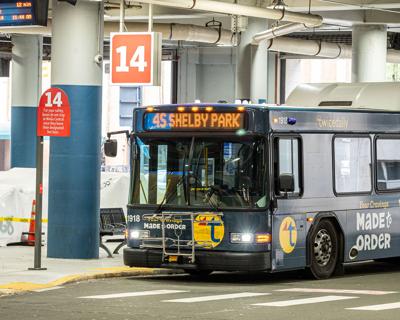

Dedicated rapid transit lanes and new WeGo routes are at the center of Mayor Freddie O’Connell’s new transit plan, according to maps presented by his top transportation aides at a meeting with advisers on Wednesday. Discussion at Wednesday's Technical Advisory Committee meeting shied away from light rail after attendees evaluated estimated per-mile costs of different mass transit modes.
After brief remarks from O’Connell, WeGo CEO Steve Bland and new Metro transportation planning director Michael Briggs steered discussion. Two major pressure points bear down on the plan: financial hurdles from the state and federal government, and the quickly approaching November ballot, targeted by O’Connell for a referendum vote. In his opening remarks, the mayor alluded to the confusion over the project’s unknown budget, which dominated the body's Feb. 22 meeting.

O'Connell effort to focus on 'sidewalks, signals, service and safety'
“We’re going to start today’s discussion without final cost analysis and without a final picture of the overall envelope,” O’Connell told the room. “The need is just remarkably clear.”
He referenced recently released data from Imagine Nashville, a community survey that sampled around 10,000 people. The survey showed transportation as a top city concern, led by respondents in Madison and Goodlettsville. Strong existing popular support for transit investment could help O’Connell succeed on a tight timeline.
Concept maps presented by Briggs show four new dedicated bus rapid transit lines on Dickerson Pike, Nolensville Pike, Gallatin Avenue and Murfreesboro Pike. The Gallatin artery would run through Madison to the edge of Davidson County. Planned transit on Murfreesboro Pike includes extensions to the airport and down Bell Road — Briggs refers to the branch as a “Magic Corridor” in his presentation, emphasizing its suitability for mass transit.
North Nashville and Charlotte Pike show extensions labeled “transit priority corridor” and “rapid bus,” though planners have not explained the exact specifications of these improvements. Maps also show new routes through Antioch, Donelson and Old Hickory, and down Highway 100, and express service via major interstates across the county.

First meeting shows debate over light rail and a plan crunched for time
Estimates shared at the meeting put BRT per-mile cost near $50 million. Bus rapid transit includes a fully dedicated right-of-way for buses and construction of associated infrastructure like sidewalks, crossings and new signals. Light rail could cost between $200 million and $500 million per mile.
Tennessee’s IMPROVE Act and President Biden’s Bipartisan Infrastructure Deal give Nashville the chance to put substantial matching money toward transit expansion. Funding requirements are pushing the city to flesh out project financials by March 29 and seek approval from the state comptroller by May 31. Any plan will likely borrow against a sales tax surcharge. Last year’s deal to finance a new stadium for the Tennessee Titans appears to have foreclosed the possibility of another hotel-motel tax bump.
“You cannot compete for and bring down federal dollars from the Bipartisan Infrastructure Act without a local match,” said Amanda Vandegrift of InfraStrategies, a transit financing consultant hired by the city. “You really only have a few more years to compete for, and bring, hundreds of millions of dollars in federal support to Nashville.”
In closing, Briggs revised the month’s meeting timeline. Along with WeGo CEO Bland, Briggs has emerged as the mayor’s transit referendum point person.
“We are a small team, and we’re pulling this together as quickly as possible,” Briggs told the room. “We’ll have a joint meeting by the end of the month between both the Technical and Community Advisory committees and merge the conversations together.”



Post a comment as anonymous
Report
Watch this discussion.
(0) comments
Welcome to the discussion.
Log In
Welcome to the discussion.
Keep it clean. Please avoid obscene, vulgar, lewd, racist or otherwise abusive language. Comments featuring hate speech or threatening or violent content will not be tolerated.
PLEASE TURN OFF YOUR CAPS LOCK.
Be truthful. Don't knowingly lie or mislead.
Be proactive. Use the “report” link on any comment that violates our comment policy.
Share with us. We'd love to hear your feedback.