
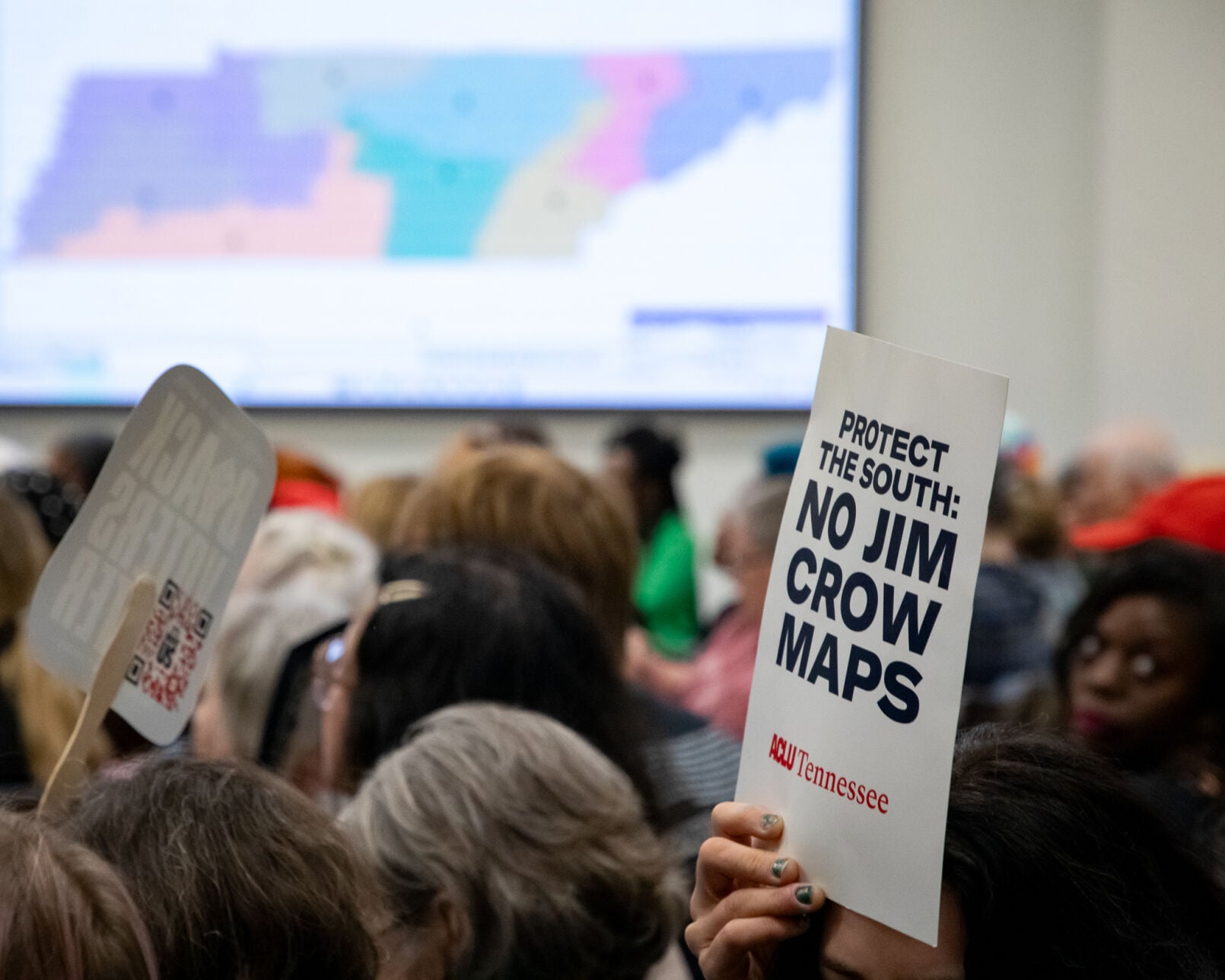
Protests, witnesses and arguments over funding took center stage Wednesday during the second day of the special session to redraw congressional lines in Tennessee.
Last week, Gov. Bill Lee called a special session to redraw the lines — particularly those around Memphis, which is Tennessee’s sole Democratic congressional district since redistricting in 2022 split Nashville in three. The 9th Congressional District, which currently contains Memphis, has a majority Black population.
Republican leadership released a proposed map Wednesday morning, with $3.15 million set aside to help local governments tell voters the lines have changed if the new map is approved. Democrats have said they fear the efforts will require more funding than what the House committees approved Wednesday. If redistricting is approved, election commissions will certify associated costs, and the state will reimburse them.

New map would also keep Nashville split into three districts
The map garnered impassioned speeches and high emotions from those at the Tennessee State Capitol Wednesday. House Speaker Cameron Sexton (R-Crossville) said the new districts weren’t drawn with race in mind.
“There was a court case or two recently that changed different aspects,” Sexton said. “Then, what you have had is red and blue states redraw the map in their area. That becomes the benchmark, which is the reason we are back here. No racial data was used in the drawing of this map.”
Democrats, protesters and witnesses pushed back, saying this is indeed a map about race.
“Three months before the election is happening, that is wrong,” Rep. Justin Pearson (D-Memphis) told the Scene. Pearson is currently running in the 9th Congressional District’s Democratic primary. “It’s political malpractice. They are seeking to change the law from what is illegal today to be legal tomorrow. It’s sickening and disgusting. My colleagues know this perpetuates Jim Crow.”
The special session follows a social media post from President Donald Trump last week, in which the president said he would like to see Tennessee become fully Republican — a reaction to the April 29 U.S. Supreme Court decision dealing a blow to the 1965 Voting Rights Act. SCOTUS ruled in Louisiana v. Callais that it’s illegal to draw congressional maps based on race.
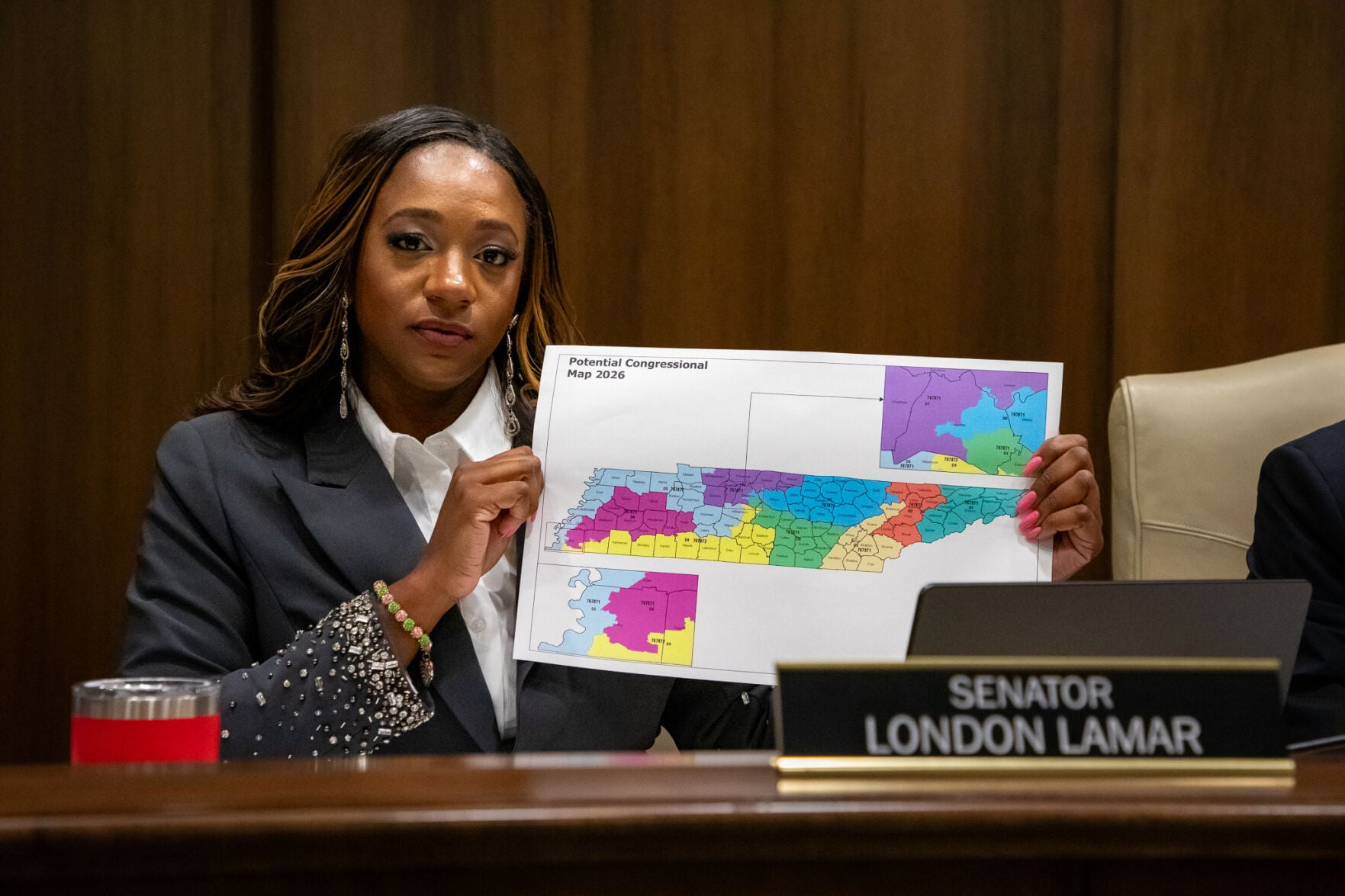
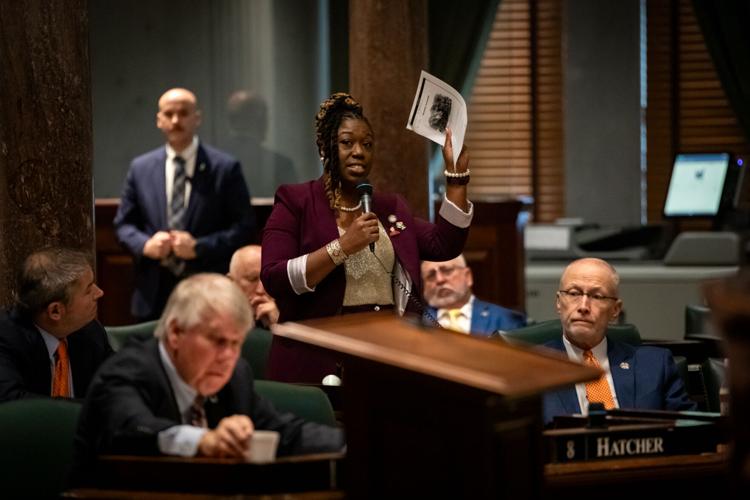
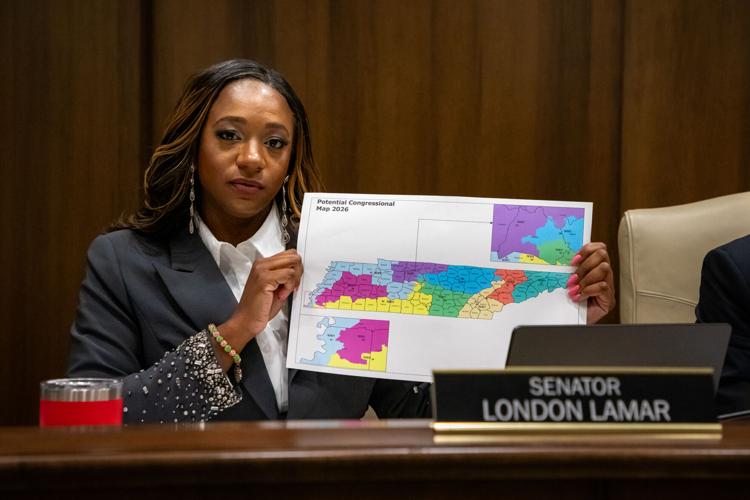
Sen. London Lamar holds a copy of Republicans' proposed congressional map, May 6, 2026
“This was based on population and politics,” Sexton said during a House Congressional Redistricting Committee hearing. “You’re looking at it based on population.”
According to the proposed map, Davidson County would once again be split into three districts — the 4th, 6th and 7th Congressional Districts, with the 5th Congressional District no longer containing a portion of Nashville. The new 4th Congressional District would stretch from Nashville to rural parts of Middle and East Tennessee, including Grundy and Sequatchie counties.
Shelby County would be carved into three pieces, split between the 5th, 8th and 9th Congressional Districts. With the proposed lines, Williamson and Shelby counties would be joined together in the 9th Congressional District.
Republican leadership calls this a positive change.
“I think it’s important for all of us who serve in the legislative branch to answer to both rural and urban areas,” House Majority Leader William Lamberth (R-Portland) told the Scene. “That’s been the push and pull — tug in Tennessee — since the dawn of this state. Whether it’s Democrats or Republicans, you have rural and urban areas, and both are extremely important. I am excited about it. I think it gives both Democrats and Republicans a shot at these seats. In years past, some of these were drawn by Democrats and Republicans to the point where you have completely safe seats. Several of these seats are going to be competitive amongst the two major parties.”
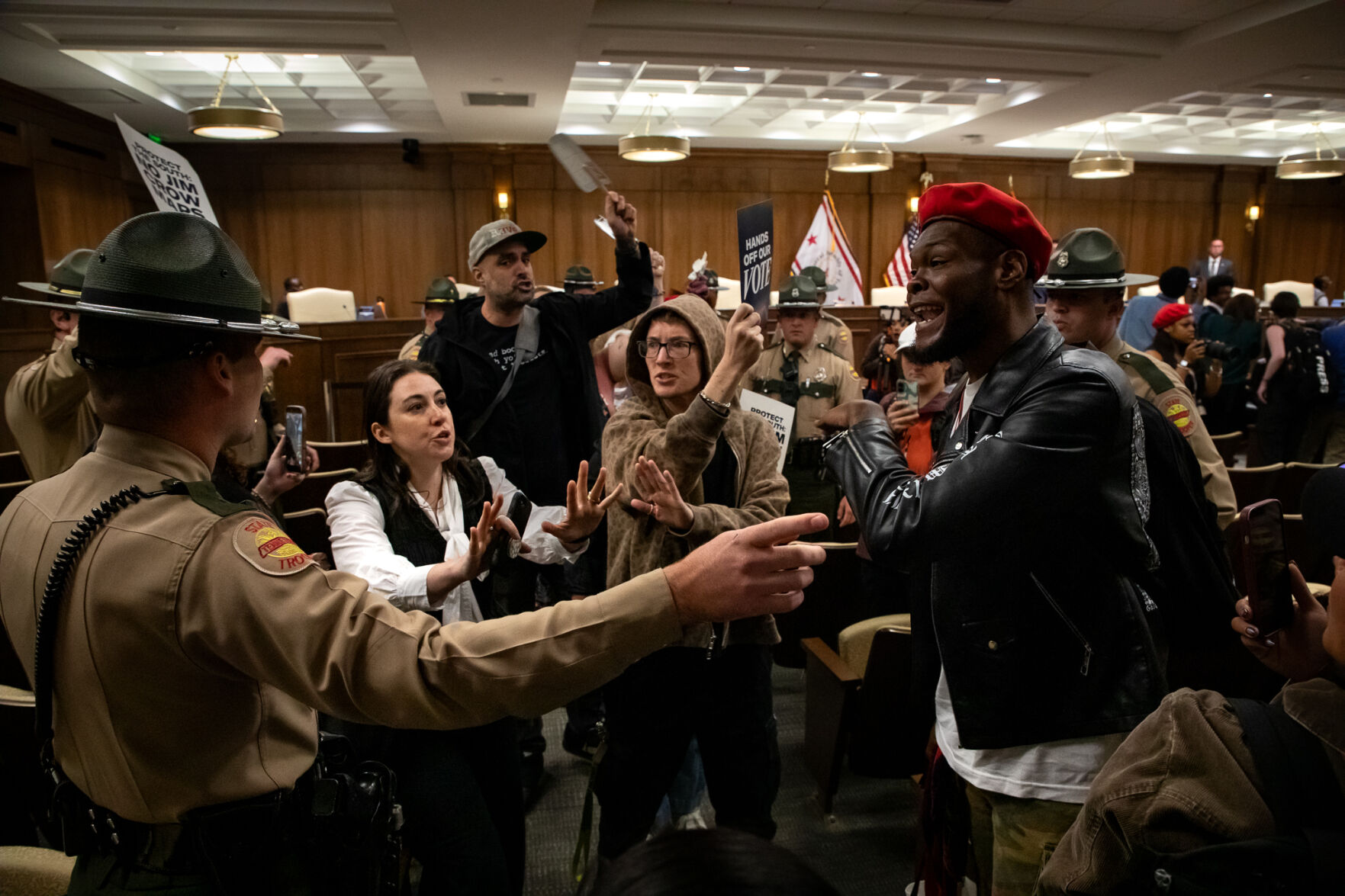
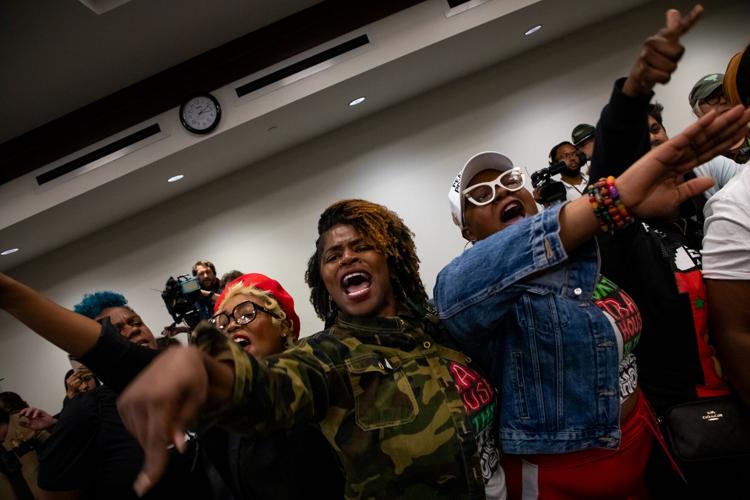
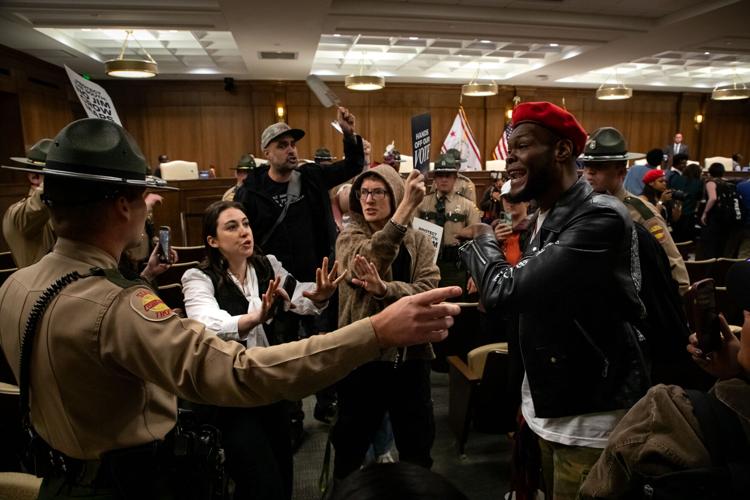
Lawmakers had protesters cleared from both hearing rooms on Wednesday, with Tennessee Highway Patrol officers having to herd demonstrators — many of whom traveled from Memphis — out of the rooms. Some Republican legislators smiled and laughed as protesters were removed.
At one point, Lamberth and Democratic Rep. Justin Jones (D-Nashville) engaged in a heated exchange, lobbing insults and referring to one another as racist.
“When will these folks stand up to this Klan member?” asked Jones, referencing Sexton.
“Be a protester or be a state representative,” responded Lamberth. “Pick one.”
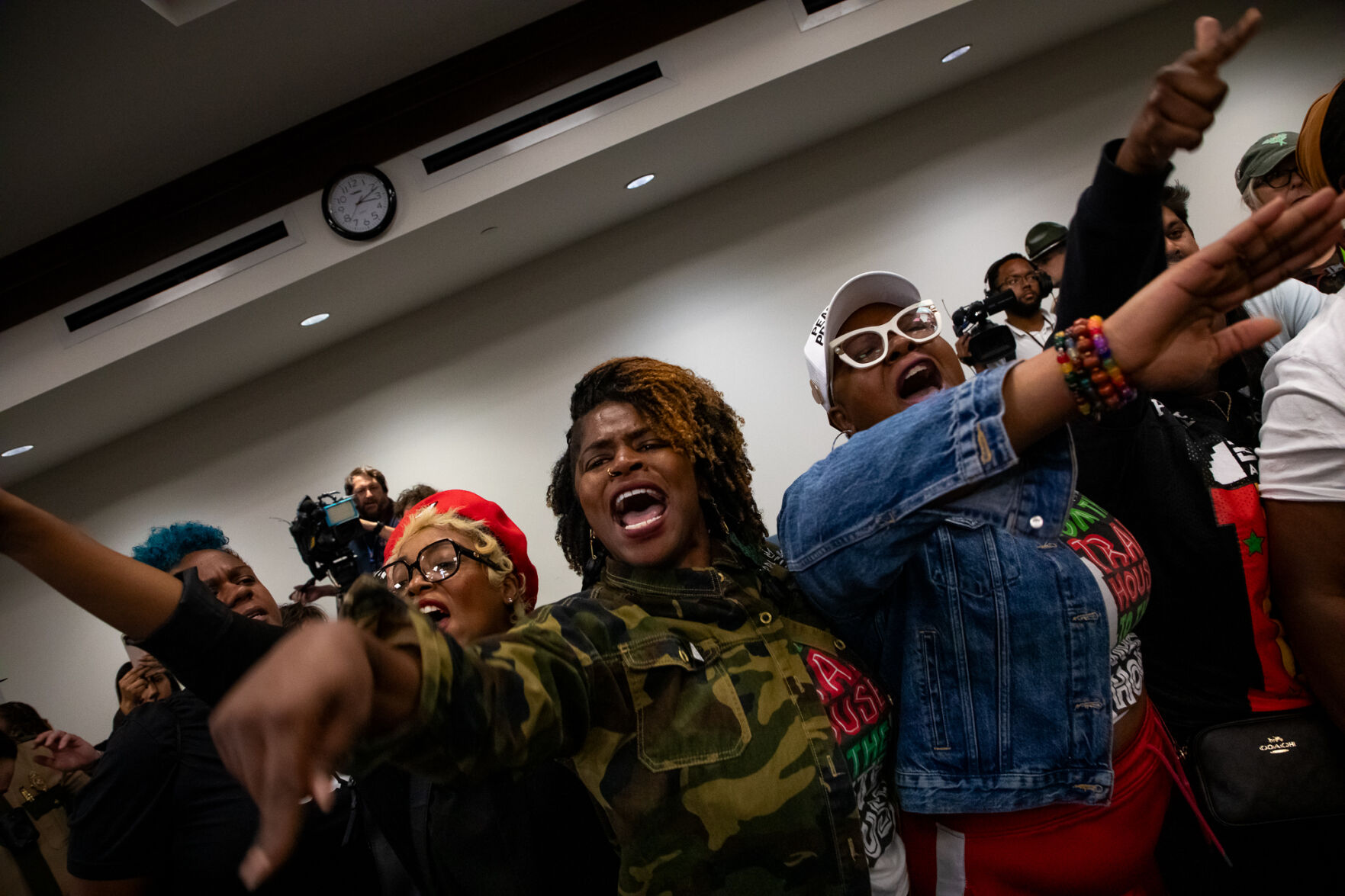
Protesters during a House Congressional Redistricting Committee, May 6, 2026
Witnesses in both chambers argued that redistricting Memphis would have racial implications that can’t be erased. Memphis civil rights attorney Walter Bailey was involved in the legal defense of Martin Luther King Jr. during the Memphis sanitation strike of 1968. Bailey said on Wednesday that the maps are “subliminally racist.”
Sekou Franklin is the political action chair of the NAACP Tennessee State Conference and the executive director of Fisk University's John Lewis Center for Social Justice. Franklin testified before the Senate State and Local Government Committee, where he noted that Memphis’ current congressional district was not legally mandated or created through federal intervention, and therefore not unconstitutional under Louisiana v. Callais.
“It's just a naturally created district,” Franklin said. “Thirty years from now, Memphis may be ‘a majority white district,’ right? Thirty years from now, Knoxville may be a majority-Black district, not because it's created that way as a congressional district, but because people live, people move. So Memphis, this is something different. This goes much further. This would be the largest attack in Tennessee's modern history on the rights of voters, particularly Black voters in the majority-Black city, that we've seen.”
Former West Virginia Secretary of State Natalie Tennant also spoke before the Senate State and Local Government Committee, where she said redistricting — especially so close to the upcoming midterm elections — will cause voter confusion and a burden on election administrators across the state.
“I’ve often said that voter confusion is voter suppression,” said Tennant.
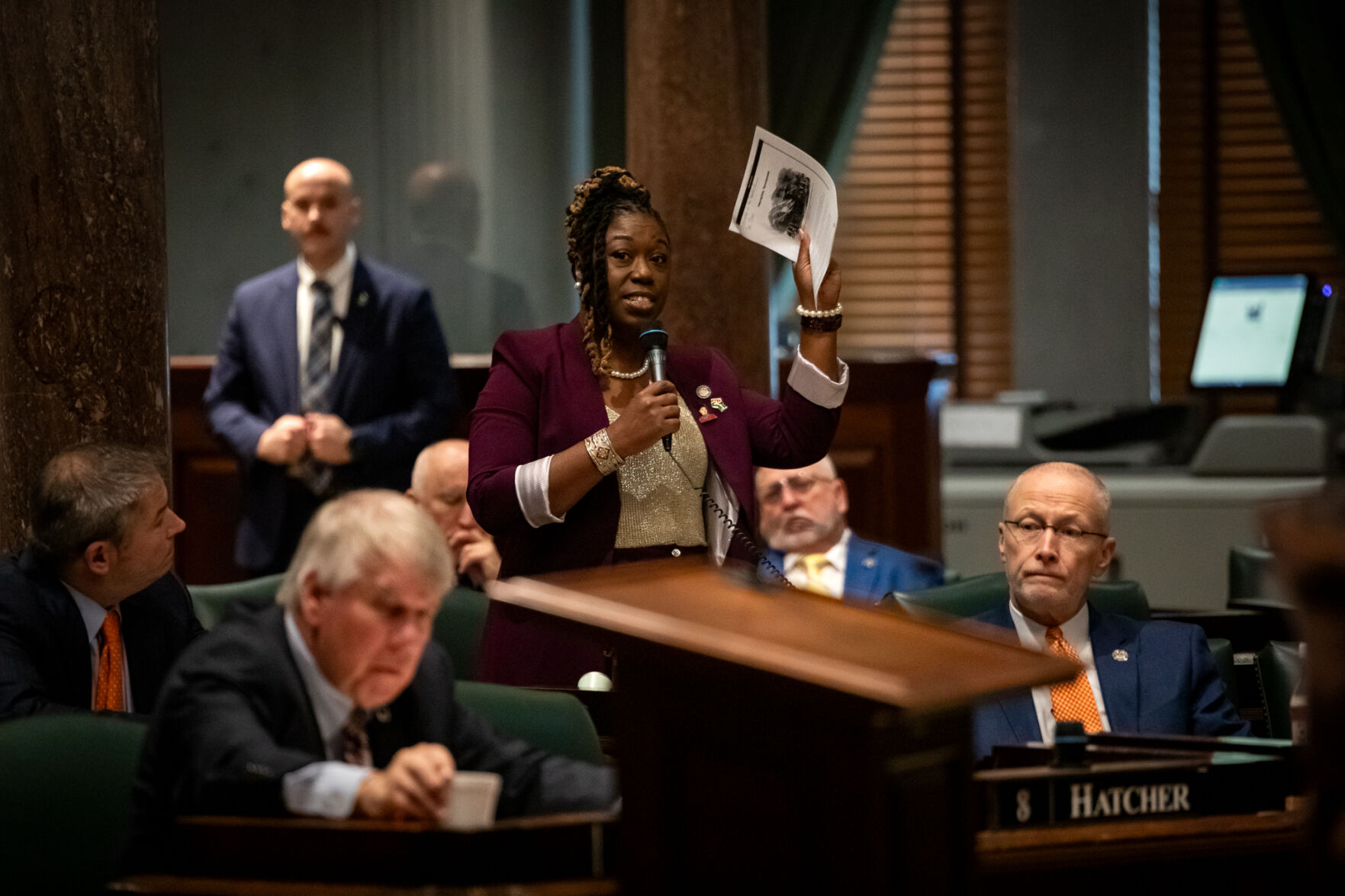
Sen. Charlane Oliver holds an account of the 1866 Memphis Massacre on the Senate floor, May 6, 2026
Franklin and Democratic lawmakers argued that using census data from 2020 to redraw district lines could be faulty and inaccurate.
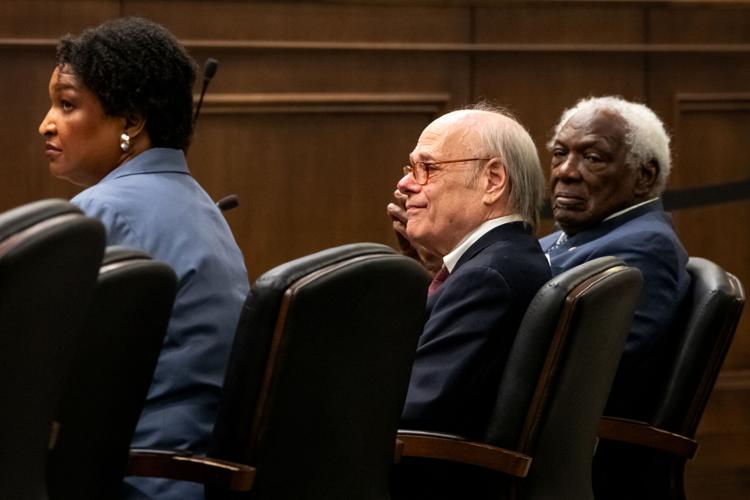
Stacey Abrams, founder of voting rights organization Fair Fight Action and a former Georgia gubernatorial candidate, spoke before the Senate Judiciary Committee, where she offered analogies regarding what redistricting could mean for Memphis voters.
“It is like having ranchers being told that you will only be represented by vegans, that you are a gun owner who will only be represented by pacifists,” Abrams said. “You are being told that your interests do not matter. Not only are you being told that, but it's so explicit that they are picking someone who is intentionally going to ignore your interests. Democracy does not mean that you get what you want. Democracy is that you get to participate and have an opportunity to have your needs met there.”

Advocate Stacey Abrams, Rep. Steve Cohen and civil rights attorney Walter Bailey testify during a Senate Judiciary Committee hearing, May 6, 2026
Meanwhile, Democratic U.S. Rep. Steve Cohen — who currently represents Memphis in Tennessee’s 9th Congressional District — offered another example. He said Republicans’ proposed map to split Memphis into three separate districts puts Memphis’ Black community in the “tail of a comet.”
“It's like a comet that goes from Memphis up to Kentucky and over towards Fort Campbell, and a comet that goes along the Mississippi border and out towards Hamilton County,” he said. “The tail of the comet gets nothing, because it has no say in the primary election where the Republican winner will be the congressperson. … And they will be on the back of the bus, just like the South did to African Americans for half a [century].”
Lawmakers are expected to vote on the changed maps Thursday morning.
This article is published as a partnership between sister publications the Nashville Scene, the Nashville Post and the Williamson Scene. Eli Motycka contributed reporting.





Post a comment as anonymous
Report
Watch this discussion.
(0) comments
Welcome to the discussion.
Log In
Welcome to the discussion.
Keep it clean. Please avoid obscene, vulgar, lewd, racist or otherwise abusive language. Comments featuring hate speech or threatening or violent content will not be tolerated.
PLEASE TURN OFF YOUR CAPS LOCK.
Be truthful. Don't knowingly lie or mislead.
Be proactive. Use the “report” link on any comment that violates our comment policy.
Share with us. We'd love to hear your feedback.