

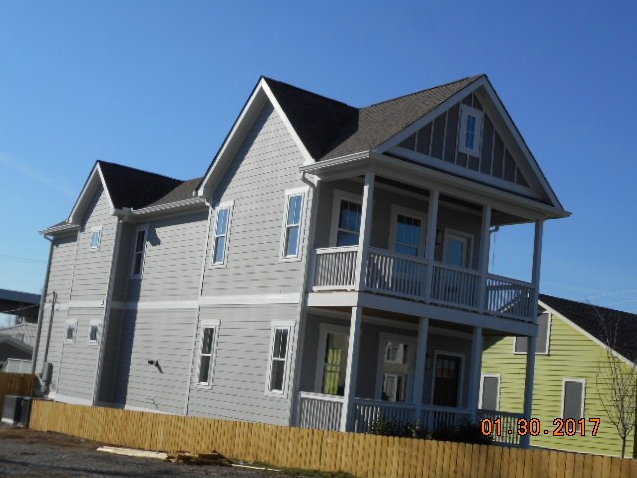
Short Term rental property owned by Jim Todd in The Nations
As court referee for the General Sessions Environmental Court, Jim Todd decides if people have violated the city’s short-term rental regulations — violations that can result in a three-year ban from running one of the controversial Airbnb-type rentals.
“This is a huge issue that’s going to affect the city for a long time,” Todd said during last week’s environmental court docket. “The city is doing its best to accommodate people who want to do this and make money, and accommodate the neighbors who don’t want people to do this and make money, and trying to make sure the people who do come to the city and spend money on tourism are safe and cared for and don’t burn up and have accidents in these homes that they’re staying in.”

Jim Todd
What Todd didn’t say, though, is that he is one of those “people who want to do this and make money.”
According to Metro records, Todd holds permits for two non-owner-occupied short-term rentals, both issued last fall. Both are in The Nations — one he purchased for $435,000 in October, the other for $401,044 in September. He secured permits for each shortly after.
He says no one has asked him to recuse himself from short-term rental cases.
“I own property, and I hear property standards cases,” he told the Scene Friday. “I own a dog, and I hear dog cases. I’ve ridden in a taxi, and I hear taxi cases. I don’t recuse myself because I have familiarity in cases that come before me.”
While Todd’s dog ownership and taxi ridership don’t stand to earn him any money, he contends his lack of penal discretion in the short-term rental cases is enough to eliminate any conflict of interest.
“I don’t have the power to shut people down for three years. That power is with the council and Metro legal,” he said. “If I find you violated, I don’t have any discretion.”
That’s not to say the court referee doesn’t desire more discretion in the cases.
In one case Todd heard last week, a short-term renter had started the permit application process but began advertising the property for rent before the permit was finalized (it never was).
“If I find him in violation, then I have no discretion. I don’t like not having discretion,” he said during the hearing. “Because if I have no discretion, I have nothing to do but shut him down for three years. And that just bothers me that I’m going to have to do that to him when that’s the same thing we do to people who didn’t try at all.”
After the case was continued to this week’s docket, Todd eventually sided with Metro lawyers and placed a three-year moratorium on the defendant’s two short-term rental properties. (The defendant’s attorney has said he will appeal.)
Todd’s court referee position is part-time, appointed by General Sessions Judge Allegra Walker, to whom his decisions can be appealed.
A legal ethics expert said the part-time nature of the position, as well as the preliminary, non-constitutional nature of Todd’s work probably meant he was correct that there is not a legal conflict of interest.
“You’re supposed to avoid outside influences, but those rules are premised upon the idea that being a judge is your full-time job,” said Memphis-based attorney Brian Faughnan, chair of the Tennessee Bar Association’s ethics and professional responsibility committee. “But if you’re operating as a part-time judge, inherently you’re going to get to do other things. The system is already set up to limit the power of the kinds of cases you can hear with the understanding that you’re just doing this part-time.”
Additionally, because Todd is hearing specific statutory violations rather than constitutional questions about the short-term rental regulations in general, Faughnan says he doesn’t think there’s a conflict of interest.
“If he’s not in a court and he’s not hearing cases where somebody’s trying to challenge the whole system […] then I think he’s probably correct that there’s not an economic interest,” he said.



Post a comment as anonymous
Report
Watch this discussion.
(0) comments
Welcome to the discussion.
Log In
Welcome to the discussion.
Keep it clean. Please avoid obscene, vulgar, lewd, racist or otherwise abusive language. Comments featuring hate speech or threatening or violent content will not be tolerated.
PLEASE TURN OFF YOUR CAPS LOCK.
Be truthful. Don't knowingly lie or mislead.
Be proactive. Use the “report” link on any comment that violates our comment policy.
Share with us. We'd love to hear your feedback.