
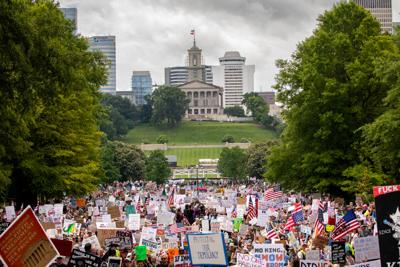

State Republican leaders are sponsoring legislation aimed at cracking down on some protests with legal action for what they characterize as “mercenary rioting.”
House Bill 2109/Senate Bill 2222, sponsored by House Majority Whip Clark Boyd (R-Lebanon) and Senate Majority Leader Jack Johnson (R-Franklin), would “create a new legal pathway for victims to sue under vicarious liability when someone pays people to join demonstrations,” and “empowers the Tennessee Attorney General to bring actions in the public interest against such funders.”
The sponsors describe “activism-for-hire,” which they argue involves paid protesters “with the goal of creating the appearance of strong support and influencing public opinion.”

Franklin's Jack Johnson made investment in Musk’s company three months before tunnel announcement
"This legislation draws a clear line between free speech and coordinated, paid disruption that damages property, threatens public safety and burdens taxpayers," Johnson says in a release. "If someone is financing unlawful activity for political or ideological gain, they should be held responsible for the consequences. Peaceful protest is a fundamental constitutional right, and nothing in this legislation changes that. This bill is about protecting communities, giving victims a path to be compensated for damages, and upholding the rule of law in Tennessee.”
The bill specifically lists the offenses of rioting, disorderly conduct, disrupting a meeting, obstructing a highway, harassment and civil rights intimidation, “unauthorized placement of signs or markings,” and “disobeying a reasonable request or order to move.”
When questioned by Rep. Gloria Johnson (D-Knoxville) in Wednesday’s House Civil Justice Subcommittee if paid protesters are actually a problem in Tennessee, Boyd said law enforcement hasn’t collected that type of data in the past.
“We’re going to start checking into that — if someone is arrested and they are being paid, then the financier will be held civilly liable,” Boyd said, adding that law enforcement officials would use “normal investigative powers” in the course of determining if a protester is being paid.
Republicans at the Capitol have long claimed — without evidence — that protesters who frequent the legislature are being paid to disrupt lawmakers.
The bill passed Wednesday’s subcommittee in a 6-1-1 vote, with Johnson voting no. Rep. Chris Todd (R-Jackson) was absent. The legislation will be heard next in the House Judiciary Committee on March 11.



Post a comment as anonymous
Report
Watch this discussion.
(0) comments
Welcome to the discussion.
Log In
Welcome to the discussion.
Keep it clean. Please avoid obscene, vulgar, lewd, racist or otherwise abusive language. Comments featuring hate speech or threatening or violent content will not be tolerated.
PLEASE TURN OFF YOUR CAPS LOCK.
Be truthful. Don't knowingly lie or mislead.
Be proactive. Use the “report” link on any comment that violates our comment policy.
Share with us. We'd love to hear your feedback.