

This story is a partnership between the Nashville Banner and the Nashville Scene. For more information, visit NashvilleBanner.com.
As soon as Freddie O’Connell or Alice Rolli wins a runoff to be Nashville’s next mayor, the clock will start ticking on the next administration. Just two weeks later, one will take the oath of office and be sworn in, likely without much of the office that will run city government.
Nashville gives incoming administrations less time than peer cities — sometimes significantly less. Denver, Austin and Charlotte have almost a month between election and inauguration. Indianapolis and Salt Lake City have roughly two months. Even in Tennessee, Knoxville had 46 days between Indya Kincannon’s election and start, while in Memphis Jim Strickland got 90 days.
It means the marathon of an election season is followed by an all-out sprint to get started.

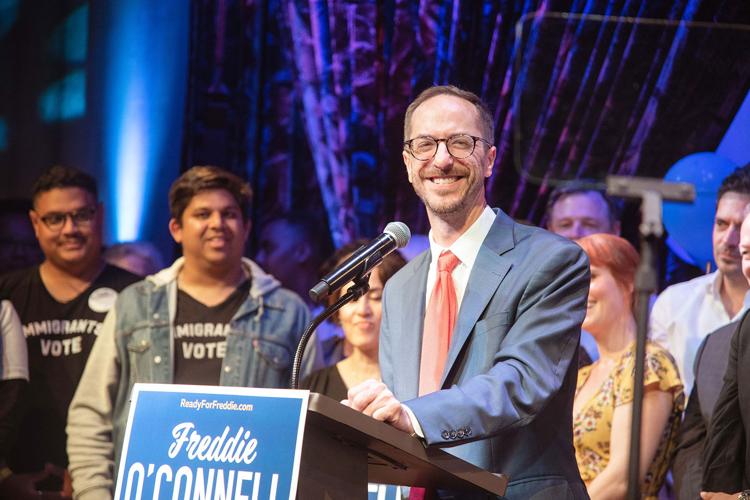
Freddie O'Connell election watch party
“I think there are two key components that were challenging,” says Mary Falls, who co-chaired John Cooper’s transition and then went to work in the mayor’s office. “One is the short timeframe, which is really a problem. Because if you want to get the best people, it takes time. And second is the requirement that there only be a headcount of I think it was 31 people and the mayor's staff. That was really a problem.”
Some of the highest-profile roles, like finance director and legal director, usually pull from a pool of candidates who already have jobs or clients that they can’t drop at a moment’s notice. As Falls notes, “You probably don’t want someone who is available on Monday.” In Cooper’s case, it took months to bring in Robert Cooper to run Metro Legal.
“If you have a public transition team, like we did, you want them to have time to give you input on what your administration looks like,” says Claudia Huskey, who ran Megan Barry’s campaign and joined her administration as a senior adviser. “The policy teams, and the bigger pieces, those are kind of the ones that take time.”

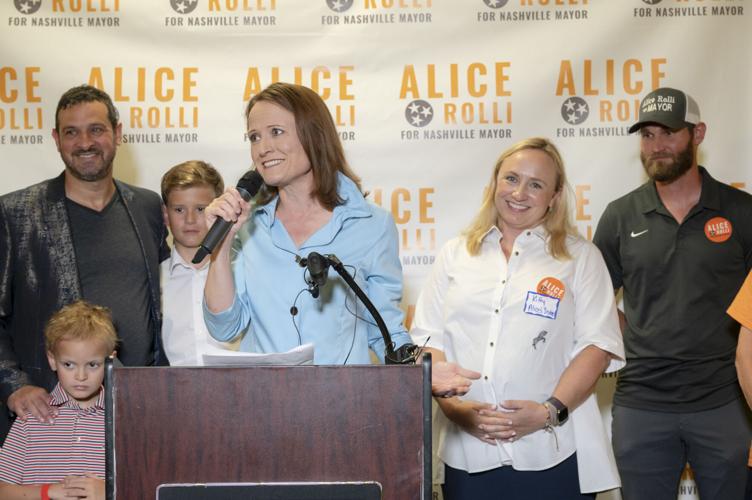
Alice Rolli mayoral election watch party
In addition to time, an administration-in-waiting will often need some kind of office space and staffing. In Denver, a 501(c)(4) nonprofit organization called “Vibrant Denver” handled some of these needs. Indianapolis had “One City Indy.” Salt Lake City provides money for staff and space as part of the city budget. In Memphis, Strickland tapped foundations to pay for his transition.
The advantage of having a nonprofit pay for the transition is that it might afford the incoming mayor a level of privacy to have discussions instead of them being public. John Cooper ran into accusations that he was being less transparent than Gov. Bill Lee by not allowing public access to transition documents.
Huskey says it’s likely that the bare minimum of a new staff will be ready on day one. There are a few key positions.
“I think you have to have a director of scheduling to manage them,” Huskey says. “Every time, I think you have to have some kind of administrative assistant to manage the mayor's calls, emails, you know, just all of that correspondence, you have to have someone doing communications and answering press inquiries and communicating, think you have to have someone who is helping with the intake of résumés, for both jobs and boards and commissions, just to at least start to funnel them into a place it and partner with Metro HR on that.”
A new administration can get by with an interim in charge of certain areas while the new team is built. And there is typically carryover between staff. Even a race that was contentious as Cooper’s with David Briley saw several members of Briley’s office remain.
Some within Cooper’s office are likely to get looks from the new administration. For example, multiple people inside and outside of the administration praised Kristin Wilson, chief of operations and performance, for her work in charge of the different Metro department heads.



Post a comment as anonymous
Report
Watch this discussion.
(0) comments
Welcome to the discussion.
Log In
Welcome to the discussion.
Keep it clean. Please avoid obscene, vulgar, lewd, racist or otherwise abusive language. Comments featuring hate speech or threatening or violent content will not be tolerated.
PLEASE TURN OFF YOUR CAPS LOCK.
Be truthful. Don't knowingly lie or mislead.
Be proactive. Use the “report” link on any comment that violates our comment policy.
Share with us. We'd love to hear your feedback.