
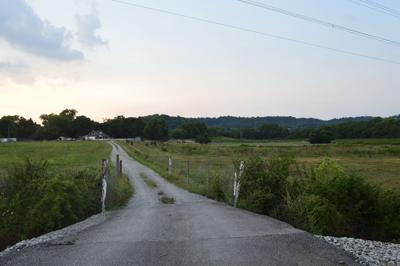

We last checked on the Ariza in February, when residents were weighing legal action to block 417 units planned for an undeveloped bend in the Harpeth River. Neighbors’ obstruction appears to be working: The Metro Planning Commission decided not to move the project forward at a meeting last week, deferring two key pieces of legislation until June 8 despite developer concessions and support for the project from the area’s Metro councilmember.
“We’re not at a point where I would recommend deferral,” Metro Planning Director Lucy Alden Kempf told commissioners before the vote. “It doesn’t seem productive at this point.”
The first piece seeks to change the site’s rural designation in the Bellevue Community Plan, recategorizing it as an evolving suburban site. The second would rezone the site to allow for a proposed 417 residential units. Opponents have brought up flooding concerns, road access, effects on nearby neighborhoods and the site’s threat to Bellevue’s more rural character. Commissioners considered concessions by the developer, specifically a pledge to physically raise Coley Davis Road to alleviate others’ flood concerns, and extensive testimony from Logan Elliott of Metro Planning, who explained the project to the body. No legislation has been introduced in Metro Council yet.
Units will be spread across seven buildings, according to plans, and have prompted pushback similar to AJ Capital’s overhaul of Belle Meade Plaza. Both promise hundreds of units on sites near waterways but differ dramatically in how they tie into surrounding infrastructure.
A shorthanded body has held up the project’s runway.
“The issue is that the amendment needs six yeses, and there hasn’t been a [Metro Planning Commission] meeting with more than six commissioners available to vote,” District 35 Councilmember Dave Rosenberg tells the Scene. “Hopefully it passes next meeting.”
“I’m a huge believer in density where it’s warranted,” commissioner Stewart Clifton recently told colleagues. “Some friends did double takes when we voted for density at Belle Meade Plaza. I wouldn’t change that for anything. But this is not Belle Meade Plaza.”
Commissioners have zeroed in on two developer moves — the pledge to raise Coley Davis and a bridge from the development across the Harpeth River to facilitate traffic flow — as key improvements that could enable the project to move forward.
“Unless the road is elevated and the bridge is there, I don’t think the policy change would be something I personally would agree with,” said commissioner Ed Henley.
Real estate professionals know that, whatever you’re doing, you don’t want to be on the other side of matching T-shirts. The meeting did not feature a public hearing, but opponents showed up to the meeting in matching yellow, part of an all-out campaign to block the development. Devin Schultz, a corporate attorney formerly of Stites & Harbison, and Jim Rossi, Judge D.L. Lansden Chair at Vanderbilt Law School, have helped construct formidable roadblocks in front of Cypressbrook, the Houston-based real estate company pushing the project. Opponents have recently seized on developers’ promise of a greenway extension, a community benefit that hinges on the right to access an easement on the southeast corner of the property and breach railroad tracks owned by CSX.
Dueling websites — BellevueStrong (anti) and ArizaBellevue (pro) — spin the project’s two sides. “We are concerned neighbors taking a stand,” reads BellevueStrong’s headline, before showing viewers extreme flooding the site endured in 2010 and the “disputed easement” necessary for greenway connectivity. Cypressbrook’s website emphasizes the greenway connector and repeats its promise to preserve the site’s green space, a critical floodplain for the Harpeth.
Planning will take up both pieces of legislation at its June 8 meeting.



Post a comment as anonymous
Report
Watch this discussion.
(0) comments
Welcome to the discussion.
Log In
Welcome to the discussion.
Keep it clean. Please avoid obscene, vulgar, lewd, racist or otherwise abusive language. Comments featuring hate speech or threatening or violent content will not be tolerated.
PLEASE TURN OFF YOUR CAPS LOCK.
Be truthful. Don't knowingly lie or mislead.
Be proactive. Use the “report” link on any comment that violates our comment policy.
Share with us. We'd love to hear your feedback.