

This story is a partnership between the Nashville Banner and the Nashville Scene. The Nashville Banner is a nonprofit, nonpartisan news organization focused on civic news. Visit nashvillebanner.com for more information.
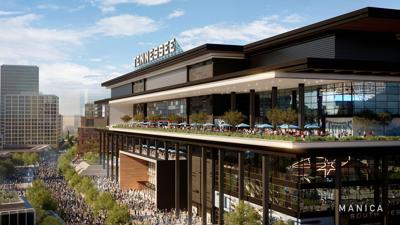
Representatives from the Tennessee Titans and Metro government offered updates to the Metropolitan Sports Authority on Thursday, setting out a timeline for a busy summer and fall as work ramps up at the site of the future Nissan Stadium.
Adolpho Birch III, the Titans' chief external and league affairs officer, told the board that more than $150 million had been spent on the stadium project through May. Around 75 percent of excavation work is now done, with hundreds of thousands of cubic yards of dirt now piled high on the site and exported to fill sites in Hendersonville and Goodlettsville. Birch said around 30 percent of the piers anchoring the future stadium have been installed.
That work is ongoing as the team and city continue discussing the final elements of the project.
Speaking to the board, Heather Hill of Cumming Group — Metro’s owner’s representative for the project — and Metro chief development officer Bob Mendes laid out a timeline of benchmarks over the next several months. The Tennessee Builder’s Alliance, the coalition of contractors working on the stadium, will develop a first draft of a guaranteed maximum price document for the overall project by July 16.
A second draft will follow in August, with the sports authority set to approve a final GMP for the multibillion-dollar project in September. That schedule precedes an Oct. 1 contractual deadline for the stadium’s financing. Hill called the deadline a “huge milestone.”
The GMP document will give the team and the Builder’s Alliance an overall budget for the project. Metro and state contributions are already capped and available, but the city wants to ensure that private funds are available to complete the project successfully.
Mendes described several remaining decisions that could affect the GMP, some of which might not be finalized by Oct. 1. One key remaining question is how the south plaza of the future stadium, which will abut Metro’s East Bank development, will unfold.

Local leaders turn out for start of East Bank development
Additionally, Mendes said the city and team are continuing to discuss the future of Interstate Drive and South Second Street. The NFL’s security recommendations would have Interstate Drive closed entirely on game days, but Mendes said the street is an essential corridor for emergency services. Officials must weigh a balance of security around the stadium and resident access to public property, according to Mendes.
Mendes and Jeff Oldham of Bass, Berry & Sims, the city’s bond counsel, said a GMP could be developed with some remaining open questions.
“We’ve got a unique circumstance here,” Mendes said. “For as long as we’ve had football on the East Bank, there’s only one thing that mattered on the East Bank.”
Now, though, he said, “the stadium needs to fit with Metro’s land next door,” with Metro’s work with master developer The Fallon Company focused on “making sure our entire property works best for the public.”



