

Vince Gill, touching on his golf obsession and the founding of the National Recreation and Park Association in just 60 seconds, introduces a vintage 10-minute Parks and Recreation promo video recently added to Metro Nashville’s YouTube channel. In March, Metro started dumping a trove of archival videos (including this kitschy artifact) that span nearly 20 years, from the late 1980s to the early 2000s.
Happy children, active seniors, lush walking paths, ample golf — parks’ public value rarely comes into question. Since Gill’s combination infomercial-PSA, residents have formed auxiliary booster organizations to capture and deploy all the money locals freely put toward local parks.
“I think of it as like, voluntary higher taxes,” says one neighbor involved in fundraising for his local park. To avoid jeopardizing any ongoing work with Metro, he asked not to be named. “I hope it also makes Metro dollars more fungible, so the money they would have spent here can go somewhere without the fundraising capacity.”
Neighborhood parks organizations tend to focus on smaller capital expenses, like a new bench or playground equipment. They also bring volunteer labor for cleanups. Metro Parks’ $67 million annual budget primarily covers salaries, including hundreds of seasonal employees, and operating expenses for the Centennial Sportsplex and Nashville’s seven golf programs.
Private parks booster groups are easy to spot because their names mostly start with “Friends of” and end with a specific Metro Parks entity, like Two Rivers Mansion or Bells Bend. Metro keeps a running list, as does the Nashville Parks Foundation, an anchor group founded in 2015 to “[enhance] public parks and [expand] recreational opportunities while promoting sustainable growth of the park system.”
The foundation also provides a legal umbrella for fledgling “Friends” like the newly formed Friends of McCabe Park, which popped up last year. Greenways for Nashville, a key coordinator of the city’s popular greenway system since 1994, exists in the same expansive role. Collectively, the groups brought in just over $1 million last year. Both have independent staff and reserve an ex officio board seat for Metro Parks director Monique Odom.
“There are many essential Friends groups, and they are all guided by the Metro Parks board,” says Amy Crownover, executive director of Greenways for Nashville. “We can help raise private dollars to match or leverage contributions from the Metro Parks Department. People often feel deep ownership of the ones closer to them — greenways but also parks. They want to support it with something as simple as picking up trash or writing a check.”

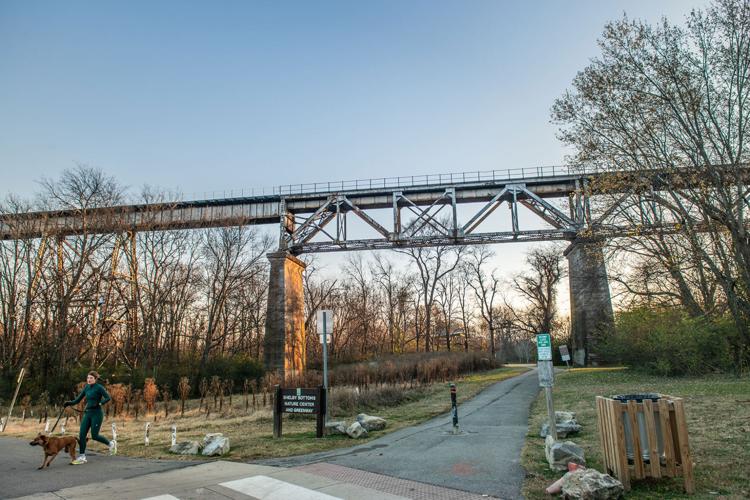
Shelby Park
Crownover emphasizes that any time a partner group raises capital dollars, it’s with the approval of Metro Parks for an asset the city recognizes as valuable to the community. Through that coordination, the city can bring privately funded improvements online, and neighbors can directly shape the sites they use regularly.
Bigger parks command bigger groups. Friends of Warner Parks sits atop the booster pyramid per any conceivable metric — by fundraising, by staff, by prestige, by acreage. President Jenny Hannon and COO Jane Avinger lead an 11-person office and make six-figure salaries. (Hannon, at $200,000 a year, tops Odom by $20,000.) The donor list could pass for a directory of Belle Meade, West Meade, Oak Hill and Forest Hills, including golf-obsessed CBS sports anchor Jim Nantz, a new resident who topped off the $2.5 million capital campaign for Percy Warner Golf Course in October. Lucius Burch III, a longtime Belle Meade resident who made a killing privatizing health care with HCA and prisons with Corrections Corporation of America (now CoreCivic), regularly tops the donor list. The group reported more than $4 million in 2023 contributions amid ongoing efforts to raise $15 million for capital projects. The group, founded in 1987, is preparing for the 100th anniversary of Warner Parks in 2026.
“Typically Metro pays for infrastructure of the parks — paving, general maintenance,” Avinger tells the Scene. “We raise funds to supplement what they do, like capital projects and education programs. Health and wellness, conservation and education are our focuses. We also really build community with our volunteer programs.”
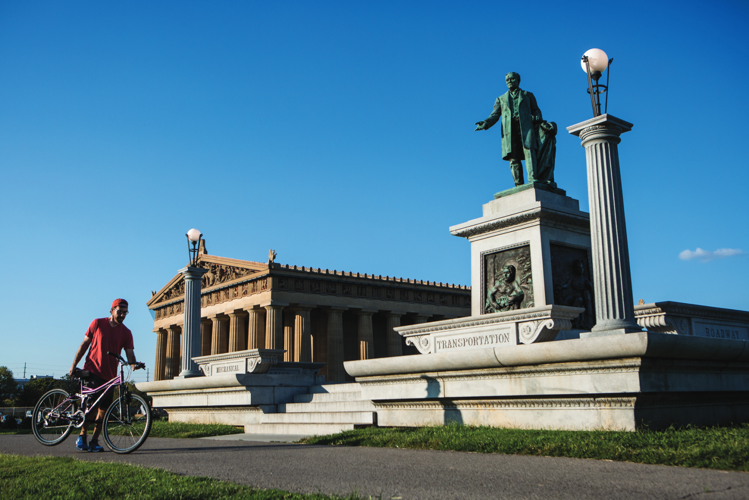
Centennial Park Conservancy, with a long history, sprawling staff and big-name board, challenges Warner Parks’ preeminence on everything except acreage. Its smaller footprint houses major draws like the Parthenon and free concert series Musicians Corner. Across town, the Friends of Shelby Park, founded in 2008, takes third place. The East Side asset pulls in annual donations in the lower six figures and focuses on the same supplementary concerns: educational activities like the Park Explorer Program and direct capital expenditures like playground equipment. Die-hards can even get a Friends of Shelby Park vanity plate. Revenues and operating costs slowly decrease across Friends of Mill Ridge Park, Friends of Beaman Park and Friends of Bells Bend. Fledgling groups have recently emerged to support McCabe and Ted Rhodes Golf Course.



Post a comment as anonymous
Report
Watch this discussion.
(0) comments
Welcome to the discussion.
Log In
Welcome to the discussion.
Keep it clean. Please avoid obscene, vulgar, lewd, racist or otherwise abusive language. Comments featuring hate speech or threatening or violent content will not be tolerated.
PLEASE TURN OFF YOUR CAPS LOCK.
Be truthful. Don't knowingly lie or mislead.
Be proactive. Use the “report” link on any comment that violates our comment policy.
Share with us. We'd love to hear your feedback.