
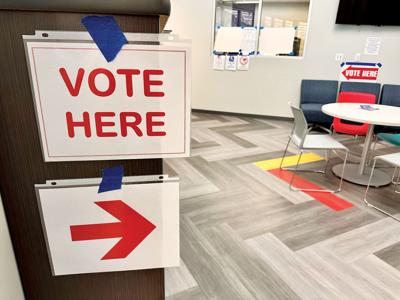

Major aspects of Tennessee’s Aug. 6 election correspond with low turnout. It’s not a presidential year, for one, and it’s a primary — not even a real partisan showdown. Yet Davidson County residents are beating turnout by 35 percent compared to the same stretch of early voting in July 2024. That includes increases at every Nashville precinct (except the Metro Office Building, which is about even with 2024 numbers) and more than 1,000 ballots cast at the county’s three new voting sites.
Tuesday morning, the fourth day of Davidson County early voting, opened with 7,608 votes already tallied, outpacing the 2024 state and federal primary by nearly 2,000 votes. Both years opened early voting on the same days — Friday, Saturday and Monday — led by the highest totals on Friday, residents’ first opportunity to vote. If this surge holds through the final day of early voting on Saturday, Aug. 1, it will furnish over 50,000 votes before election day.
The Davidson County Election Commission added early poll sites at the Community Foundation of Middle Tennessee on Belmont Boulevard, the Scarritt Bennett Laskey Welcome Center near Vanderbilt University and DCEC’s office on Murfreesboro Pike.
Several factors might motivate the majority-Democrat county, which includes parts of three U.S. congressional districts. President Donald Trump has alienated many members of his own base with a war on Iran, waged without congressional approval. Trump’s strikes on Iran, which began in February with an air attack coordinated with Israel, have ignited a regional conflict in the Middle East and cost at least 18 American lives and led to thousands of Iranian deaths, including many civilians, by American air, missile and drone strikes. Historically low approval ratings for the White House, Republican infighting, violent ICE raids and several competitive primaries have likely energized both parties’ bases.
Gerrymandered congressional districts may also be driving Democratic voters to the polls. Nashville Democrats lost control over the 5th Congressional District, long held by Nashville’s Jim Cooper, during a 2022 redistricting by conservative state lawmakers; Memphis lost its majority-Black 9th Congressional District during May’s bitter special session controlled by the GOP supermajority. More thorough rundowns of congressional races and the gubernatorial primary explain how each party is weighing different directions ahead of the Nov. 3 general election. Data and punditry predict a midterm backlash against Republicans, likely costing the controlling party the U.S. House of Representatives, though it’s unknown exactly how far the tides will shift.



Post a comment as anonymous
Report
Watch this discussion.
(0) comments
Welcome to the discussion.
Log In
Welcome to the discussion.
Keep it clean. Please avoid obscene, vulgar, lewd, racist or otherwise abusive language. Comments featuring hate speech or threatening or violent content will not be tolerated.
PLEASE TURN OFF YOUR CAPS LOCK.
Be truthful. Don't knowingly lie or mislead.
Be proactive. Use the “report” link on any comment that violates our comment policy.
Share with us. We'd love to hear your feedback.