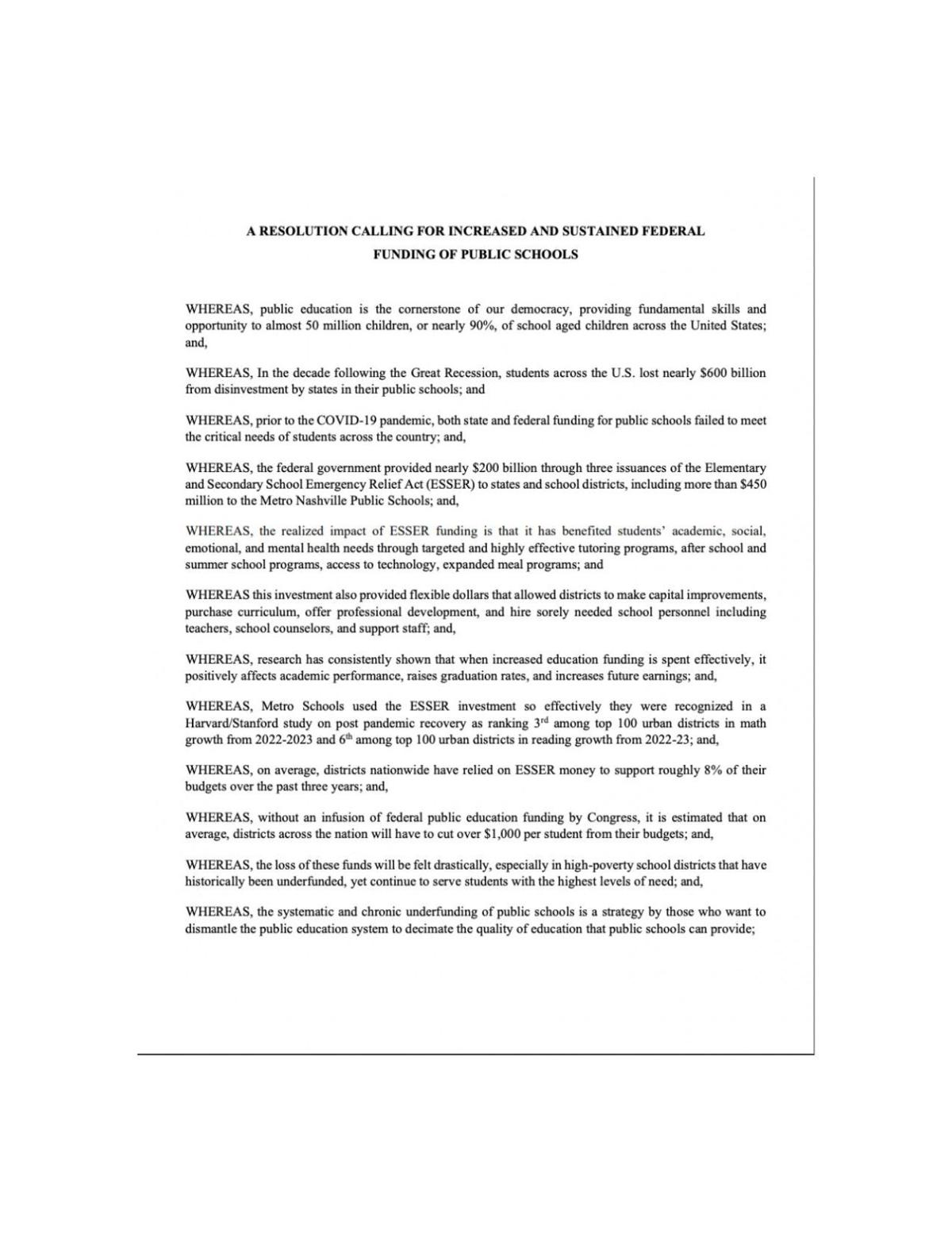
“WHEREAS public education is the cornerstone of our democracy, providing fundamental skills and opportunity to almost 50 million children, or nearly 90% of school aged children across the United States …”
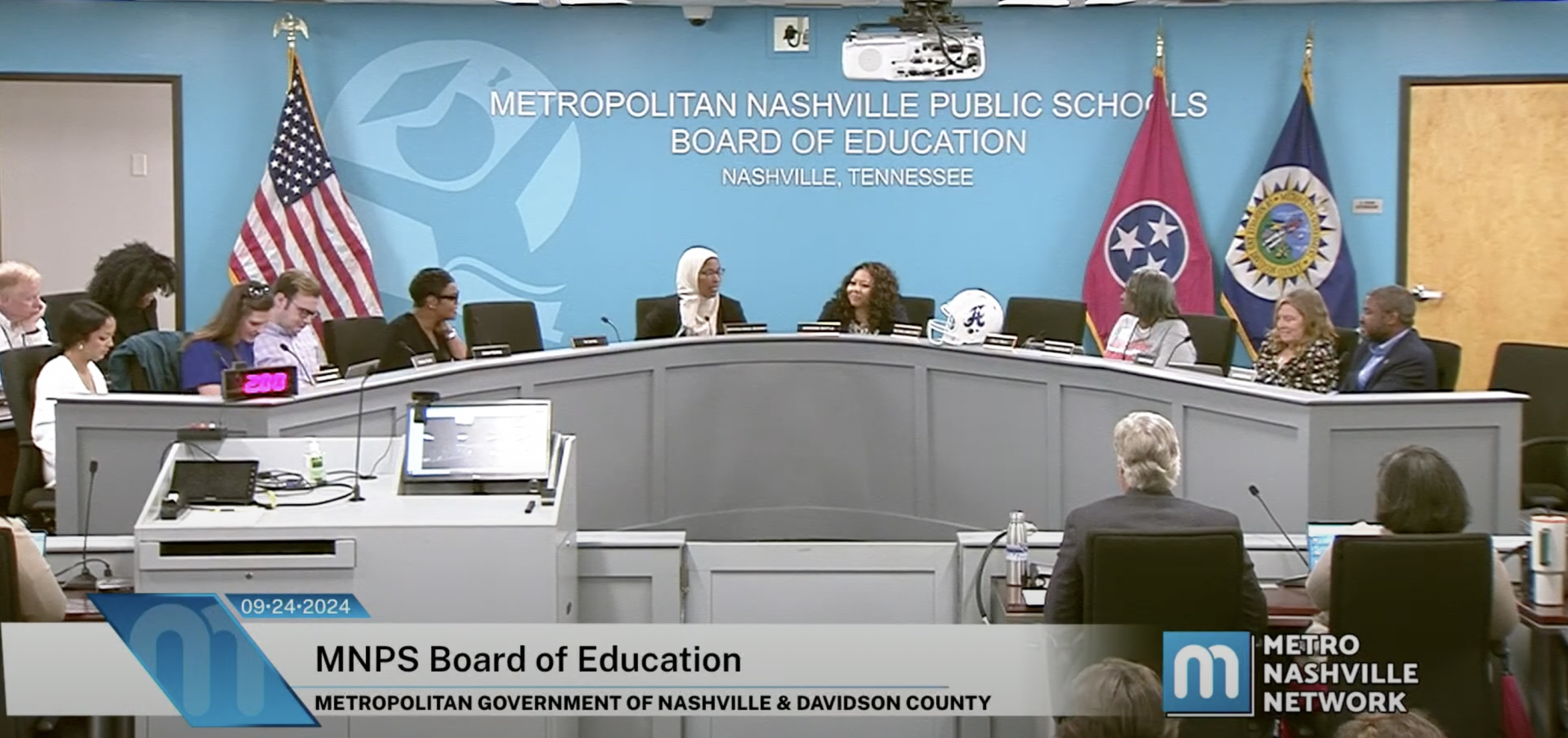
So begins a resolution from the Metro Nashville Public Schools board calling for “increased and sustained federal funding of public schools” as federal COVID-19 funding expires. Specifically, the resolution calls on Congress to pass the Keep Our PACT Act and the IDEA Full Funding Act. The resolution passed unanimously at Tuesday’s board meeting, though board member Rachael Anne Elrod was not present for the vote.

ESSER funds proved useful in supporting pandemic response and academic recovery
Elementary and Secondary School Emergency Relief (or ESSER) funds have helped MNPS address longstanding issues that were highlighted by the pandemic. The funding — which must be spent or accounted for by Sept. 30 — allowed the district to hire more nurses, mental health counselors and social workers. MNPS was also able to buy new technology and equipment for students, as well as provide support to tutoring and literacy programs. MNPS has been recognized among the top school districts in the nation for its pandemic recovery.
“ESSER money was great while it lasted, but it was never enough,” MNPS teacher and Metropolitan Nashville Education Association secretary treasurer Mary Jo Cramb told the school board Tuesday. “Its most important limitation was that the district was unable to use it for its biggest budget need: staff salaries. In order to increase pay for all educators — so that we can afford to live in this city — the district needs steady, dependable funding, not one-time infusions like ESSER and other grants.”
While MNPS is asking for more federal funding, state Republicans have explored the idea of rejecting federal funding. Last year, a joint committee considered rejecting federal funds in order to avoid the “strings” attached to them. The meetings didn’t end in a decision to refuse federal funding, though discussions on the topic could continue during next year’s Tennessee General Assembly.