
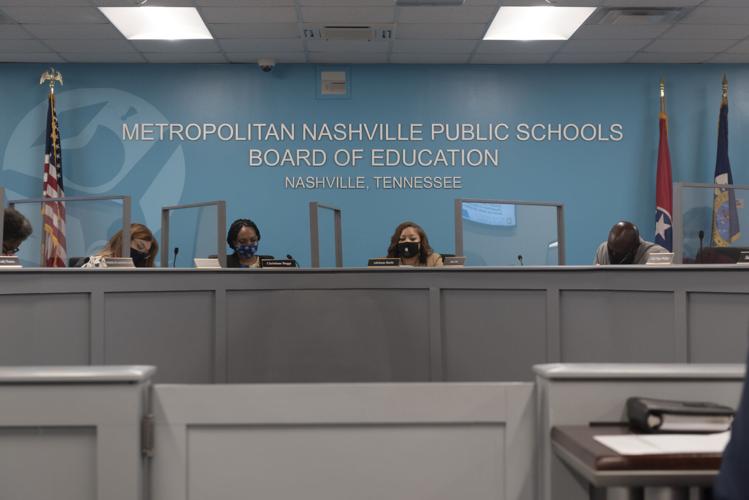
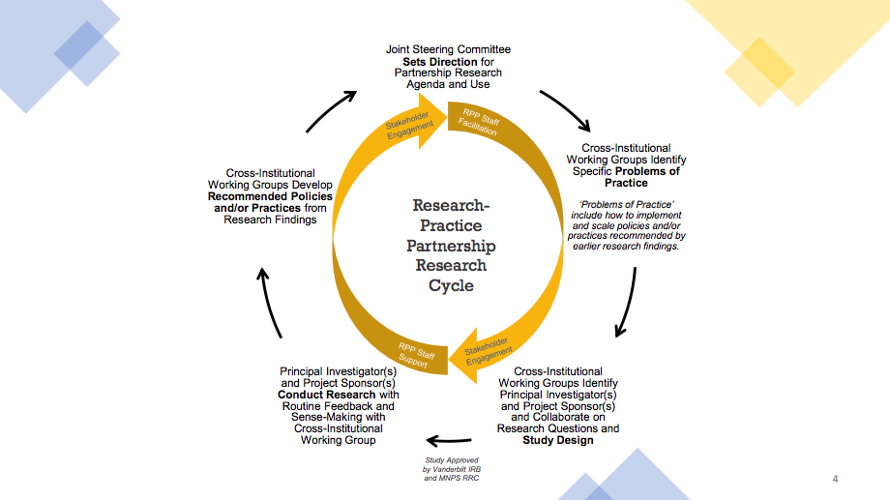
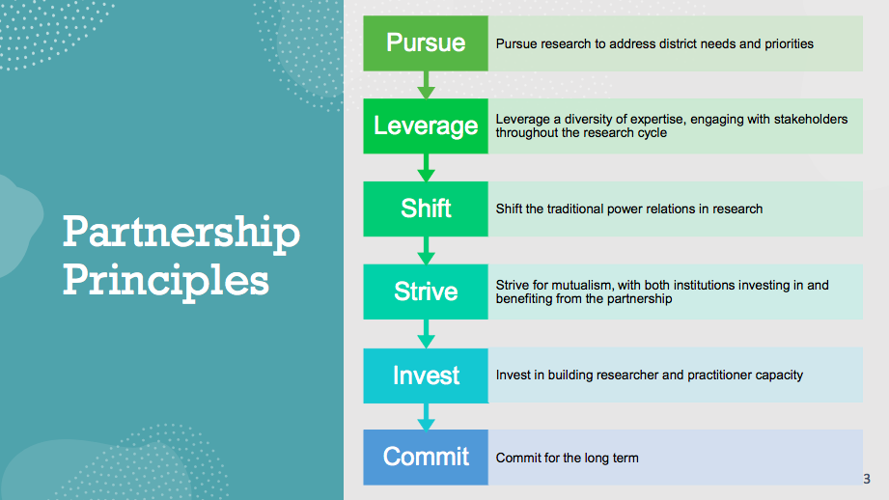

At last night’s Metro Nashville Public School Board of Education meeting, director of schools Adrienne Battle announced a new research partnership between MNPS and Vanderbilt University’s Peabody College of Education and Human Development.
The study will be called the Nashville Partnership for Educational Equity Research, or PEER, and will focus on addressing racial and social inequities in public schools. At the meeting, Battle said the study will enable MNPS “to answer questions that will allow us to make research-based decisions to modify policies and practices to identify and eliminate inequities.”

This is not the Peabody's first venture into public education studies. In 2016, the college launched the Tennessee Education Research Alliance with the Tennessee Department of Education to inform education policy and practices.
Vanderbilt's website states that the PEER study’s steering committee will be facilitated by Katie Cour, president and CEO of the Nashville Public Education Foundation. Other members include:
Adrienne Battle, MNPS director
Camilla Benbow, dean, Peabody College
Paul Changas, MNPS executive officer of research, assessment and evaluation
Ellen Goldring, executive associate dean, Peabody College
Jason Grissom, Patricia and Rodes Hart Chair and professor of leadership, policy and organizations, Peabody College
Ashford Hughes Sr., MNPS executive officer for equity, diversity and inclusion
Maury Nation, Bob Innes Chair and professor of human and organizational development, Peabody College
Keri Randolph, MNPS chief strategy officer
Marcy Singer-Gabella, PEER Faculty Director and professor of the practice of education, Peabody College (ex-officio)
TBD, MNPS manager of research-practice partnerships (ex-officio)

“The roots of educational inequities in our city are complex and multifaceted,” says Vanderbilt chancellor Daniel Diermeier. “Enduring challenges have only been compounded by COVID-19, and our city’s recent growth. These are issues that defy easy answers. But together, we can start to address them through rigorous research and collaboration. Drawing on data and history, we can find new ways to improve access and belonging and to reduce disparities in educational outcomes. And we can create new pathways and opportunities for the students of today, who are also Nashville’s future citizens and leaders.”



Post a comment as anonymous
Report
Watch this discussion.
(0) comments
Welcome to the discussion.
Log In
Welcome to the discussion.
Keep it clean. Please avoid obscene, vulgar, lewd, racist or otherwise abusive language. Comments featuring hate speech or threatening or violent content will not be tolerated.
PLEASE TURN OFF YOUR CAPS LOCK.
Be truthful. Don't knowingly lie or mislead.
Be proactive. Use the “report” link on any comment that violates our comment policy.
Share with us. We'd love to hear your feedback.