
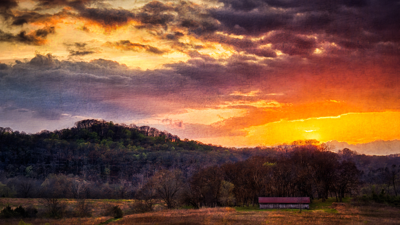


Bells Bend
Monday, Mayor David Briley thrilled public lands advocates with his announcement that he wants Metro to acquire 789 acres of green space on Bells Bend for parks and greenways.
The tracts in question include 107 acres currently used as a turf farm by Thomas Bros. Grass at the southern tip of the bend, plus 682 acres owned by the Graves family that was originally the farm of David Lipscomb, further north on the bend near Tidwell Hollow. Neither of the tracts are contiguous with the existing Bells Bend Park, but they are close. The turf farm is priced at $1.5 million and the Graves property at $7.8 million. Both will be purchased using the parks department's Greenways Acquisition Fund.
Adding green space, particularly in a place as untouched as Bells Bend — which not so long ago was in danger of development — is always a positive. (Although coming a few days after the council passed a tight budget, certainly Briley's backslapping could leave a bad taste in some mouths.) But not all public lands are the same, and preserving Bells Bend is a whole different can of bananas than an old firehall, an old school and an old public works building.
For his part, the mayor has some ... interesting ideas about what to do with the land (and none of them involve giving it away to developer Tony Giarratana, as best we can tell).
"These nearly 800 acres of farmable land have great potential for food production, sustainability efforts and agritourism," Briley said in his statement.
He's not wrong, of course, as the Bend is some of the most fecund land in the county. And while I love some good agritourism as much as the next crunchy weirdo, the idea of Metro running a farm is a little disconcerting and seems likely to end up in some bizarre amalgam of interesting and corporate — like a massive cherry orchard contracted out to Monsanto or something. Also — and this might seem shocking to some in Metro government — but not everything we do has to have a tourism component.
Furthermore, Bells Bend is likely the richest archaeological site in Davidson County, with dozens of confirmed sites from both Paleo-Indians and Mississippian mound-building cultures. To discourage looting, the state keeps the exact locations of such sites a secret (it's one of the gajillion exceptions to open-records law and, unusually, a completely logical one). But some information on what's been found is available from, among other sources, a 2012 edition of the journal Tennessee Archaeology. The Tennessee Council for Professional Archaeology hosts an annual Archaeology Day at Bells Bend Park; this year's event is set for Sept. 14.
As for the newly acquired tracts, archaeologist Sarah Levithol Eckhardt with the Tennessee Division of Archaeology tells Pith there are confirmed occupations from the Archaic, Woodland and Mississippian periods and a potential Paleoindian site on the parcels in question. Because those sites have been on private property, their condition is unknown and would need to be evaluated.
Nashville is doing a better job telling a fuller version of history, particularly through its park system. The evolution of Fort Negley's interpretation as a simple Civil War site to an example of the complex history of Nashville's African American community is a notable example notable enough to be recognized by UNESCO. Kellytown, a Mississippian village abandoned suddenly in the mid-15th century, will become Aaittafama' Archaeological Park, bearing a Chickasaw language name. Even First Tennessee Park includes explanatory signage about the massive pre-European-contact saltworks at Sulphur Dell.
Certainly, any archaeological undertaking at Metro's new land needs to preserve and protect the sanctity of the sites. But there's also an opportunity for Metro to educate Nashvillians about the area's original settlers who followed the big game south after the glaciers receded and their successors, the mound builders and, heck, the generations of farmers and ferry operators (including an enclave of Melungeon families, unusual this far west) who have occupied the Bend (and maybe Lipscomb University will give David's cabin back).
Absolutely, the pastoral expanse west of downtown needs to be preserved as open space, but surely the city can find the space to interpret the 14,000 years of human history on the Bend with a mocked-up village and a small museum with a knowledgeable staff. It's a far better use for it than agritourism.
In a statement sent to Pith Wednesday, the mayor's office said "Briley would be supportive of honoring and highlighting the long history of human occupation in the final vision of this park space."



