
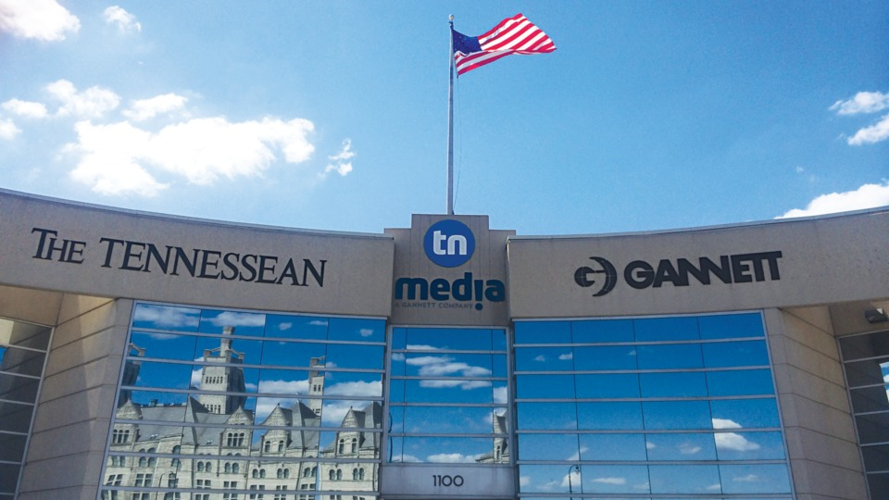

It’s almost like Gannett doesn’t want you to subscribe to their print edition anymore.
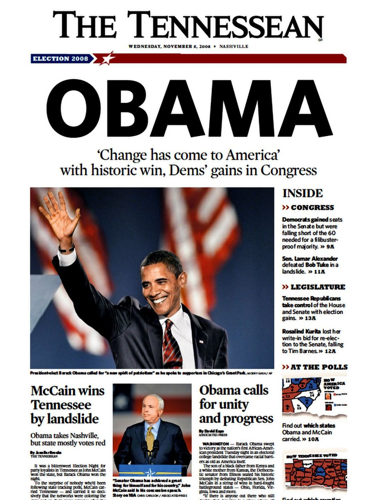
Editors at the chain’s papers around the country were informed two weeks ago that deadlines for the print edition could not be extended in order to cover elections. As a result, Wednesday’s editions of The Tennessean, Commercial Appeal and Knoxville News-Sentinel will not have final results for some of the most closely contested statewide races in years.
Gannett had already moved The Tennessean’s deadlines up to 7 p.m. earlier this year, and as a result, the print edition did not have coverage in August of the state’s first execution in a decade. Now, editorial staffs have been told to close their editions within 45 minutes of polls closing, long before any definitive results can be tabulated.
“It is not entirely accurate that we are foregoing election coverage in print — it will be much more limited than in the past — but I understand the point of your questioning,” says Tennessean vice president and editor Michael Anastasi. “We do not believe print is a vehicle for breaking news. Our focus there is on context, analysis and enterprise reporting, as well as, more broadly, watchdog and investigative reporting. Our efforts are designed to place ever-increasing focus on the type of journalism that actually increases print’s value in a world where people turn to their digital devices for the latest news on every topic.”
That daily print edition has been hemorrhaging readers, with an audit filing obtained by the Scene showing a little more than an average of 55,000 copies distributed daily — that's around half of its total from just five years ago. And while print circulation has declined around the country, some of those losses are self-inflicted as The Tennessean has pulled out of daily circulation in farther-flung areas to concentrate on Davidson and the counties that surround it.
While print revenues remain significant — and notably, not replaceable by digital ad dollars — it also remains one of The Tennessean’s biggest costs. The paper’s other main cost, people, is under the microscope as well: Gannett has offered buyouts to employees 55 and older with 15 years of service time.
The news of the advanced deadlines caused an uproar among staff members at several Gannett newsrooms across the state. While the advanced deadlines have meant, as Anastasi says, an increased emphasis on features and analysis, standard operating procedure has still been to push deadlines back to have at least some coverage the morning after elections. Tennessean staff as recently as a month ago had submitted those plans to the company’s print hub, which designs and edits the print editions. But the decision was made by corporate to hold tight on deadlines and aim results at the Thursday paper.
“They don’t have to answer the phones,” one Gannett staffer tells the Scene.
Anastasi says that despite the declines, The Tennessean has no plans to cut frequency from seven days a week as some other chains have tried.
“Throughout the industry in markets where frequency drops have been implemented, they generally have not been successful,” he says. “Customers who are willing to pay for seven days of print really want seven days of print.”
It will be interesting to see the reaction of those customers next week.



Post a comment as anonymous
Report
Watch this discussion.
(0) comments
Welcome to the discussion.
Log In
Welcome to the discussion.
Keep it clean. Please avoid obscene, vulgar, lewd, racist or otherwise abusive language. Comments featuring hate speech or threatening or violent content will not be tolerated.
PLEASE TURN OFF YOUR CAPS LOCK.
Be truthful. Don't knowingly lie or mislead.
Be proactive. Use the “report” link on any comment that violates our comment policy.
Share with us. We'd love to hear your feedback.